
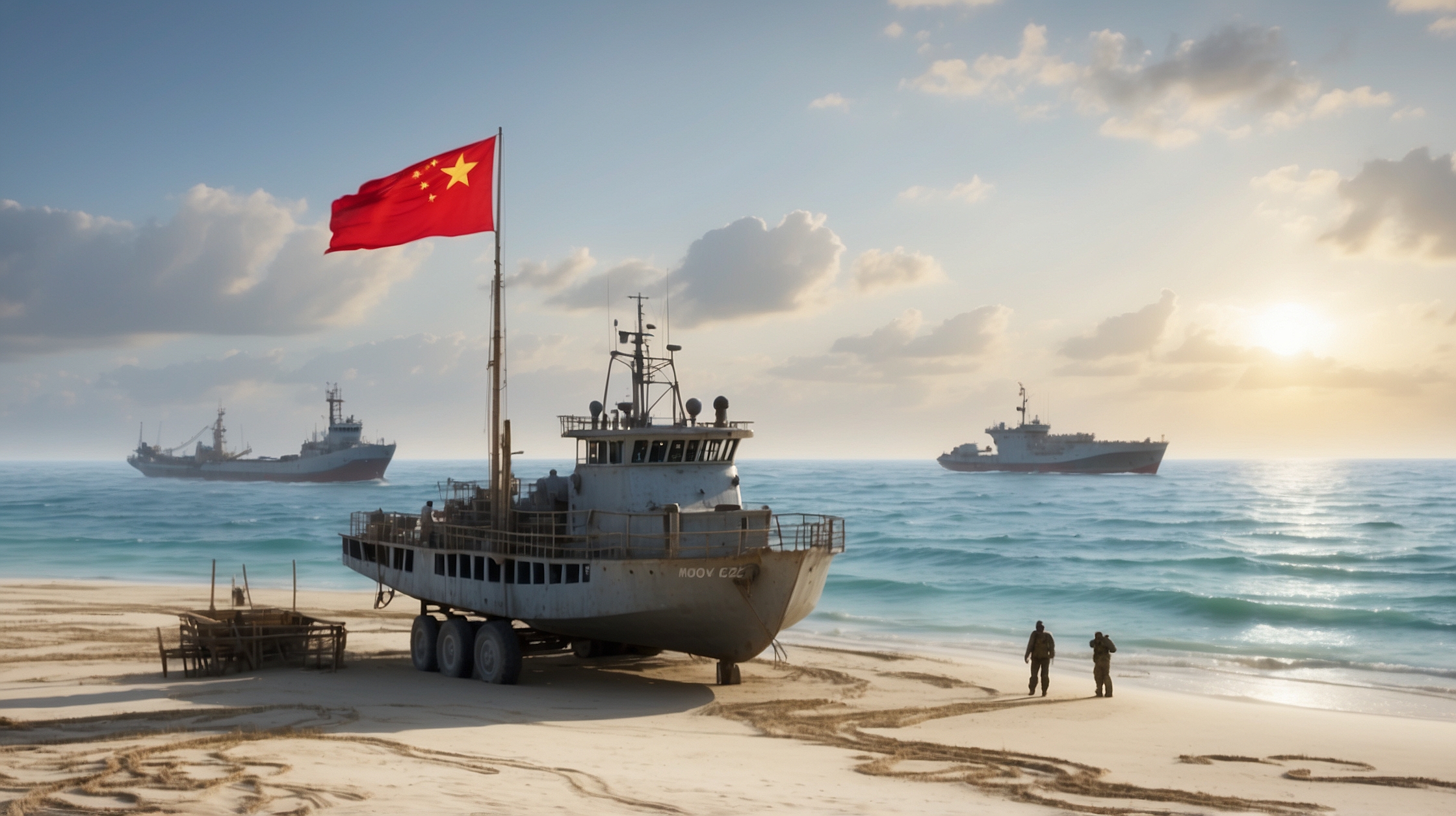
China’s continued construction of artificial islands and military installations in the **South China Sea** represents a bold strategic gambit that is reshaping geopolitics across Southeast Asia. Tensions have escalated in recent months as new satellite imagery confirms substantial advances in large-scale land reclamation and infrastructure upgrades on disputed reefs. The implications of these developments are vast—altering regional security balances, challenging international maritime law, and sparking concern from the U.S., ASEAN nations, and global trade partners.
Through strategic engineering, China has turned formerly submerged reefs into fortified outposts, complete with runways, radar systems, and deep harbors. While Beijing insists these projects are defensive in nature and within its sovereign rights, neighboring states such as the Philippines, Vietnam, and Malaysia argue that the activities violate international rulings and undermine maritime sovereignty. With approximately $3.5 trillion in trade passing through the South China Sea annually, the global stakes of these actions could not be higher.
Overview of the South China Sea Island Dispute
| Topic | Details |
|---|---|
| Disputed Regions | Spratly Islands, Paracel Islands, Scarborough Shoal |
| Key Countries Involved | China, Philippines, Vietnam, Malaysia, Brunei, Taiwan |
| Main Chinese Activities | Land reclamation, military infrastructure, airstrips, radar systems |
| Strategic Importance | Shipping lanes, fisheries, potential oil and gas reserves |
| International Legal Ruling | 2016 Hague Tribunal ruled against China’s claims |
What changed this year
In 2024, satellite data revealed emerging **new artificial islands** among the uninhabited reefs of the Spratly chain—an area already subject to overlapping claims by China and several ASEAN nations. These latest projects go beyond earlier island creation efforts and include multi-tiered fortifications, extended runways capable of hosting heavy bombers, and advanced surveillance systems. Experts suggest China’s military presence in the region has now fully matured, giving it the tactical ability to project power deep into Southeast Asian waters.
This expansion follows a period of relative calm, during which China focused more on consolidating infrastructure on already-developed islands. The recent flare-up in reclamation activities suggests a renewed intention to buttress its territorial claims with physical and military presence. Analysts consider this not merely a defensive gesture but rather a larger assertion of dominance over the world’s most crucial maritime artery.
Why is China building artificial islands
At the heart of China’s island-building campaign is its claim to the **’Nine-Dash Line’**—a sweeping demarcation that covers nearly 90% of the South China Sea. Though rejected by the Permanent Court of Arbitration in 2016, this line forms the backbone of China’s historical claim. By physically transforming and weaponizing reefs, Beijing is creating “facts on the water” that lend de facto control, even if its claims lack legal international recognition.
Strategically, these islands offer immense value. They serve as forward operating bases, shorten logistical lines for China’s Navy, and give it the ability to enforce what it views as its maritime domain. Economically, the South China Sea is thought to contain **11 billion barrels of untapped oil** and **190 trillion cubic feet of natural gas**, in addition to being one of the world’s richest fisheries. By controlling the sea lanes, China also gains leverage in global trade and deters foreign naval power from freely maneuvering through key straits.
Implications for neighboring countries
China’s moves have left countries like the **Philippines, Vietnam, and Malaysia** in a precarious position. These states maintain overlapping claims to various reefs and shoals, grounding their arguments in historical usage and proximity. Beijing’s increasingly assertive posture has led to a spate of maritime confrontations, with Chinese coast guard vessels reportedly using water cannons and military-grade lasers against foreign vessels within their Exclusive Economic Zones (EEZ).
Security experts warn that such incidents raise the risk of miscalculation and conflict. The militarization of the region may prompt smaller nations to deepen defense ties with the United States or establish multilateral security frameworks. For instance, recent military exercises between U.S., Australian, and Philippine forces near contested waters have drawn fierce criticism from Beijing, accusing them of “external interference.”
These artificial islands are not just strategic chess pieces—they’re seismic political statements.
— Dr. Mei Lin, Professor of International Relations, Tsinghua University
Global response and diplomatic tension
The United States—long a defender of freedom of navigation—has repeatedly challenged China’s claims through **Freedom of Navigation Operations (FONOPs)**. American destroyers and surveillance aircraft routinely patrol contested zones, prompting warnings from Chinese authorities. While these interactions have so far avoided direct conflict, the tension is palpable.
Washington has also reaffirmed its **Mutual Defense Treaty with the Philippines**, clarifying that armed attacks on Philippine vessels in disputed waters could invoke joint response obligations. Meanwhile, Japan, Australia, and European allies have voiced concern about China’s disregard for the 2016 UNCLOS ruling—a stance that continues to frame multilateral diplomatic backlash against China’s maritime assertiveness.
The entire Indo-Pacific ecosystem hinges on navigational openness and legal compliance. China’s actions challenge both.
— Rear Admiral James Carter (Ret.), U.S. Navy Strategy Consultant
Winners and losers in regional balance
| Winners | Losers |
|---|---|
| China (gains strategic depth, energy access) | Philippines, Vietnam, Malaysia (eroded maritime claims) |
| Chinese Navy (enhanced regional agility) | ASEAN unity (strained by differing responses) |
| Beijing’s geopolitical influence | International maritime law enforcement |
What could happen next
The trajectory of this dispute suggests rising **regional militarization** and increasing polarization. ASEAN, though diverse in interests, may push for a more unified Code of Conduct with China—but past efforts have been slow and largely symbolic. Meanwhile, Vietnam is upgrading its naval capacities and considering joint patrols with the Philippines, responding to overlapping Chinese aggression.
Observers also point to potential environmental damage. Coral ecosystems around newly dredged islands are collapsing, fisheries are facing disruption, and traditional livelihoods are eroding. Legal avenues may re-emerge, including additional cases at the Hague or appeals to the United Nations, though none are likely to sway China’s entrenched position without broader enforcement mechanisms.
Every reef turned into a fortress is a loss not only to regional peace but also to marine biodiversity.
— Elaine Dominguez, Marine Ecologist at ASEAN Biodiversity Center
Short FAQs
Why is the South China Sea important?
It’s vital for global shipping, rich in resources, and geopolitically central to Asia’s security architecture.
What is the Nine-Dash Line?
A historical boundary China uses to claim most of the South China Sea, though it lacks international legal validity.
How many islands has China built?
China has built or developed more than seven major artificial islands, primarily in the Spratly Islands.
Are the islands militarized?
Yes. They now feature runways, missile systems, radar installations, and military personnel.
What was the 2016 tribunal ruling?
The Hague tribunal ruled China’s maritime claims under the Nine-Dash Line were legally baseless.
Who else claims parts of the South China Sea?
The Philippines, Vietnam, Malaysia, Brunei, and Taiwan all have competing claims.
Has there been armed conflict?
While full-scale war hasn’t occurred, skirmishes, maritime standoffs, and naval blockades have increased.
What role does the U.S. play?
The U.S. supports freedom of navigation and allies like the Philippines, while challenging China’s territorial ambitions.


