
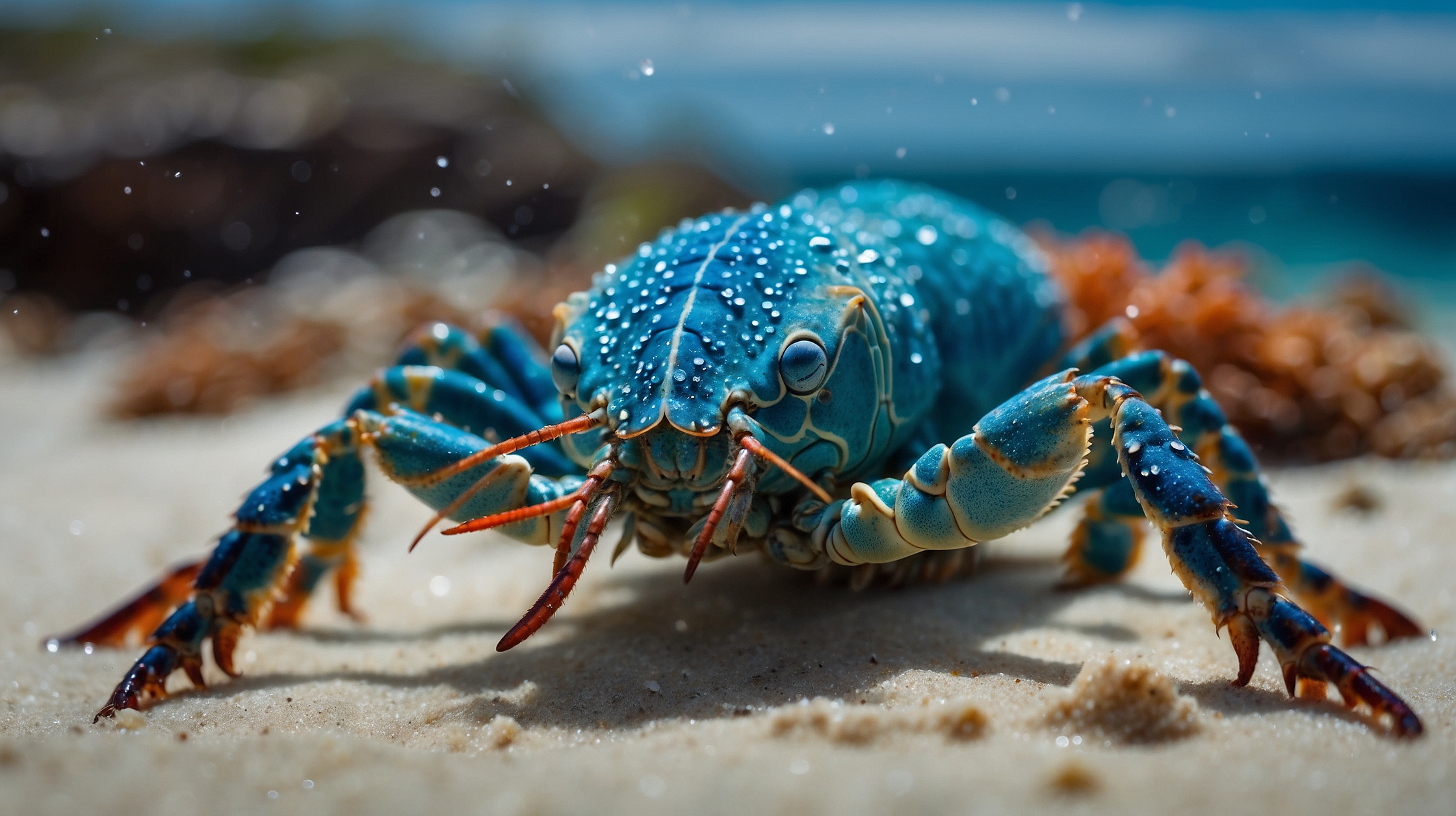
It’s not every day that a lobster becomes a viral sensation, but one crustacean recently discovered in the Atlantic Ocean has done just that. A strikingly rare **blue lobster**, a genetic marvel with odds of just 1 in 2 million, was pulled from the waters by a commercial fisher. The dazzling creature’s brilliant sapphire shell immediately caught the attention of marine enthusiasts and scientists alike — and for good reason. Its discovery not only highlights the biodiversity hiding in our oceans but also reignites conversation around conservation efforts and marine anomalies.
Unlike their more common bronze-toned relatives, these extraordinary blue lobsters owe their vivid coloring to a rare genetic mutation. When images of the lobster surfaced online, many were convinced they were edited or artificially colored — a testament to how rare such a spectacle truly is. However, experts quickly confirmed its authenticity, validating both the fisher’s find and the unique genetic mutation behind its hue. With lobsters serving as a keystone species in ocean ecosystems and a central figure in the fishing economy, occurrences like this shed light on the genetic diversity still waiting to be uncovered beneath the waves.
So what does it mean when a blue lobster is found? Is it a mere marvel of nature or an indicator of larger environmental shifts? Marine biologists and fisheries are eager to explore those questions. Meanwhile, the lobster in question has found a new home in an aquarium, safe from the dinner plate, where it will serve as a living ambassador for marine biodiversity.
Overview of Rare Blue Lobster Discovery
| Discovery Location | Atlantic Ocean (specific location undisclosed) |
| Discovery Date | Recent (within past month) |
| Odds of Occurrence | 1 in 2 million |
| Species | Homarus americanus (American Lobster) |
| Reason for Blue Color | Genetic mutation causing overproduction of a particular protein |
| Current Status | Donated to marine aquarium for conservation and education |
What causes a blue lobster’s unusual color?
The mesmerizing blue color of the rare lobster is the result of a **genetic mutation** that affects how proteins bind with pigments in the shell. More specifically, it is caused by an overproduction of a protein called crustacyanin, which, when mixed with astaxanthin (a red-orange carotenoid pigment), reflects bright blue.
This remarkable mutation doesn’t signify any health problems for the lobster itself, nor does it affect its behavior or life expectancy. It’s purely a visual deviation from the norm — one that happens once in about 2 million lobsters, according to marine scientists.
In the lobstering world, there are various rare color morphs documented: yellow, orange, albino (known as “crystal lobsters”), and even calico patterns. However, the **blue variation is by far the most well-known and widely recognized**, due in part to how dramatically it contrasts against the typical olive-brown coloration of most lobsters.
This is one of the most stunning specimens we’ve ever encountered. A find of this kind is not only a stroke of luck — it’s a brilliant reminder of the genetic complexity within our oceans.
— Dr. Elena Trask, Marine Biologist, Atlantic Institute of Marine Science
A rare catch and a conservation opportunity
Because of its exceedingly rare coloring, this lobster quickly drew attention from local authorities and marine institutions who recommended it be preserved for research and public engagement. Rather than selling it as part of a regular catch, the fisher who discovered it opted to donate it to a regional aquarium equipped to care for such a creature.
This gesture offers dual benefits. Not only will the lobster avoid being cooked and eaten — a fate that befalls over 100 million lobsters annually — but it will also become a **living ambassador for conservation education**, helping visitors and students understand more about marine biodiversity, genetics, and ecosystem preservation.
Lobstermen are encouraged by regulators and researchers to report and preserve rare morphs like this one when caught. Their genetic profiles can help scientists study heredity, adaptation, and environmental factors influencing marine species.
Every rare lobster that comes through our doors adds another data point in our ongoing research on marine mutations and ecosystem health.
— Bethany Crane, Director of Marine Life Programs, New England Oceanarium
How often are rare-colored lobsters found?
While the odds for a blue lobster are steep — around **1 in 2 million** — other rare lobsters have their own unique probabilities. For example, calico-colored lobsters (orange mottled with black) occur once in 30 million, and albino lobsters — also called crystal lobsters — are even rarer, appearing once in approximately 100 million lobsters. These statistics underscore just how exceptional each of these finds is.
Blue lobsters are among the **more frequently encountered “rare” lobsters**, which may explain why they receive so much media attention. Each time they make headlines, interest surges in marine genetics and the preservation of unusual marine life. It also helps promote sustainable fishing practices and deeper public involvement in oceanic studies.
What the blue lobster symbolizes for ocean biodiversity
This colorful anomaly offers a vivid metaphor for the broader richness and **genetic diversity within our marine ecosystems**. As ocean environments face increasing threats from overfishing, climate change, and pollution, the appearance of such a rare creature is a striking visual call to action. It suggests there might be countless other unique life forms yet to be discovered beneath the sea, many of which could inform science and conservation strategies if protected.
The incident also raises awareness about lobster populations and how closely they are being monitored. Regulatory agencies and conservation groups continue to push for more humane, balanced harvesting practices that consider sustainability and the protection of rare specimens.
Rising public fascination with marine anomalies
Over the past decade, rare-colored marine animals — including **pink dolphins, white orcas, and blue lobsters** — have captivated both scientists and the general public. Social media has further amplified their visibility, turning once-ignored anomalies into viral sensations that often lead to increased funding and awareness for marine research organizations.
This wave of fascination isn’t limited to aesthetics. It taps into our innate curiosity about the natural world and how unpredictable, vibrant, and mysterious it can be. Blue lobsters, in particular, have emerged as icons in online conversations about marine life, conservation, and science education.
We love when the public latches onto these moments — they’re teachable opportunities. Animals like the blue lobster help ignite interest in the ocean that textbooks alone can’t provide.
— Dr. Helen Murphy, Science Communicator, Coastal Ecology Center
Will climate change affect lobster coloration?
While the genetic mutation responsible for blue lobsters is not believed to be directly linked to environmental conditions, researchers caution that **long-term climate change could increase or decrease the prevalence of such anomalies**. Shifts in ocean temperatures, salinity, and acidity can influence the habitats and breeding patterns of marine species — possibly impacting how often rare traits like blue pigmentation emerge in lobster populations.
Further study is required to determine whether environmental stressors correlate with an uptick in observed rare morphs, though so far, there is no direct evidence to suggest that this particular blue lobster is tied to climate impacts.
Short FAQs About Rare Blue Lobsters
What causes a lobster to be blue?
A genetic mutation leads to the overproduction of a protein called crustacyanin, which interacts with red pigments to create a striking blue shell.
How rare is a blue lobster exactly?
Expert estimates suggest that only 1 in every 2 million lobsters has the genetic mutation that causes the blue coloring.
Can a blue lobster be eaten?
Yes, though it’s often discouraged due to their rarity. Most are donated to aquariums or research institutions for conservation and study.
Where are blue lobsters most commonly found?
They can be found anywhere American lobsters live, primarily along the Atlantic coast of North America, from Canada to North Carolina.
Are there other rare lobster colors?
Yes. Other rare colors include yellow, orange, calico, white (albino), and even split-colored lobsters. Each has different odds of occurrence.
Does the blue color affect the lobster’s health?
No, the blue color is purely cosmetic and doesn’t impact the lobster’s health, behavior, or longevity.
Can lobsters change color during their life?
No, lobsters do not change color naturally. Their coloration is genetically determined and remains consistent throughout their lives.
Why is the blue lobster not released back into the wild?
Due to their rare color, blue lobsters are more visible to predators. Keeping them in aquariums helps protect them and allows for education and study.


