
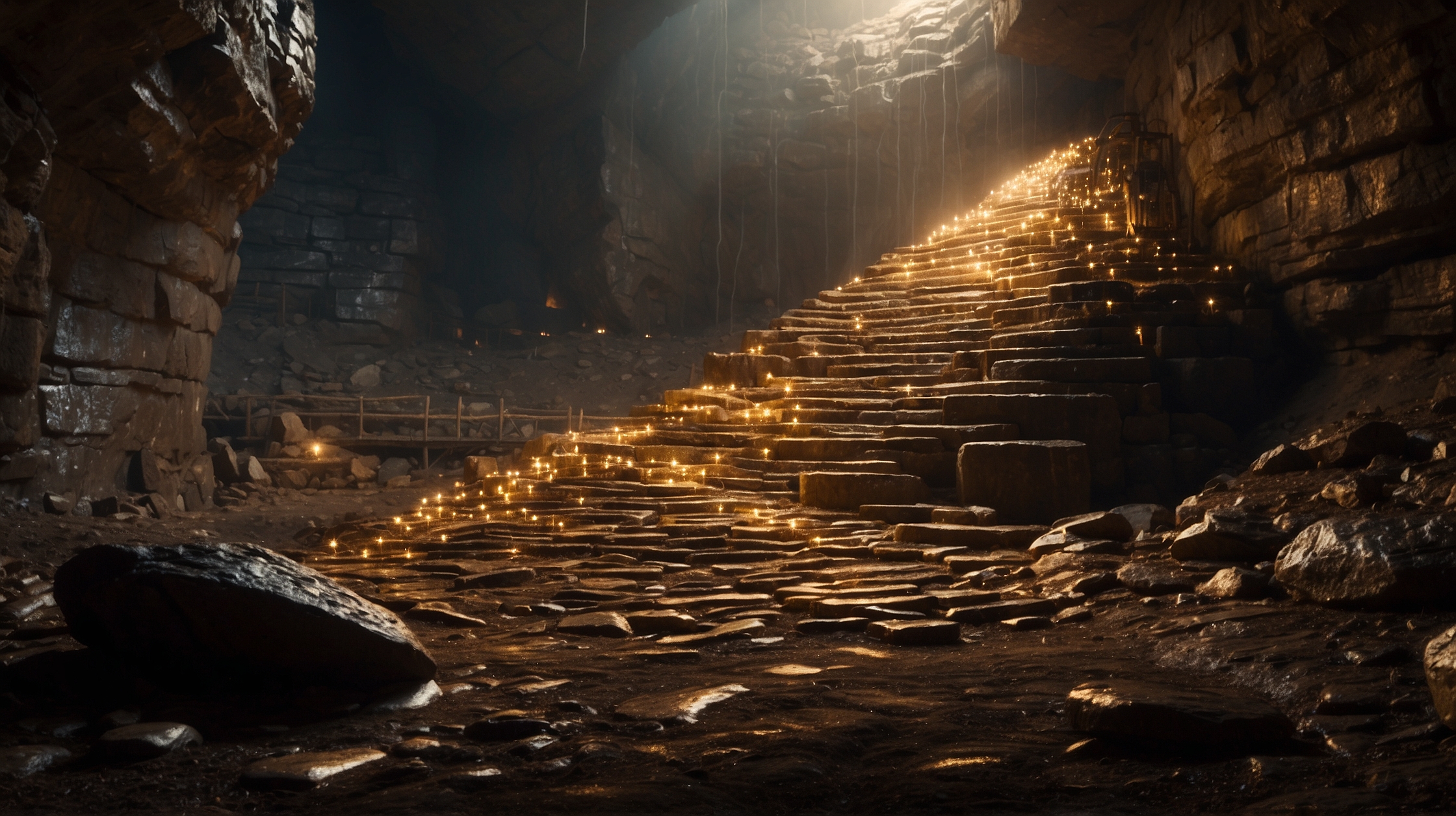
In what is being hailed as the “find of the century,” a remarkable discovery has surfaced deep beneath the Earth’s crust — **dozens of gold bars buried more than a kilometer underground** have been uncovered in a remote mining zone. The unexpected nature of the treasure trove and the secrecy surrounding it have drawn international attention, and speculation is now mounting about a single country’s critical role in both the discovery and what it may mean for the future of global gold markets.
The location of the find, reported to be within a prolific mineral-rich region, has prompted swift responses from authorities, mining magnates, and treasure hunters alike. Whispers of historical ties, secret wartime operations, and government hush orders have only fueled public fascination. As experts scramble to authenticate the gold and evaluate its implications, one country’s strategic interest in the site is becoming increasingly clear.
Discovery insights at a glance
| Discovery Location | Underground mining shaft, depth of 1.15 km |
| Date of Find | April 2024 |
| Amount of Gold Recovered | Undisclosed, estimated in tons |
| Linked Country | Japan |
| Potential Historical Significance | Possible wartime treasure burial |
| Estimated Value | $4–$10 billion (pending appraisal) |
How the gold was uncovered after decades underground
The discovery was made by a mining team conducting excavation operations in an existing shaft previously deemed unproductive. At a depth of over **1,150 meters**, workers noticed an unusual metallic glint from within a collapsed chamber. When further clearing revealed several metallic containers, they quickly realized what they had found — **a large number of pure gold bars wrapped in oilskin and stacked within what appeared to be a sealed vault**.
Initial estimations suggest the cache could contain upwards of **several metric tons of 99.9% pure gold**, adding to speculation that this was not simply lost treasure but intentionally placed there for safekeeping. The presence of markings on the container surfaces — including Japanese characters and wartime-era insignias — has rapidly drawn attention to Japan’s historical involvement in the region.
Why the discovery is being linked to Japan
There are growing reasons to believe that the trove of gold may be linked to **Imperial Japan’s military campaigns during World War II**. Historians have long suspected that fleeing Japanese officials buried fortunes looted during wartime expansion in secret sites across Southeast Asia, a theory often dismissed due to insufficient physical evidence.
However, this new find has rekindled interest in what some researchers call the legend of **“Yamashita’s Gold”**, referring to treasure allegedly amassed and hidden by General Tomoyuki Yamashita and other high-ranking officers. The Japanese government has not made any official statement so far, but experts speculate that diplomatic discussions may already be underway behind closed doors given the potential geopolitical and monetary stakes involved.
“This isn’t just a gold discovery — it could be a verifiable piece of lost wartime history, which may alter what we know about the end of Japanese involvement in the Pacific theater.”
— Dr. Eli Tanaka, Military Historian
Legends and secrecy around hidden WWII gold caches
Tales of hidden wartime treasure have persisted for decades, often dismissed as myths. Reports of gold being secretly buried to prevent Allied forces from reclaiming it circulated from the Philippines to Myanmar, but few physical confirmations ever surfaced. This discovery lends credence to the theory that **vast riches were covertly stashed by retreating forces** just before the war’s conclusion.
The newly unearthed gold, especially when analyzed for origin and minting date, could provide concrete proof validating these controversial stories. It also raises complex legal questions surrounding **rightful ownership** — is the gold the property of the modern government of the country where it was found, does it belong to Japan, or perhaps to the original nations from whom the treasure may have been confiscated?
Could this shift the global gold economy?
Gold prices are highly sensitive to large, sudden changes in supply or major discoveries. If the current estimates of the found treasure’s volume are confirmed, **up to $10 billion in gold could enter circulation**, thus impacting investment portfolios and national reserves around the world. However, the likelihood of such new bullion hitting the market in the near term is low due to ongoing legal, political, and forensic processes.
Some analysts believe this could invigorate **investment in gold exploration**, particularly in regions with wartime histories or underexplored sites. For countries with unsettled economic situations, such discoveries may also provoke renewed interest in hidden or protected national treasures.
“Even if the gold doesn’t enter the market for years, the psychological effect of knowing such treasure exists can trigger shifts in mining stocks and investor behavior.”
— Liwen Gao, Senior Commodity Analyst
Winners and losers from this seismic discovery
| Winners | Losers |
|---|---|
| Gold valuation researchers | Competing gold reserve holders |
| The mining team and local governments | Black market traders of historic artifacts |
| War historians and researchers | Nations with disputed treasure claims |
| Global precious metals market | Private collectors who paid top dollar for unverified war relics |
What legal battles lie ahead
The biggest question now may not be how much gold has been found — but who has the right to claim it. If it is indeed proven to be **wartime treasure stolen from other countries**, lawsuits could emerge, potentially involving Japan, the nation where the gold was recovered, and even countries across Southeast Asia which were historically pillaged during imperial expansion.
International law concerning wartime reparation and asset recovery is *extremely complex*, particularly when documentation is unclear or destroyed. There’s also the potential for claims by private families who believe their ancestors were victims of large-scale theft during the conflict. Legal advisors are already stepping in to manage the fallout.
“This case will set legal precedent. We’re potentially witnessing the start of decades-long court proceedings.”
— Samantha Ryu, International Law Expert
What comes next for the gold bars discovered underground
For now, the treasure remains in government custody while **forensic analysis and historical examination** are underway. Specimens are being cataloged, weighed, and compared with historical records. Multinational teams comprising **archeologists, geologists, and war historians** are being assembled to extract as much contextual information as possible from both the vault structure and individual gold bars.
Ultimately, there may be efforts to place a portion of the treasure in museums or national reserves, with controlled releases into the gold market. Whatever the outcome, this gold find is poised to become a pivotal moment in **both financial and historical scholarship**.
Frequently Asked Questions (FAQs)
How deep was the gold found?
It was discovered at a depth of approximately 1.15 kilometers beneath the Earth’s surface in an existing mining shaft.
What is the total estimated value of the gold findings?
Estimates range between $4 billion to $10 billion, though the full valuation is still pending expert analysis.
Is there proof that Japan is linked to this discovery?
Containers holding the gold display Japanese characters and WWII-era insignia, strongly suggesting a connection to Imperial Japan.
Will the gold be sold in the market?
In the short term, it’s unlikely. The gold will likely undergo extended legal, historical, and forensic review before any release decisions are made.
Could this discovery affect gold prices?
Yes, even the discovery alone can cause shifts in investor sentiment and gold-related assets, though prices remain stable for now.
What does this mean for war artifact collectors?
This confirms that some long-dismissed legends may have truth, potentially increasing interest but also legal scrutiny for wartime relics.
Is Yamashita’s gold real?
Many dismissed the idea as a myth, but this discovery offers the most compelling evidence yet supporting the legend’s authenticity.
Who owns treasure found underground?
Ownership varies by country, but typically it may belong to the state, or contested under international reparations laws if linked to wartime theft.


