
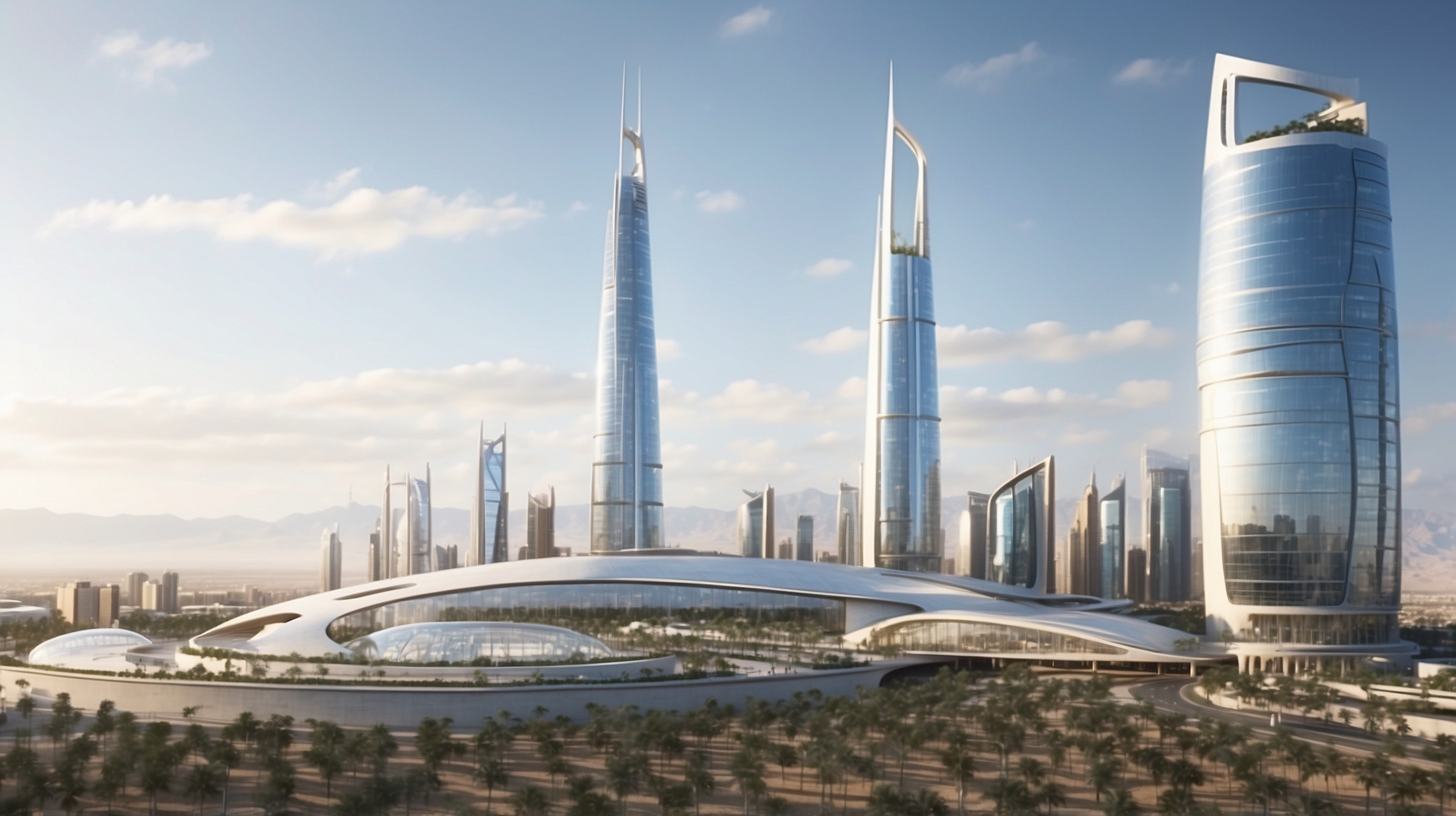
Saudi Arabia is once again set to redefine the global architectural horizon. As part of its ambitious Vision 2030 campaign, the Kingdom is venturing into a colossal new project—**a towering 1,000-meter skyscraper** that aims to challenge, and possibly surpass, the world’s tallest building. If completed on schedule, this ambitious construct could not only dethrone Dubai’s famed Burj Khalifa but also solidify Saudi Arabia’s place in architectural history and as a global investment magnet.
This new mega-tall landmark, backed by billions in funding and located at the heart of the upcoming city of Neom or on the Red Sea coast near Jeddah, represents far more than just a construction project. It’s emblematic of a nation in transformation, channeling its oil wealth into futuristic infrastructure and innovative urban centers. The unnamed tower could rise in height, scale, and symbolism, becoming a beacon of aspiration for the Middle East and beyond.
Overview of Saudi Arabia’s 1,000-Meter Mega Tower Project
| Project Name | To be officially announced |
| Proposed Height | 1,000 meters (3,281 feet) |
| Current Tallest Building | Burj Khalifa – 828 meters |
| Location | Potentially Jeddah Economic City or NEOM |
| Estimated Cost | $5 – $10 billion |
| Completion Timeline | Expected within the next decade |
| Primary Uses | Mixed-use: residential, commercial, hospitality |
What inspired the vision for a 1,000-meter tower
The inspiration for building such a towering icon comes from a mix of competition, cultural ambition, and economic diversification. Saudi Arabia has observed the regional shifts in architectural dominance, with nearby cities like Dubai and Abu Dhabi leading in skyline development. The Kingdom seeks not just to join the fray, but to win it—with a structural phenomenon that exceeds expectations and reaches skyward unlike anything built before.
Saudi Arabia’s Crown Prince Mohammed bin Salman has spearheaded projects that reflect futuristic thinking, sustainability, and luxury. This mega-tower, whether situated in Neom’s high-tech environment or as part of the Jeddah Central plan, fits perfectly within the leadership’s broader goals of shifting the country beyond oil dependency.
“Architecture is about more than steel and concrete—it’s about vision, and Saudi Arabia is wielding it on a scale we’ve rarely seen.”
— James Wu, Urban Development Analyst
How the tower could reshape regional and global skylines
Once built, the 1,000-meter skyscraper would dominate not just the Middle East’s views but also global rankings. Officially categorized as a “megatall” building (structures exceeding 600 meters), this tower could unlock untapped tourism, international investment, and global curiosity. It caters to Saudi Arabia’s growing interest in hosting global events and attracting foreign capital, aligning closely with climate-conscious infrastructure and smart city initiatives.
Moreover, the tower will likely include a mix of **residential apartments**, **luxury hotels**, **observation decks**, **office spaces**, and possibly even zones for vertical farming or drone ports—emphasizing multi-dimensional utility and sustainability. By blending prestige with purpose, it breaks free from the criticism some vanity skyscrapers face regarding long-term utility.
Major architectural and engineering feats required
Constructing a 1-kilometer skyscraper comes with an extraordinary set of engineering challenges. High-altitude wind loads, elevator system complexities, foundation depth, and material innovation are all critical factors. Building at that height requires **dual-core elevator systems**, **wind tunnel testing**, and **new structural materials** that are stronger and lighter than standard steel and concrete.
Additionally, sustainability features such as **solar façade panels**, **self-cooling exteriors**, **greywater recycling**, and real-time energy monitoring must be integrated to meet global expectations and environmental regulations. Saudi Arabia may collaborate with renowned global firms for design and execution—likely involving advanced AI modeling and vertical zoning technologies developed in recent years.
“Reaching 1,000 meters isn’t just an architectural milestone—it’s an environmental and logistical recalibration of urban thinking.”
— Dr. Leila Mansour, Structural Engineer and Smart City Planner
What changed this year for the project to break ground
Until recently, many doubted the feasibility of ever building a 1,000-meter tower. However, 2024 has seen a resurgence in Saudi infrastructure investment. With the Public Investment Fund (PIF) injecting more capital into flagship projects and land allocations finalized in pivotal locations, the project has gained high-level momentum.
The country’s post-COVID recovery strategy has prioritized **legacy infrastructure**, backed by sovereign assets and environmentally conscious design. Ministers and mega-project coordinators have hinted at announcements “soon” regarding the final height, name, and foundational schedule of this skyscraper.
Winners and losers from a new tallest tower
| Winners | Losers |
|---|---|
| Saudi Arabia’s tourism & investment sector | Other global tourism hotspots competing for attention |
| Local job creation in construction and tech | Firms involved in smaller residential or commercial projects |
| Innovative architecture and sustainability firms | Traditional construction models and non-innovative urban layouts |
| Young professionals seeking vertical city living | Outdated commercial hubs in less competitive cities |
Who will fund and benefit from the skyscraper
The bulk of funding is expected to come from the wealthy Saudi sovereign wealth fund, backed likely by additional stakeholders including international contractors, real estate developers, and technology firms. Foreign investors looking for high-ROI real estate opportunities in the region may also be invited to hold equity or operational oversight in parts of the project.
As for beneficiaries, the targets are high-net-worth individuals, digital nomads, tourists, and companies focusing on sustainable innovation. The tower could represent a new urban model for vertical cities—offering not just living spaces but entire ecosystems within the same building.
Comparisons with other global vertical giants
Dubai’s Burj Khalifa held its crown for over a decade, surging 828 meters into the sky when opened in 2010. The proposed Saudi tower, breaching the 1,000-meter threshold, could eclipse not just Burj Khalifa, but also still-under-construction marvels such as Dubai Creek Tower (currently on hold).
From Tokyo’s Sky Tree to the Shanghai Tower in China, the trend of vertical urbanism is well-discussed but seldom realized at this scale. Saudi Arabia’s tower, if successful, could ignite a **new race in megastructure design**—akin to the moon race of the 1960s, but unfolding in steel, concrete, and innovation.
“This project parallels humanity’s greatest ambitions: to reach higher, live smarter, and build sustainably in a constrained world.”
— Dr. Ana Petrovic, Vertical Cities Research Fellow
Frequently Asked Questions
Where will the new tallest skyscraper in Saudi Arabia be located?
The final location has not been officially confirmed, but insiders suggest it could be in Jeddah Economic City or the NEOM smart city region.
How tall will the new Saudi skyscraper be?
The proposed height is 1,000 meters (3,281 feet), which would make it the tallest building in the world.
When is construction expected to start?
While there’s no exact construction date confirmed yet, funding pledges and land pre-approvals suggest groundwork could begin within the next 1–2 years.
Who is funding the skyscraper project?
The primary funding is expected from Saudi Arabia’s Public Investment Fund (PIF) with potential foreign investment and corporate partnerships.
How long will it take to complete the skyscraper?
Similar mega-tall buildings take 5–10 years to complete. Therefore, experts anticipate a completion window between 2030 and 2035.
Will the structure be environmentally sustainable?
Yes, the project will incorporate modern sustainable and energy-efficient technologies including smart HVAC, eco-materials, and power-saving glass facades.
Is the building only residential?
No, it will include a mix of residential, commercial, hospitality, and possibly even academic or innovation lab zones.
What makes this skyscraper different from others?
Beyond height, the building is expected to champion next-generation sustainability, smart city integration, and vertical urban living—the first of its kind on this scale.


