
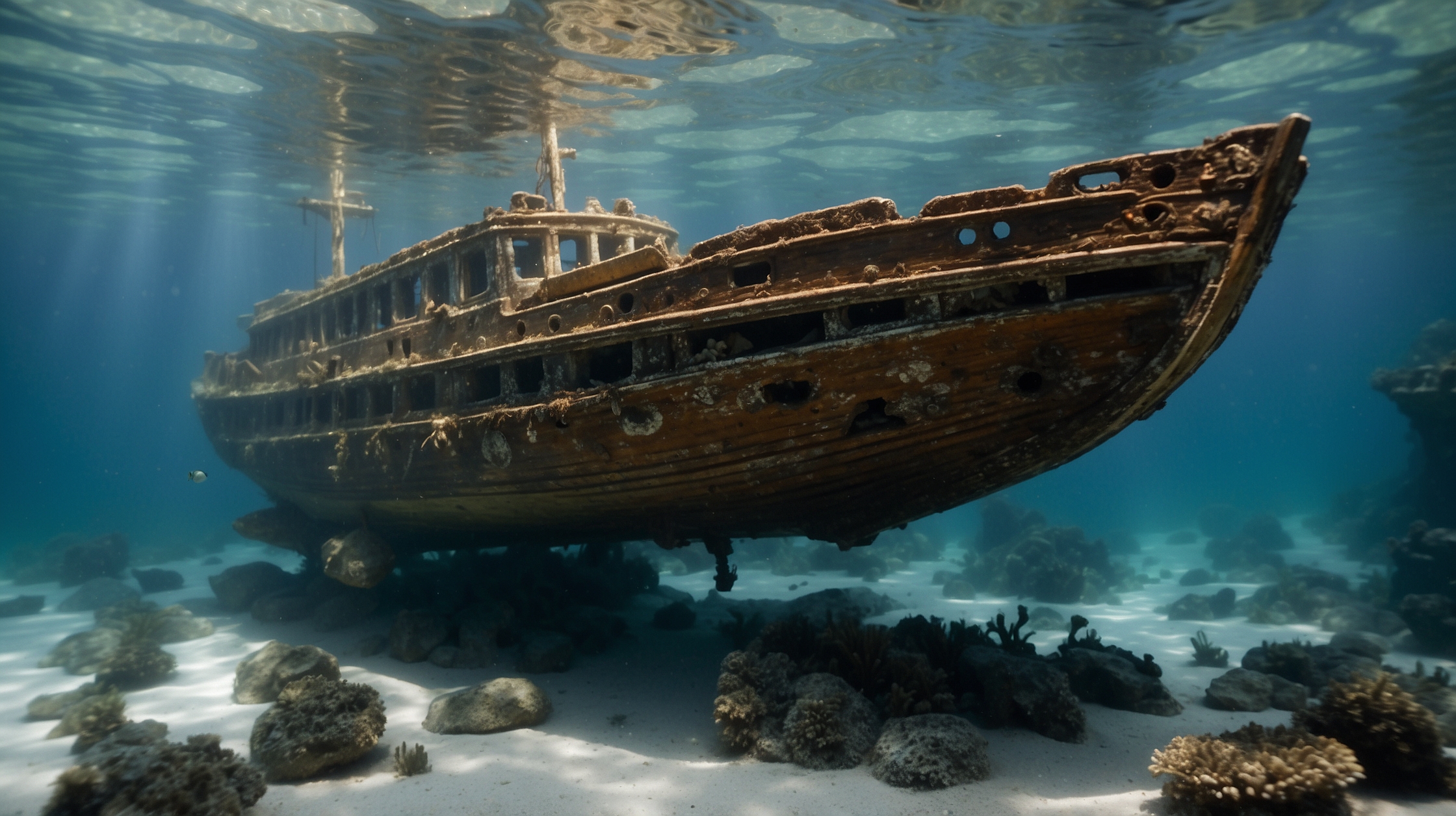
After centuries submerged beneath the waves off Australia’s southeast coast, one of the world’s most sought-after shipwrecks has finally been found. Maritime archaeologists confirmed the discovery of the HMS Endeavour — the iconic vessel once helmed by the famed British explorer Captain James Cook. It’s a historic moment with deep ramifications for maritime history, Indigenous narratives, and global heritage.
This discovery culminates over two decades of meticulous research carried out by Australian and U.S. maritime experts. The ship, remarkably preserved in the sediments of Newport Harbor, Rhode Island, represents a tangible link to a pivotal moment in history — when Cook mapped Australia’s east coast for the British Empire in the 18th century. The confirmation of the ship’s identity, through intensive cross-referencing of historical data and timber analysis, brings a centuries-old mystery to a close.
Key facts about the ship discovery
| Ship Name | HMS Endeavour |
| Captain | James Cook |
| Year Built | 1764 |
| Sank | 1778 |
| Rediscovered | 2022 |
| Location | Newport Harbor, Rhode Island, USA |
| Preservation Level | Moderately intact timbers and structure |
Why this particular ship matters in global history
The HMS Endeavour is not just another vessel lost in time. It famously carried Captain James Cook on his first voyage of discovery to the Pacific from 1768–1771. During this critical journey, Cook mapped the eastern coastline of Australia, paved the way for British colonization, and made first contact with several Indigenous groups.
Its significance lies not only in its voyage but in its symbolic stature — representing both scientific progress and colonial expansion. The ship was also instrumental in astronomical observations, contributing to data collected for the 1769 transit of Venus. Rediscovering the Endeavour isn’t just a historical footnote; it’s a rediscovery of humanity’s past entangled in exploration, empire, and cultural contact.
“It’s one of the most important shipwrecks ever to be discovered. Not because it’s grand, but because its journey reshaped the world.”
— Dr. Sarah Williams, Maritime Historian
How researchers finally pinpointed the Endeavour
Unraveling the fate of the Endeavour has been a painstaking process. Renamed the Lord Sandwich during the American Revolutionary War, the ship was scuttled by the British in 1778 alongside 12 others in a strategic blockade. Maritime archaeologists had long posited that Endeavour’s remains were among those submerged off the coast of Newport in the United States, but empirical proof was elusive.
Australian marine archaeologists worked in tandem with their U.S. counterparts to narrow down the wrecks. After years of underwater excavation, dendrochronology (tree-ring dating) helped determine that the timbers matched those from the 18th century British oak. Further analysis of the vessel’s structural design, size, and historical reference to ship logs enabled experts to confirm the identity of the Endeavour.
Preservation status and what’s being done next
Despite the centuries-long submersion, parts of the Endeavour remain “reasonably intact” thanks to the cool, low-oxygen environment. While only portions of the vessel survive — primarily part of the keel, hull planking, and lower deck framing — the structural integrity is sufficient for significant archaeological documentation and possible public exhibition in the future.
Plans are now underway between U.S. and Australian authorities on how to best preserve the remains. There’s ongoing debate about the potential transportation of the ship’s fragments to Australian museums or whether to create a dedicated underwater heritage site in Newport.
“This is an international treasure. We want to ensure it’s treated with utmost respect, balancing scientific study with heritage conservation.”
— Anna Ramsey, Director of Maritime Archaeology Australia
The deep cultural impact on Indigenous communities
While the discovery excites maritime circles, it also rekindles reminders of the past for many Indigenous Australians. The arrival of Captain Cook aboard the Endeavour in 1770 marked the beginning of British colonization and upheaval for Aboriginal communities. Organizations are urging for inclusive narratives that acknowledge both the historical feat and its colonial consequences.
There are now calls for the Endeavour’s future exhibitions or documentation to incorporate Indigenous voices and perspectives, especially from clans around Botany Bay who were the first to make contact with Cook’s crew. Recognizing the ship’s dual legacy — as a vehicle for scientific advancement and colonial intrusion — is seen as vital for reconciliation and honest representation.
“To us, that ship is a reminder of what was taken. If it is to be displayed, it must include our story too.”
— Uncle Gumaroy Newman, Aboriginal elder and cultural advisor
What this means for maritime archaeology
The Endeavour is a crown jewel in maritime archaeology. Its discovery represents a leap forward in non-invasive underwater technologies, archival research, and diplomatic collaboration between nations. The project sets a precedent for future efforts to locate and preserve historically significant shipwrecks around the globe.
Furthermore, this finding illustrates the importance of patience and scientific rigor. It demonstrates how international collaboration can bring closure to long-standing mysteries and foster a better understanding of historical impact — positive and negative alike.
Who gets to ‘own’ history under the sea
This discovery also reignites complicated questions around ownership. Although the wreck lies within U.S. waters, Australia claims cultural and historical ownership as the vessel played a foundational role in its colonial origins. There are ongoing discussions between U.S. agencies, Australian authorities, and local preservation boards to ensure the site is handled equitably and ethically.
Compromise could come in the form of joint stewardship or rotating exhibitions, akin to international artifact sharing models employed by museums worldwide. Regardless of the outcome, the global value of the Endeavour as a symbol of exploration makes this an issue of shared heritage.
A tangible link to world-changing events
The discovery of Captain Cook’s ship connects us materially to an age of discovery that dramatically influenced world history. It’s a sobering moment — the realization that one wreck holds within its timbers the blueprint of modern Australia’s genesis, the entwining of Indigenous and European worlds, and the thirst for discovery that continues even today.
“This isn’t just a shipwreck — it’s a timeline etched in wood. That’s why it captivates the imagination.”
— Prof. Thomas Elliot, Archaeologist
Frequently asked questions about the Endeavour discovery
What was HMS Endeavour used for originally?
HMS Endeavour was initially a coal ship named Earl of Pembroke before being repurposed as an exploration vessel for Captain James Cook’s first Pacific voyage in 1768.
Why did the ship change names to Lord Sandwich?
The British navy renamed Endeavour to Lord Sandwich during the American Revolutionary War to serve military purposes, eventually scuttling it during the Battle of Rhode Island.
Where exactly was the shipwreck found?
The remains of the vessel were discovered in Newport Harbor, Rhode Island, alongside other ships sunk as part of a blockade in 1778.
How do experts know it’s the Endeavour?
Archaeologists used timber dating, ship construction analysis, and historical documentation to positively identify the wreck’s dimensions and materials consistent with the Endeavour.
What condition is the ship in after 250 years?
While not fully intact, major elements like the keel and some structural frames have been preserved due to cold, sediment-rich underwater conditions.
Will the ship be brought to the surface and displayed?
No final decision has been made yet. Discussions between Australia and the U.S. are ongoing about future preservation, possible relocation, and exhibitions.
Why is the discovery culturally significant to Indigenous Australians?
The Endeavour symbolizes both the start of colonization and the lasting impacts on Aboriginal communities. Many advocate for inclusion of Indigenous narratives in any public display or storytelling of the ship.
Is this the most important shipwreck discovery ever?
While subjective, many experts argue that the Endeavour is among the most historically significant discoveries due to its global impact and symbolic legacy.


