
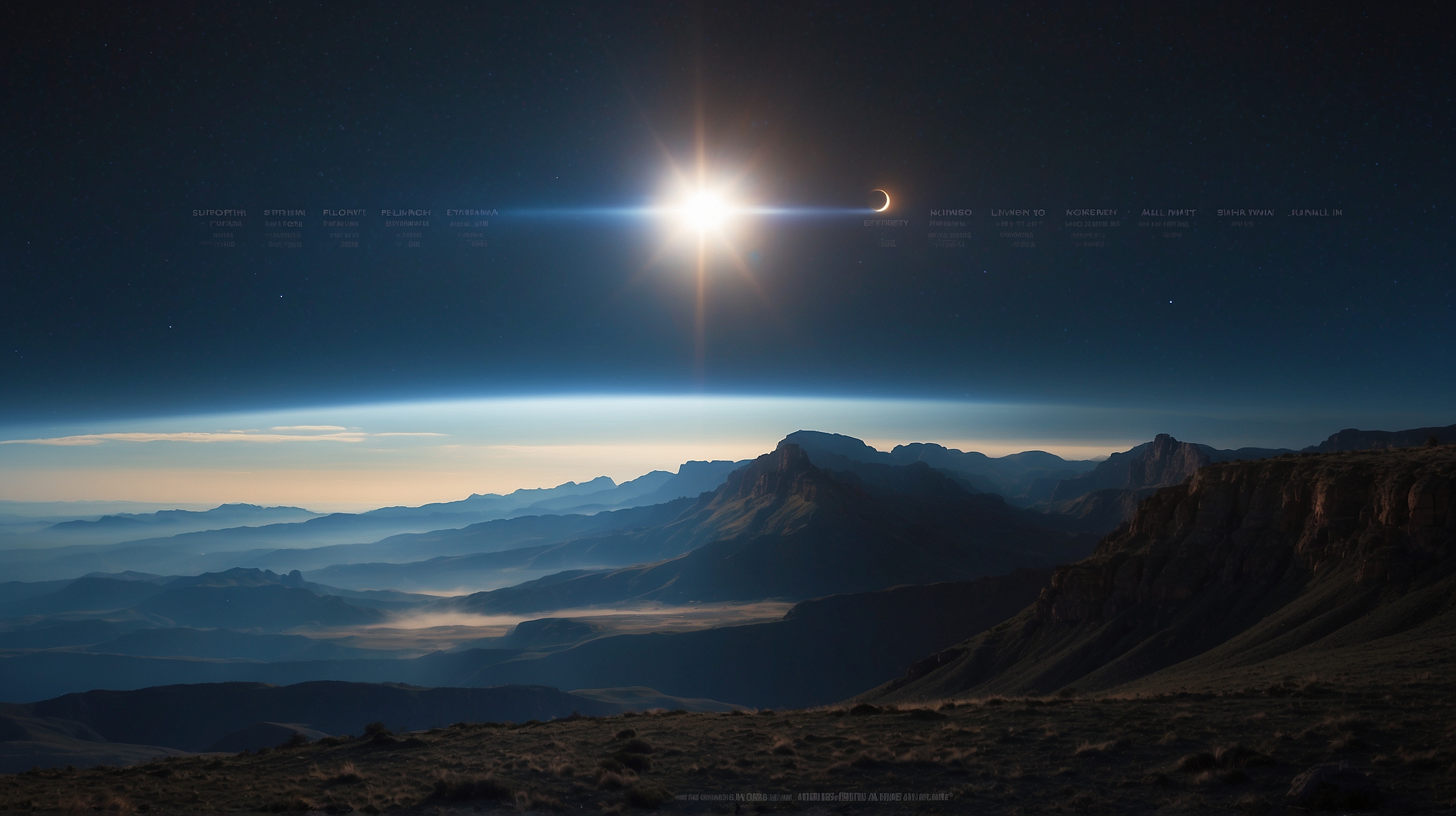
Millions of people across North America are preparing for what many are calling the “eclipse of the century.” This rare and awe-inspiring celestial event will bring a total solar eclipse across a wide swath of the continent, plunging parts of the United States, Mexico, and Canada into near-total darkness for a stunning six minutes. This rare astronomical alignment gives spectators a brief window to experience the mysteries of the cosmos, as the Moon completely covers the face of the Sun in the middle of the day.
This upcoming eclipse isn’t just rare—it’s record-breaking. The path of totality, where observers will see the total solar eclipse in its full glory, stretches over 4,000 miles. Even more astonishing is the unusually long duration of the eclipse; in certain areas, totality will last just over six minutes, a duration not seen in North America for over a century. This combination of length, visibility, and geographic accessibility makes the 2024 eclipse one of the most anticipated astronomical events in decades.
Key details at a glance
| Event | Total Solar Eclipse |
| Date | April 8, 2024 |
| Maximum duration of totality | 6 minutes 23 seconds |
| Countries in path of totality | Mexico, United States, Canada |
| First point of totality | Pacific Coast of Mexico |
| Last point of totality | Newfoundland, Canada |
What is a total solar eclipse and why this one stands out
A total solar eclipse occurs when the Moon passes directly between the Earth and the Sun, completely obscuring the face of the Sun. This casts a narrow path of darkness—known as the path of totality—on the Earth’s surface. Outside this path, people will still witness a partial eclipse, where the Sun is only partially covered.
What makes this eclipse particularly significant is its exceptional duration. Most total solar eclipses last only about two to three minutes. However, in April 2024, observers located at the eclipse’s peak location will witness sky-darkening totality for over six minutes, making this a once-in-a-lifetime experience for astronomers and casual sky-watchers alike.
Best places to watch the eclipse
The eclipse will first make contact with North America along Mexico’s Pacific coastline near Mazatlán, an area perfectly poised to enjoy long totality and clear skies. From there, it will cut a swath northeast across the United States, passing through key cities and states including:
- San Antonio, Texas
- Indianapolis, Indiana
- Buffalo, New York
Finally, the eclipse will reach the Canadian provinces of Ontario, Quebec, and Newfoundland before the Moon’s shadow exits the North American continent.
Watchers hoping to get the best views should try to situate themselves as close to the path of totality as possible. Even being just a few miles outside of it drastically reduces the intensity of the experience. Clear skies, low light pollution, and higher elevations will also help maximize your viewing.
How to prepare for totality day
Planning in advance is key. Protective eclipse glasses or viewers are essential at all times except during the few minutes of totality when the Sun is completely covered. Regular sunglasses are not safe for direct solar viewing.
Many towns and cities in the path of totality are already preparing for an influx of visitors, with accommodations selling out months in advance. Organizers recommend making travel plans early, as road congestion and shortages of supplies are likely in high-traffic areas.
Additionally, be prepared with water, snacks, seats, and weather protection. Even brief cloud cover could obscure the totality experience, making weather apps an essential tool on eclipse day.
Why this eclipse is so rare
Total solar eclipses are uncommon, occurring about once every 18 months somewhere on Earth. However, a number of factors make the April 2024 eclipse particularly rare. First, the Moon is near its closest point to Earth (perigee), making its apparent size large enough to fully cover the Sun for an extended period.
Second, this eclipse traverses a densely populated part of the world, increasing accessibility to tens of millions. Lastly, the eclipse boasts the longest duration of totality in North America since 1806, a historical moment that won’t be repeated for decades.
Expected impact on tourism and local economies
Destinations under the path of totality are already seeing massive economic upticks, as both international and domestic travelers seek prime viewing spots. Coastal towns in Mexico, small cities in Texas, and rural areas in the Midwest stand to benefit the most. Thousands of eclipse-themed events, from science talks to music festivals, are springing up across the route.
“We’re expecting more than 300,000 visitors within our city limits during eclipse week. Hotels are at 98% capacity already.”
— Karen Mitchell, Director, Austin Tourism Board
This makes the eclipse not just a celestial event, but an economic one.
Scientific importance of the 2024 eclipse
For astronomers, total solar eclipses offer a rare chance to study the Sun’s corona—the outermost layer—without the interference of its bright face. Instruments and sensors will be deployed along the path to capture data on solar activity, magnetic fields, and solar wind behavior that could help forecast space weather.
“We’ll be using the 2024 eclipse as a groundbreaking opportunity to monitor the Sun using a series of telescopes placed across the path of totality.”
— Dr. Lena George, Astrophysicist, Solar Science Consortium
Citizen science also plays a role, with volunteer observers and educational groups contributing to NASA’s eclipse observation programs using simple gear like tripods and smartphones.
Weather forecasts and what to expect
Springtime weather in early April can be unpredictable depending on the region. Southern and southwestern parts of the U.S. such as Texas and New Mexico traditionally have better odds for clear skies, making them ideal viewing locations. Northern parts of the path, especially in Canada, could potentially face more cloud cover.
You can minimize risks by checking weather forecasts early and monitoring shifting patterns in the days leading up to April 8, 2024. Some travelers are even planning flexible itineraries to chase the clearest skies along the path.
Winners and losers of the eclipse
| Winners | Losers |
|---|---|
| Tourism-driven towns on the path | Urban areas just outside totality path |
| Amateur astronomers and skywatchers | Regions with poor weather or cloud cover |
| Schools incorporating STEM programs | Late planners unable to find lodging |
FAQs about the 2024 total solar eclipse
When is the 2024 eclipse happening?
The total solar eclipse will take place on April 8, 2024, with totality beginning on Mexico’s Pacific coast in the morning and progressing northeastward through the day.
Where is the best place to view the eclipse?
Anywhere along the path of totality offers the best view, but cities like Mazatlán, TX Hill Country, and parts of Indiana and New York are among the top choices due to potential weather clarity and viewing duration.
How long will the eclipse last?
The duration varies depending on your location. At its peak, totality will last up to 6 minutes and 23 seconds.
Is it safe to look at the eclipse?
Only during the brief moments of totality is it safe to look at the Sun with the naked eye. At all other times, certified eclipse glasses must be used to prevent permanent eye damage.
Do I need special equipment to see the eclipse?
Besides eclipse glasses, no special equipment is needed for safe viewing. However, telescopes with solar filters or pinhole projectors can enhance the experience.
Will the eclipse repeat soon?
The next total solar eclipse visible from the U.S. after 2024 won’t happen until August 23, 2044. The opportunity to witness an eclipse of this magnitude won’t come again for decades.
Can weather affect visibility?
Absolutely. Cloud cover can completely obscure the Sun. It’s vital to monitor weather conditions and adjust your location if possible as the eclipse nears.
Will there be any educational events or coverage?
Yes, many schools, science centers, and observatories are planning live events, watch parties, and educational programs dedicated to the 2024 eclipse.


