
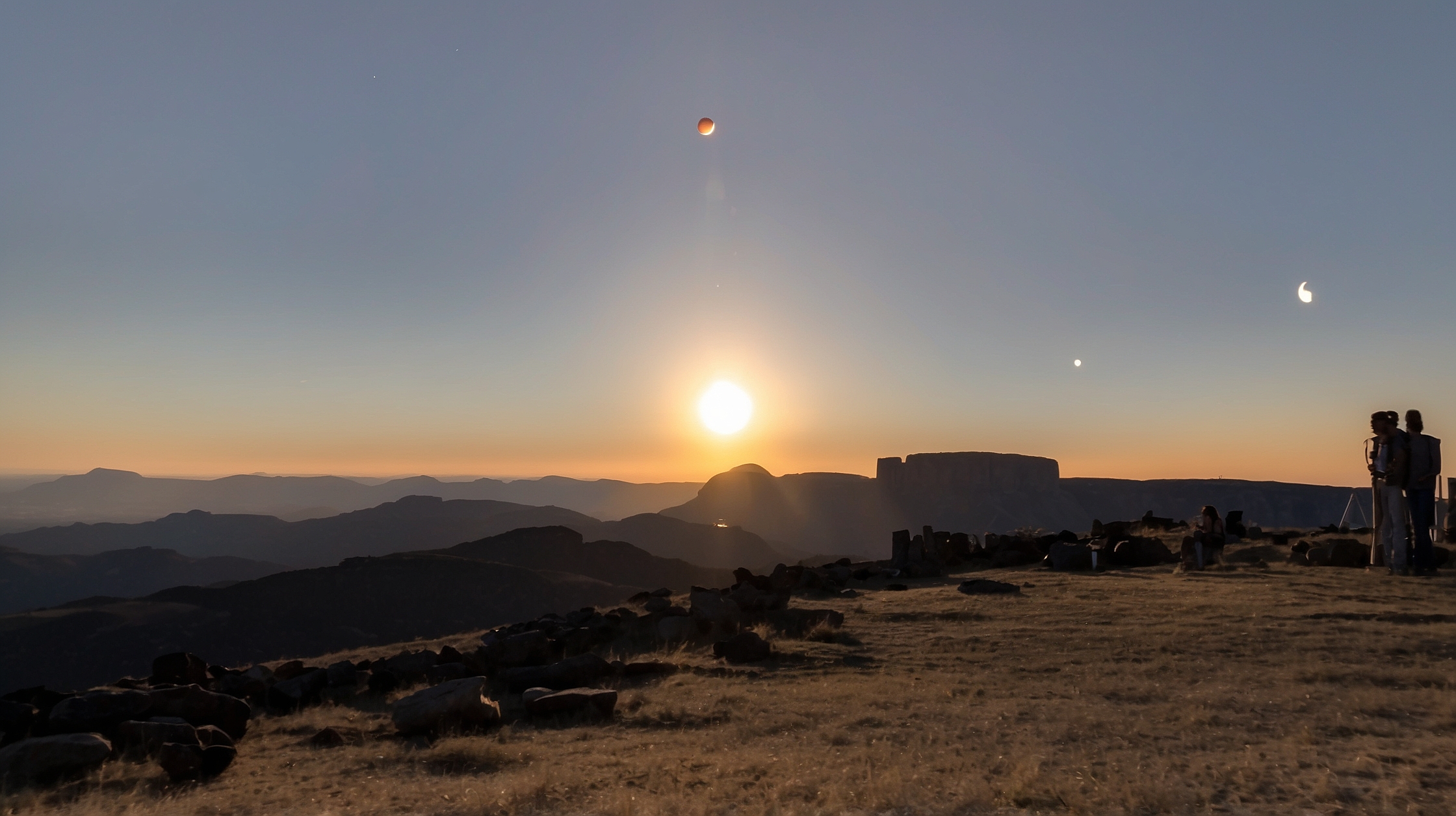
On a rare cosmic stage, the sky is set to transform briefly from bright daylight into a mesmerizing twilight. This spectacle won’t require you to stay awake at night or travel across the globe — the year’s most anticipated celestial event is coming to a region near you. Mark your calendars, because the **longest solar eclipse of the century** is scheduled to occur on **August 2, 2027**. Unlike other recent eclipses that offered only fleeting moments of darkness, this solar eclipse will last a remarkable **6 minutes and 23 seconds** at its peak — more than double the duration of many total eclipses in the past decade.
It’s not just the duration that’s breaking records. The 2027 solar eclipse will span a wide arc of countries and continents, making it not only the longest but also one of the **most widely observed total eclipses** in modern history. Whether you’re in North Africa, southern Europe, or the Middle East, this celestial event will deliver an otherworldly pause to your ordinary daylight hours. For astronomers, photographers, and skywatchers alike, this isn’t just another eclipse — it’s a **once-in-a-century opportunity** to witness one of nature’s rarest and most captivating phenomena.
Essential Facts About the 2027 Solar Eclipse
| Date | August 2, 2027 |
| Type | Total Solar Eclipse |
| Maximum Duration | 6 minutes and 23 seconds |
| Visible Regions | Northwest Africa, Southern Europe, Middle East |
| Best Viewing Locations | Egypt, Libya, Saudi Arabia, Spain |
| Next Eclipse of Similar Length | June 13, 2132 |
Why this solar eclipse is extraordinary
The upcoming eclipse isn’t just another date for skywatchers — it could be the most significant **natural astronomical event** of the decade. While total solar eclipses occur somewhere on Earth every 18 months or so, long-duration eclipses exceeding six minutes are rare gems in astronomical terms. The 2027 eclipse falls into an elite category, only rivaled by similar events that happen once in a century. The eclipse track stretches thousands of kilometers in length, sweeping across varied geography, cultures, and climates, giving millions a ringside seat to this spectacle.
According to astronomers, the length of the eclipse is dictated by a perfect alignment of the Moon being at its closest point to Earth — called **perigee** — and the Earth being near **aphelion**, its farthest point from the Sun. This alignment allows the Moon to apparently cover the Sun more completely and for a longer time.
“This eclipse is unique not only in its duration, but in the sheer number of people who will be able to view it in full totality — directly from their hometowns in some cases.”
— Dr. Lena Martinez, Astrophysicist, International Astronomy Consortium
Where and when to watch the eclipse
The path of totality — the corridor where total eclipse will be fully visible — will begin in the **Atlantic Ocean**, sweeping into **Southern Spain**, then across **North Africa** (passing over countries like Morocco, Algeria, and Libya), and continuing through the **Middle East** including Saudi Arabia and parts of Egypt. The primary cities with the best odds for viewing under clear skies include **Luxor (Egypt), Mecca (Saudi Arabia), and Fez (Morocco)**. These cities lie close to the eclipse’s central path, offering more than six uninterrupted minutes of midday darkness.
The eclipse begins off the eastern coast of North America as a partial eclipse before tracking eastward. While not everyone along the outskirts of this path will experience a full eclipse, large portions of Europe, western Asia, and northern Africa will still get to see a **significant partial eclipse**.
What to expect during full totality
During totality, the Sun’s overwhelming brightness is briefly blocked by the Moon, allowing onlookers to behold the **solar corona** — the Sun’s outer atmosphere — a shimmering, ghostly white halo that’s usually invisible to the naked eye. Temperatures can drop noticeably, birds may stop singing, and daylight will give way to an eerie twilight. Cities and towns under totality will be bathed in atmospheric magic, a sensation that is impossible to replicate.
“It’s a moment that defies description — the air changes, the light changes, and for a few minutes, you’re connected to the universe in a profound way.”
— Prof. Mahmoud El-Amin, Director of Cairo Planetarium
How to prepare safely for eclipse viewing
Never look directly at the Sun without the proper protection. Use only **certified eclipse glasses** or handheld solar viewers that meet international safety standards (ISO 12312-2) to see any phase before or after totality. Regular sunglasses are not a safe alternative. Telescopes and binoculars must be equipped with proper solar filters.
For those planning to photograph the event, special solar filters for cameras and telescopes are essential. Make travel arrangements early, as high tourist demand is already expected around sites with optimal viewing conditions — particularly Egypt and southern Spain.
Economic and tourism impact in affected regions
Countries along the central eclipse path are making preparations not just for skywatchers, but also for the **economic boost** the solar event is expected to bring. From luxury eclipse cruises in the Mediterranean to eclipse-themed festivals in Egypt and Morocco, local economies are anticipating a surge in tourism-related revenue. Aviation and hospitality sectors are preparing to meet increased demands during the last week of July and early August 2027.
| Winners | Losers |
|---|---|
| Tourism and travel sectors in eclipse path | Regions outside eclipse path missing visibility |
| Science education and outreach programs | Unprepared or undersupplied rural areas |
| Astrophotographers and eclipse enthusiasts | Air travelers who experience delays |
Opportunities for researchers and scientists
Total solar eclipses offer invaluable research opportunities. Scientists use the rare moments of darkness to study solar flares, the corona’s magnetic field, and even behavior changes in wildlife. Astronomy teams around the globe, including NASA and ESA, are coordinating joint efforts for real-time data collection during the eclipse window. Observational data from the 2027 event could contribute to climate research, solar models, and a better understanding of our Sun’s influence on Earth’s atmosphere.
How this eclipse fits into the astronomical calendar
The 2027 eclipse will be the last great eclipse before the next extremely long one on **June 13, 2132**, lasting approximately **6 minutes and 55 seconds**. However, a series of shorter eclipses follow in the years after 2027, including a total solar eclipse over parts of the U.S. in 2024 and another significant eclipse crossing Australia in 2037. Yet, none of these will match the 2027 eclipse for both duration and global accessibility.
Its combination of duration, wide visibility, and geographical positioning makes this eclipse a **highlight for the 21st century** — a solar event that will be studied, recorded, and remembered for generations.
Frequently Asked Questions (FAQs)
When is the 2027 solar eclipse expected to happen?
The solar eclipse is scheduled for August 2, 2027, with the longest totality occurring near midday, varying by location.
How long will the total eclipse last?
The maximum totality will last around 6 minutes and 23 seconds, making it the longest of the 21st century.
Where are the best locations to view the eclipse?
Top cities for viewing include Luxor (Egypt), Mecca (Saudi Arabia), and southern regions of Spain like Cádiz and Málaga.
Is it safe to look at the eclipse without special glasses?
No. Always use ISO-certified solar eclipse glasses or viewers to prevent serious eye damage.
How often do total solar eclipses of this duration occur?
Solar eclipses this long occur roughly once every 100 years. The next will be in 2132.
Can I witness the eclipse if I’m not in the path of totality?
Yes, many regions nearby will experience a partial eclipse, but the full spectacle occurs only within the path of totality.
Will weather impact visibility?
Yes, cloudy skies or storms can obstruct your view, so make sure to check weather forecasts and consider travel to optimal locations.
Do I need a telescope to enjoy the eclipse?
No, you can enjoy the eclipse with the naked eye during totality, as long as you’re wearing certified eclipse glasses for other phases.


