
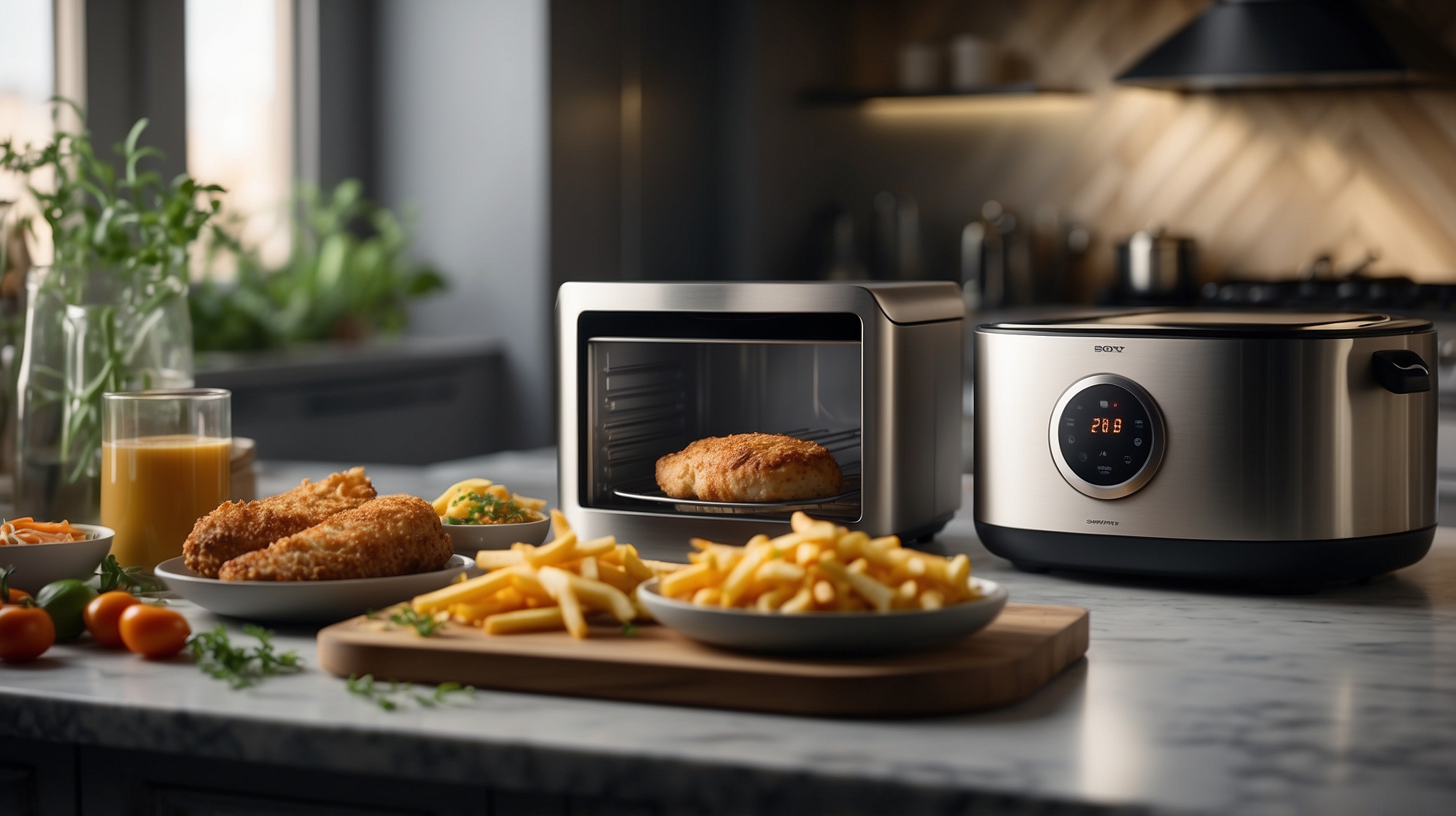
Once confined to trendy culinary corners and YouTube videos, the **air fryer** has surged into the mainstream — not just as a gimmicky gadget, but as a genuine alternative to the microwave. With consumer behavior tilting toward healthier, faster, and more efficient cooking, the air fryer is appearing in more kitchens, from college dorms to suburban households. As its popularity continues to skyrocket, many are beginning to question: Is this the beginning of the end for the microwave?
Unlike conventional microwaves that primarily reheat food by agitating water molecules, the air fryer uses convection heat — circulating hot air rapidly around food to create a crisp outer layer and juicy interior, offering a texture that microwaves simply can’t replicate. It’s this drastic improvement in texture and taste, coupled with ease-of-use and compact design, that has made air fryers a must-have appliance in 2024.
Why air fryers are becoming the go-to kitchen appliance
| Factor | Details |
|---|---|
| Popularity Surge | Over 40% increase in air fryer sales from last year alone |
| Health Benefits | Requires significantly less oil than traditional frying methods |
| Versatility | Cooks everything from frozen pizza to fresh salmon |
| Energy Efficiency | Uses less electricity compared to traditional ovens and microwaves |
| Consumer Preference | More than 60% of users prefer reheating in air fryers over microwaves |
How the air fryer edged out the microwave
For decades, the **microwave** was the undisputed king of quick meals. But with growing scrutiny around texture, nutritional quality, and even certain health concerns related to plastic containers and uneven heating, consumers began exploring alternatives. The air fryer, originally developed as a small convection oven, evolved quickly in both capacity and capability — able to cook a wide range of foods faster and with better texture retention.
Unlike microwaves, which can leave food soggy, the air fryer crisps with precision. It’s not just about fries and chicken wings anymore. Air fryers now handle compact baking, searing, roasting, and even dehydrating. Today’s user can roast vegetables for a salad or crisp up leftover pizza slices to their original delight — all without turning on an oven or stovetop.
“The modern consumer cares about texture and nutrition more than ever, and air fryers deliver on both fronts with minimal effort.”
— Jessica Winthrop, Kitchen Appliance Analyst
What changed this year
This year’s uptick in **air fryer popularity** isn’t just about aesthetics or novelty. Industry reports show that inflation and energy-conscious lifestyles have dramatically steered consumer interest away from energy-hog appliances like large ovens or even microwaves when not truly necessary. With rising utility costs, many households are using air fryers as their default appliance.
Additionally, manufacturers have been quick to respond to volatile market demands. Modern air fryers often come with multi-purpose settings, touch displays, and even app-controlled features — giving users not just convenient food, but a more **interactive cooking experience**. These tech-savvy updates are helping millennials and Gen Z home chefs adopt cooking habits that previously belonged to more seasoned kitchen veterans.
Health-conscious cooking made simple
Perhaps one of the air fryer’s greatest appeals is how it aligns with today’s **health-conscious lifestyle**. The appliance significantly reduces oil usage — up to 75% compared to deep frying — which translates to fewer calories and lower cholesterol levels. For families trying to cut back on processed foods, air fryers offer a way to cook meals from scratch more quickly and healthily.
Nutritionists are jumping on board too, advising clients to use air fryers for everything from veggies to proteins. Even traditionally fried comfort foods can be made in healthier versions using this appliance, offering an ideal solution for those seeking a balance between indulgence and nutrition.
“Air fryers are one of the few gadgets that make eating healthy easier rather than harder.”
— Dr. Samuel Greene, Registered Dietitian
Winners and losers in the appliance wars
| Winners | Why They’re Thriving |
|---|---|
| Air Fryer Manufacturers | Riding a massive wave of consumer demand and innovation |
| Health Advocates | Promoting oil-free, nutrient-rich meals with ease |
| Consumers | Gaining an efficient, versatile, and healthier tool for daily cooking |
| Losers | Why They’re Falling Behind |
| Microwave Brands | See falling sales due to lack of culinary versatility |
| Conventional Oven Usage | Consuming too much energy & time for small meals |
Consumer shift: from convenience to performance
The shift in appliance preference doesn’t mean that convenience is no longer key — it’s that convenience alone is no longer enough. Today’s home chefs want **performance** alongside speed. Air fryers deliver textures formerly available only via grilling, frying, or oven-roasting — and in half the time.
Social media plays a role here too. From TikTok recipes to Instagram reels, the air fryer is the culinary equivalent of having Wi-Fi — not a want, but a need. As more users demo their 15-minute salmon dishes or churro-coated raspberries, the air fryer has become not just an appliance, but a lifestyle statement.
Innovation driving long-term adoption
Brands have recognized that maintaining this momentum requires constant innovation. The newest models include **smart presets**, rotisserie attachments, and dual-basket systems that allow for cooking two different meals at once. One side can be set to roast veggies while the other air-fries chicken — both ready at the same time.
Such technologies foster important kitchen behaviors: planning, experimenting, and meal prepping. Parents are discovering that air fryers help them batch-cook school snacks; busy professionals appreciate the low cleanup; those with smaller kitchens revel in the appliance’s compact footprint.
Air fryers are here to stay
The boom in air fryer usage is more than just a fleeting trend. It’s a testament to a changing culinary landscape where efficiency, nutritional value, and user experience all matter. Markets are seeing a reshuffling of which appliances are considered staples in new homes, apartments, and even RVs.
For those still asking whether to buy an air fryer in 2024, the signs are overwhelming. Whether to replace a microwave or accompany it, the air fryer has carved out a permanent place on the kitchen counter — backed by consumer enthusiasm and culinary creativity.
Frequently Asked Questions
Is the air fryer really healthier than using a microwave?
Yes. Air fryers use significantly less oil than traditional cooking or frying methods, making meals lower in fat and calories. Microwaves don’t add fat, but they also don’t offer the same crisping effect that many associate with satisfying meals.
Can I completely replace my microwave with an air fryer?
It depends on your cooking habits. While the air fryer excels in reheating, roasting, and crisping, it doesn’t perform well with liquids or soft heating, such as warming beverages or soups — where microwaves still have an edge.
What types of meals work best in an air fryer?
Air fryers work well with vegetables, meats, frozen snacks, baked goods, and leftovers. Meals that benefit from a crispy or roasted finish are ideal candidates.
How much energy does an air fryer consume compared to a microwave?
Air fryers generally use less energy over time due to quicker cooking speeds and smaller power draw. However, exact consumption will vary depending on the model and usage.
Do air fryers take longer than microwaves?
Air fryers may take slightly longer than microwaves, especially during preheating. However, the improved texture and overall quality usually compensate for the minor time difference.
Is it safe to use aluminum foil or parchment paper in an air fryer?
Yes, both are safe if used correctly and do not block airflow. Always follow manufacturer guidelines to prevent fire hazards or overheating.
Are there any foods I shouldn’t cook in an air fryer?
Soupy or saucy dishes don’t work well due to convection cooking. Wet batters should also be avoided as they can drip and burn.
What size air fryer should I get for a family of four?
A model with at least a 6-quart capacity is recommended for families, allowing multiple items or batch cooking to be done efficiently.


