
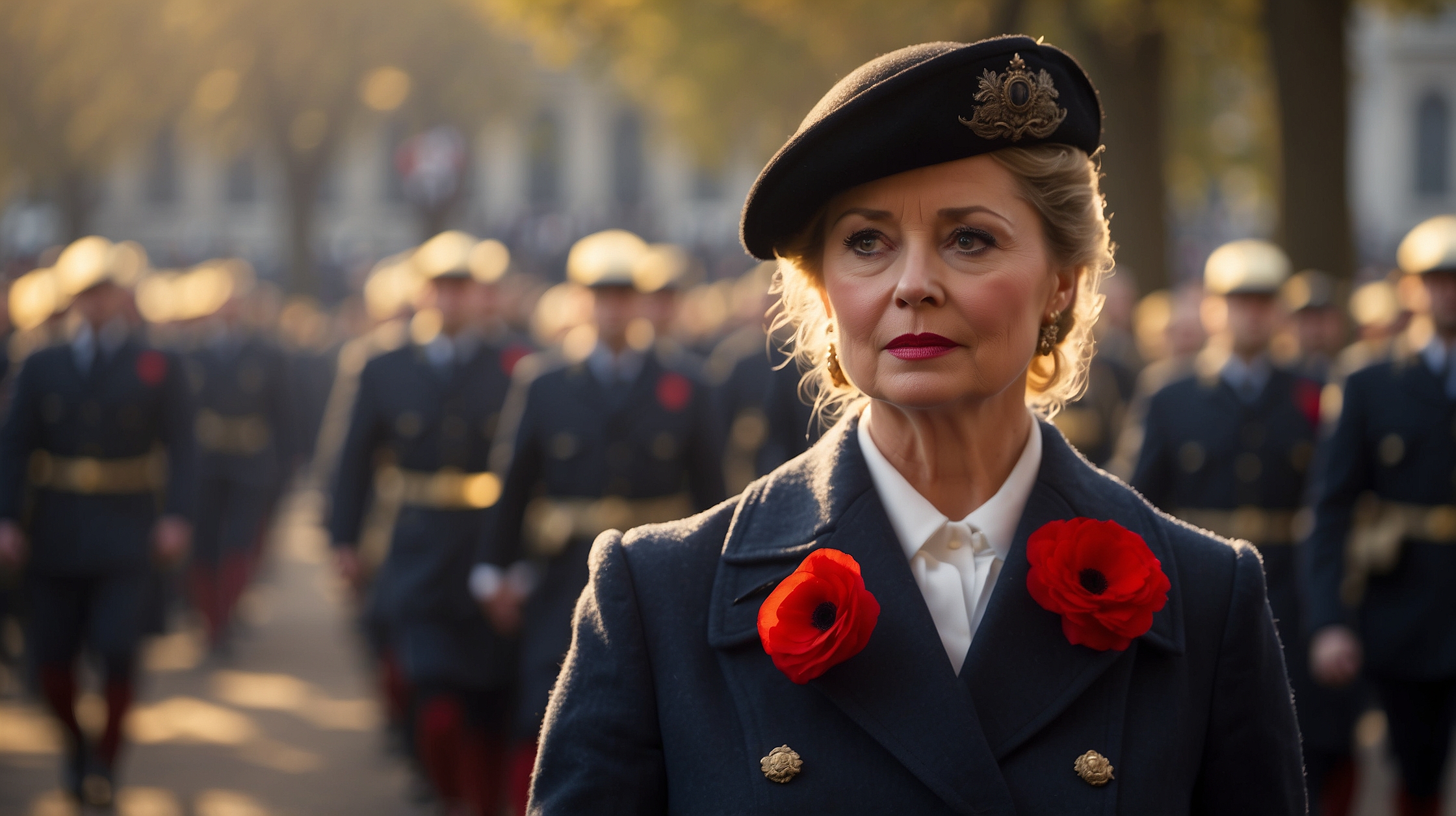
In a solemn and deeply traditional event such as the UK’s Remembrance Day service, every gesture, attire choice, and placement carries great weight and symbolism. That’s why when the Princess of Wales, Kate Middleton, made an unexpected decision during this year’s commemorations, royal watchers and protocol experts immediately took notice. Often praised for her poise and unwavering adherence to long-standing royal customs, **Kate’s subtle deviation from tradition at the Cenotaph ceremony has sparked both admiration and speculation**.
Onlookers from across the United Kingdom and around the globe were quick to point out that Kate’s lapel featured **three poppies instead of the usual single bloom**, conspicuously larger in arrangement than those worn in previous years. This move, while delicate and respectful, marked a notable departure from her otherwise meticulous adherence to protocol—prompting royal commentators and historians to dig into the meaning behind this choice, asking whether it was a personal tribute, a symbolic message, or part of an evolving role in the monarchy.
Key elements of Kate Middleton’s Remembrance Day gesture
| Aspect | Details |
|---|---|
| Event | Remembrance Day 2023 Cenotaph Ceremony |
| Gesture | Wore three poppies instead of one |
| Traditional Norm | Senior royals typically wear a single poppy bloom |
| Possible Symbolism | Personal tribute to fallen servicemen or family members |
| Public Reaction | Mixed – praised by many, questioned by others |
| Royal Commentary | Seen as reflective of her evolving role in monarchy |
What changed this year
Kensington Palace did not release an official statement regarding the **significance behind the change in Kate’s poppy display**, fueling widespread discussion among experts and spectators. In previous Remembrance Sundays, the Princess of Wales—much like Queen Elizabeth II before her—had chosen a simpler pin or brooch with a single red poppy, aligning closely with the royal family’s minimalistic tradition.
However, this year, her decision to wear **three distinct poppies**, accompanied by a black coat and wide-brim hat in complete sartorial reverence, marked a soft pivot in visual symbolism. Some royal commentators speculated that the change could be Kate’s way of paying tribute to three family members lost in the line of duty—although this has not been officially confirmed. Others suggested a broader gesture toward all fallen soldiers, adding depth to her ceremonial presence.
“It’s a quiet but powerful statement. In royal spheres, changes like this are rarely accidental. It’s possible the Princess is signaling a more personal investment in the history and future of Britain’s armed forces.”
— Emily Nash, Royal Correspondent
Symbolism of the poppy in British culture
The red poppy has long stood as a poignant symbol of remembrance in Great Britain. Inspired by the fields of Flanders where poppies grew on battlefields ravaged by World War I, the flower represents **the resilience of memory and honor**. By wearing it each year on Remembrance Sunday, citizens across the UK honor servicemen and women who laid down their lives in both world wars and more recent conflicts.
The Royal Family, as tradition dictates, always plays a leading role in Remembrance Day observances, with **Queen Elizabeth II long standing at the center of national mourning**, passing the torch in recent years to King Charles and the next generation. Kate Middleton’s evolving representation, marked by her new gesture, demonstrates how younger royals may continue this legacy while also reinventing its expression in subtle but modern ways.
Public and royal expert reactions
Following the ceremony, reactions across social media and among royal experts were diverse but predominantly positive. Many praised the Princess of Wales for injecting a **personal touch into a national ritual**, interpreting the gesture as refined and heartfelt. A select group, however, argued whether such deviations risk undermining the unity of visual traditions during state events.
“These gestures matter. Every lapel, every hat tilt communicates something. The Princess is undoubtedly aware of that, and I think she meant to say something meaningful.”
— Arthur Edwards, Royal Photographer
Interestingly, some believe that the gesture might have been strategically designed—both to honor fallen heroes and to subtly underscore her growing stature as a future Queen Consort. Royal watchers observed that **Kate has been increasingly taking on more visible and impactful roles** during key national ceremonies, a trend that illustrates deepening public trust in her ability to uphold and refresh royal duties.
Evolution of royal appearances on Remembrance Sunday
Over the past decade, there has been a noticeable **transition in the royal family’s approach to public memory and national mourning**. From Queen Elizabeth’s deeply stoic presence to King Charles’s slightly more emotive demeanor and William and Kate’s balance of grace and accessibility, Remembrance Day ceremonies have become more than just traditions—they are now platforms for generational storytelling and persona building.
Kate Middleton’s consistent composure, style, and message of unity have often made her the face of familial stability. Yet, this year’s change, minor though it may seem, casts her in a warmer, more dynamically engaged light—someone who is not only remembering history but **actively interpreting its meaning for today’s public**.
Historical precedence of poppy variations
This is not the first time a member of the royal family has adapted the way they wear the remembrance poppy. In previous years, the late Queen was seen wearing a bouquet of poppies too—though hers often indicated different military branches. Additionally, the **Queen Consort Camilla has worn brooches incorporating structural poppy designs**, signifying regimental affiliations.
Kate’s triple-poppy gesture may well fall in line with this evolving, personalized practice. But crucially, it coincides with a time when her **royal identity is being scrutinized and shaped for longevity**. As she undertakes more patronages and increases visibility during state matters, seemingly small decisions like these may mark milestones in her journey toward queenship.
Winners and losers of this subtle shift
| Winners | Why |
|---|---|
| Princess Kate | Demonstrated thoughtful leadership and personal connection |
| Royal Family | Gained renewed public engagement through modern symbolism |
| British Public | Received a more relatable, emotionally nuanced representation |
| Losers | Why |
| Protocol Traditionalists | Minor concerns about breaking visual continuity of royal practices |
Short FAQs
Why did Kate Middleton wear three poppies?
While unconfirmed, many speculate the three poppies represent either personal tributes to fallen family members or a broader gesture toward armed forces sacrifices.
Was this Kate’s first break from royal tradition?
No, but it’s one of the more visible and symbolic ones made during a highly watched event like Remembrance Day.
What do the red poppies symbolize?
They signify remembrance for British soldiers who died in wars, especially World War I and II, inspired by the poppies in Flanders Fields.
Do other royals wear multiple poppies?
Yes, Queen Elizabeth II and Queen Camilla have previously worn multiple or specially-designed poppy insignias.
What is the significance of Remembrance Sunday?
It is a national day of mourning and memory in the UK, held to honor the military personnel who died in wars and conflicts.
Will this become a new trend in the royal family?
It’s too early to say, but Kate’s gesture may open space for more personalized expressions through ceremonial attire in the future.
What role does Kate Middleton play on Remembrance Day?
As a senior royal, she represents the Crown in paying respects, participating in the service, and maintaining a solemn public presence.
Is there a difference between single and multiple poppy displays?
Yes, although not officially codified—single poppies are standard, while multiple may indicate a more personal or layered form of tribute.


