
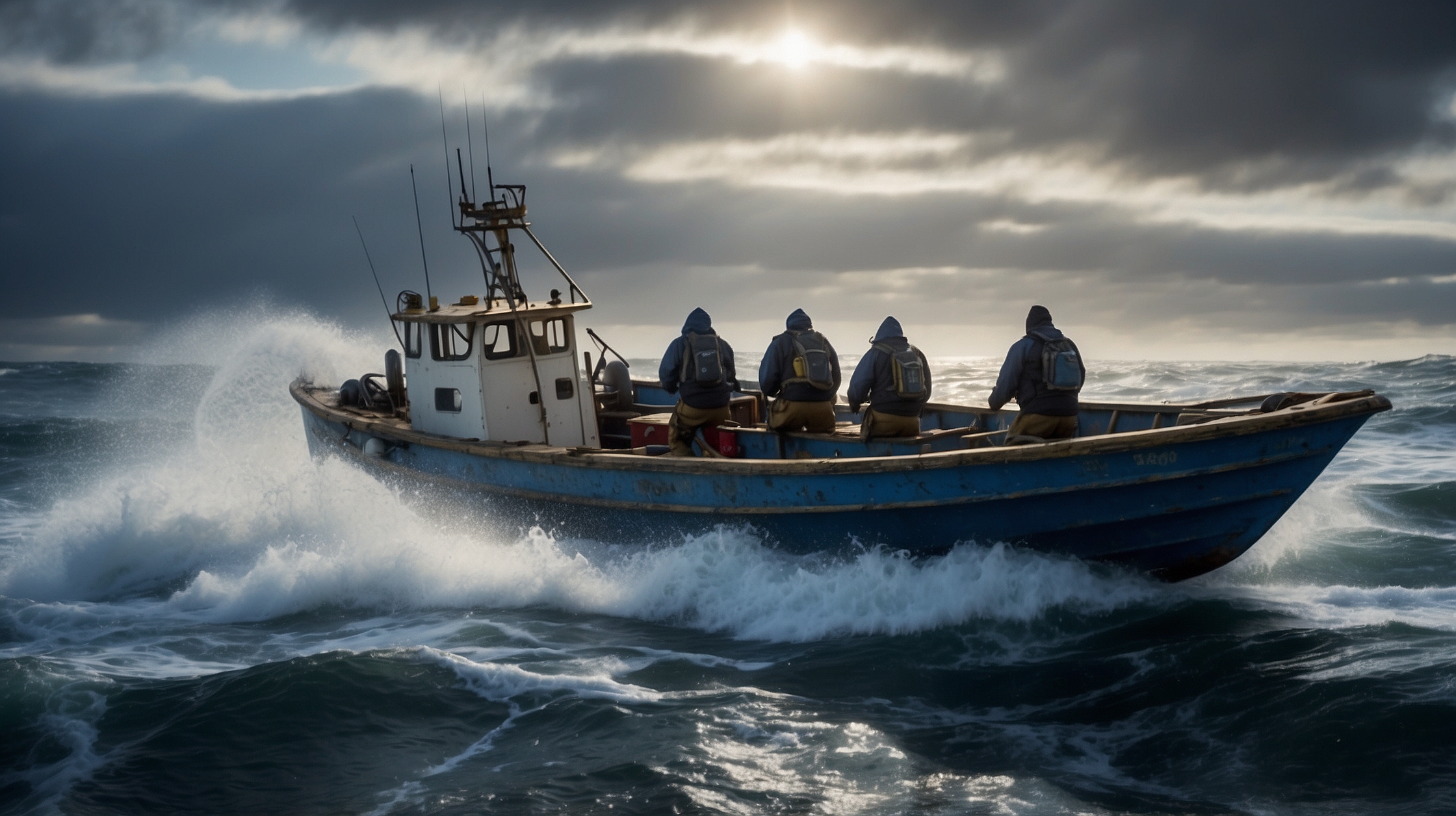
Off the coast of Hawaii, a group of local fishermen recently experienced a harrowing and highly unusual sequence of events in the open sea. Just moments after orcas surrounded their fishing boat, an unexpected twist unfolded: sharks appeared to bite through their anchor lines, disconnecting the vessel from its mooring and sending the crew into a defensive scramble. The rare interaction between two apex predators — orcas and sharks — and the vulnerable fishing boat has captured national attention and sparked new conversations among marine biologists, conservationists, and commercial fishers alike.
Wildlife encounters in the Pacific waters near Hawaii are nothing new, but the episode involving simultaneous orca activity and aggressive shark behavior is raising eyebrows in the marine science community. The incident, which took place in deep waters off the Hawaiian archipelago, sheds light on increasingly unpredictable animal behavior in areas where human activity, climate disturbances and food supply disruptions intersect. Could this be a sign of shifting ecosystems? And what are the risks for seafarers navigating these complex marine territories?
What we know so far about the Hawaii fishing boat incident
| Date of Incident | September 2023 |
| Location | Offshore Hawaiian waters |
| Involved Marine Life | Orcas, Sharks |
| Type of Fishing Vessel | Commercial longline tuna boat |
| Key Incident | Sharks bit through anchor lines after orcas appeared |
| Outcome | No human injuries; boat untethered |
Marine behavior becoming more unpredictable
The incident immediately sparked curiosity among local experts who see growing trends in unusual animal behaviors. Orcas, also known as killer whales, are not commonly observed in the region in such numbers or with such proximity to fishing vessels. More importantly, the coordinated timing — orcas encircling the boat followed by sharks biting through anchor lines — is not a behavior previously documented in Hawaii’s waters. It fuels a broader scientific inquiry into interspecies interaction and predator dynamics.
“Seeing both orcas and sharks engaging with the same boat within minutes of each other is highly unusual,” explained Dr. Leilani Koa, a marine biologist specializing in Pacific apex predators. “We don’t know yet if it was coincidence, competition, or possibly a sign that marine animal territories are shifting due to altered migration or resource patterns.”
Commercial fishermen sound alarm on safety risks
The fishermen who experienced the event say they were stationary and had barely dropped anchor when the orcas approached from multiple directions. Not long after, they reported aggressive tugs on the anchor lines, which were promptly bitten through by what they described as large sharks circling below the surface. The boat began to drift, and the crew scrambled to regain control.
Fishermen across Hawaii have long seen isolated shark attacks on equipment and fish cages, but the combination of orcas and sharks appearing in succession presents new challenges in assessing risk. These boats often anchor for hours while hauling longlines; being cut loose can send them adrift into dangerous currents or collision courses with other vessels.
Some scientists urge caution before drawing conclusions
While the fishermen’s account has been largely consistent and corroborated by GPS logs showing sudden movement after anchoring, marine experts caution against immediately interpreting the incident as a sign of coordinated predator behavior or increasing hostility toward humans. Still, they admit the convergence was extraordinary.
We have to study whether sharks were responding to chemical cues released by orcas or just reacting to the presence of the boat.
— Dr. Ethan Navarro, Oceanographer
One emerging theory suggests that the presence of both predators might be linked to dwindling food sources in deeper waters. Approximately 30% of pelagic fish populations in the Pacific are estimated to have declined in the past decade, prompting changes in feeding grounds and behavior that bring animals into closer contact with humans and each other.
Similar incidents hint at a potential trend
This is not the first time commercial fishermen have faced disruptions from marine life, but rarely have multiple predator species acted simultaneously. Earlier this summer, boats near the Aleutian islands reported similar occurrences involving damaged nets and broken anchor chains thought to be caused by large marine mammals. Although these reports are anecdotal, they indicate a potential pattern emerging in high-sea encounters.
Scientists now believe it’s necessary to track not just individual species movements, but also overlapping migration paths that could lead to spontaneous interactions like this one — particularly in areas of increased ocean current turbulence and commercial activity.
Could climate change be a contributing factor?
There is growing scientific consensus that climate fluctuations and warming ocean temperatures are disrupting marine ecosystems at nearly every trophic level. Warmer water layers drive fish stocks into cooler, deeper zones, which in turn forces predators — including sharks and orcas — to extend their search territories into human-frequented waters.
Additionally, coral bleaching and seaweed degradation through acidification shrink ecosystems for prey species, causing larger marine animals to venture into unfamiliar environments for sustenance. Disrupted migratory cues in orcas and stress-induced aggression in sharks are now being investigated as secondary consequences of climate-linked oceanic changes.
We’re seeing marine megafauna behave in erratic ways tied directly to the emotional and physical stress brought on by ecosystem breakdowns.
— Dr. Naveen Singh, Marine Ecologist
Resilience strategies for fishing crews
In response to the Hawaii incident, local fishing unions and regulatory bodies are collaborating on a set of voluntary safety recommendations. These include reinforced anchor lines, faster retrieval equipment in case of emergency, and improved sonar alert systems that detect unexpected marine activity within a 500-foot radius.
Government agencies are also looking into introducing adaptive training programs that prepare fishing crews for marine wildlife interactions. While such events are exceedingly rare, the recent incident highlights the need for better preparedness when navigating shared environments with large aquatic predators.
| Winners | Losers |
|---|---|
| Marine researchers (new behavioral data points) | Commercial fishermen (increased risks and costs) |
| Ocean safety equipment companies | Local fisheries (interrupted catch operations) |
| Policy advocates for marine conservation | Tourism-dependent diving expeditions |
Short FAQs about the Hawaii predator encounter
What triggered the shark attack on the anchor lines?
While experts are still investigating, the most likely explanation involves the sudden presence of orcas which may have caused a chain reaction among local shark populations, possibly driven by hunger or territory defense.
Are such multi-predator occurrences common in Hawaiian waters?
No, simultaneous appearances of sharks and orcas near human vessels are rare in this region. This makes the event particularly notable for both scientists and fishermen.
Was the fishing crew in immediate danger?
Fortunately, no injuries occurred, but the crew faced a potentially hazardous situation when their boat was detached from its anchor and set adrift unexpectedly.
Could this be a sign of increasing marine aggression?
Not necessarily. While the behavior was aggressive, many experts believe it reflects changing environmental pressures rather than increased hostility toward vessels or people.
Are there new safety protocols for such situations?
Authorities are working with fishery associations to develop stronger preventive measures, including advanced sonar systems and reinforced equipment to avoid similar future events.
What does this mean for local fishing businesses?
Increased unpredictability in marine life interactions may raise insurance costs, require gear upgrades, and lengthen fishing expeditions, all of which could financially impact smaller fleets.
Could orcas and sharks be coordinating in any way?
There is no conclusive evidence of coordination. While both are apex predators, their interactions are usually competitive, not collaborative.
Is there a larger ecological message in this incident?
Possibly. The event is a stark reminder of the complex ripple effects climate and ecosystem changes can have on both animal behavior and human industry at sea.


