
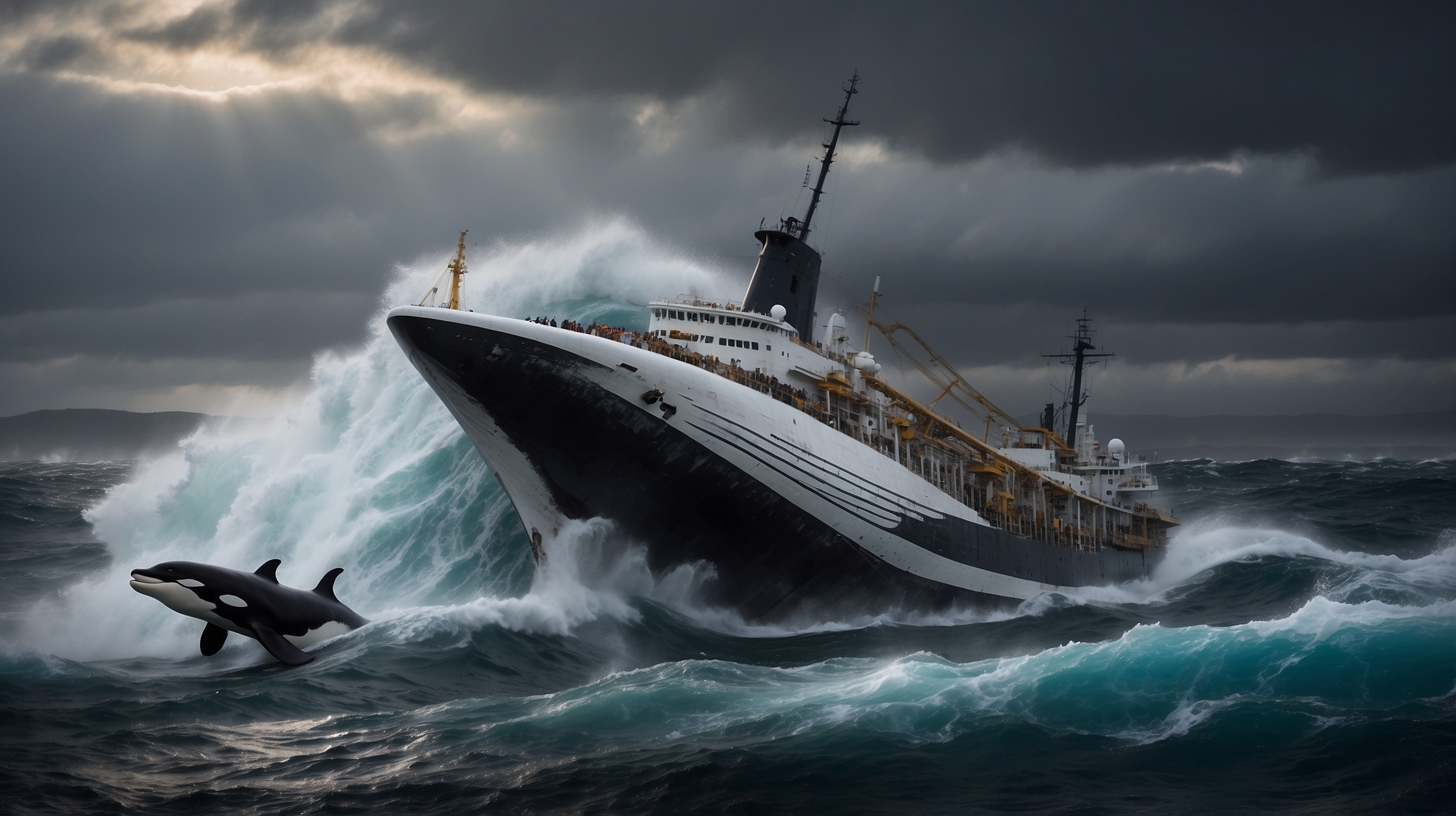
Unusual marine behavior has recently drawn global attention to the waters of the North Atlantic, where pods of orcas—also known as killer whales—have been coordinating attacks on commercial vessels. Experts and seafarers alike are raising the alarm as these sophisticated marine mammals persistently ram, damage, and even disable boats. The attacks suggest a level of intelligence and intent that goes beyond accidental encounters, heralding a possible shift in the dynamic between humans and apex creatures of the ocean.
The phenomenon, which has been observed near the coasts of Spain, Portugal, France, and now extending into the broader North Atlantic, raises fresh concerns about marine navigation, maritime safety, and ecological disruption. Scientists are racing to understand the motives behind these unprecedented incidents. Early data suggest the attacks are not random but appear orchestrated, involving strong communication and learning among the orcas themselves. It’s a maritime mystery placing researchers, military, and shipping companies on high alert.
North Atlantic orca incidents at a glance
| Topic | Details |
|---|---|
| Event | Coordinated orca attacks on commercial ships |
| Initial sightings | Off the coast of Spain and Portugal |
| Expansion zone | North Atlantic, including shipping routes to France and UK |
| Timeline | Incidents dramatically increased since mid-2022 |
| Targets | Sailboats, motorboats, and commercial vessels |
| Suspected cause | Social learning, possible trauma trigger, unclear motives |
What changed this year
While orcas have long been known as intelligent and socially complex predators, the scale and intent of the current spate of encounters mark a sharp departure from their usual behavior. Previously curious but non-aggressive around vessels, a subset of the Iberian orca population is now exhibiting hostile actions such as ramming boat hulls, biting or breaking rudders, and coordinating to trap boats.
The frequency and targeting pattern seem deliberate. Previously, such incidents would be considered one-offs or rare misjudgments by juvenile whales. Today, experts are tracking nearly 600 incidents reported across approximately 18 months – a surge dramatically higher than previously recorded.
How the orcas are coordinating attacks
Marine biologists point to signs of collaborative strategy among the orcas. Footage and damage reports suggest younger orcas initiate the interaction, followed by older, possibly more dominant individuals who intensify the effort. Boats often experience rudder damage, which immobilizes them, followed by persistent bumps, spins, or capsizing attempts.
The behavior appears to spread socially among groups, meaning orcas seem to be teaching each other—sharing knowledge about how to disable vessels. This kind of cultural transmission had only previously been documented among orcas when learning to hunt seals or synchronize during fish hunts.
“What we’re seeing is not isolated aggression—this is tactical behavior from highly intelligent animals.”
— Dr. Elena Rodriguez, Marine Biologist
Possible causes and behavioral theories
While the exact reasons behind this aggression remain unknown, several hypotheses are being considered. One popular theory suggests that one orca, possibly traumatized by a boat collision or fishing net injury, began attacking vessels and taught this behavior to peers as a reactionary defense mechanism. Given the orca’s ability to mimic, adapt and learn socially, such a trigger could cause cascading behavioral changes across generations of whales.
Other researchers propose the incidents may be a “fad”—a transient but socially viral behavior common in orca communities. However, the sustained and spreading nature of these incidents seems to contradict this interpretation.
“These attacks could signify frustration, curiosity, or even revenge. Until more data is collected, we are still speculating.”
— Prof. Henri Leclair, Oceanographic Institute of Brest
Impact on the maritime industry
The economic cost to the shipping and yachting industries is mounting. Damaged rudders and vessels translate into insurance claims, lost time, and rerouted journeys. Several shipping firms have advised navigating away from known orca zones, though this means longer and more expensive routes. For smaller vessels, the risk is especially dire as some have been fully immobilized at sea, demanding rescue operations.
| Winners | Losers |
|---|---|
| Marine researchers and tagging programs | Commercial shipping companies |
| Environmental awareness NGOs | Insurance firms covering marine fleets |
| Satellite technology developers | Yacht and leisure boat owners |
Military and government response
Some naval forces are evaluating the role of sonar and ship traffic noise in possibly triggering orca hostility. Governments are funding research to study orca communication and behavior patterns, deploying drones, tagging devices, and hydrophones to track changes. Maritime authorities have also introduced new hazard zones on nautical charts, warning mariners to modify travel plans accordingly.
“We are navigating uncharted waters. This is not just an environmental concern—it’s increasingly a naval safety issue.”
— Capt. Dario Estevez, Spanish Naval Liaison
The ecological and ethical dilemma
Just as maritime industries call for action, conservationists urge caution. Orcas are part of a fragile ecosystem, and any aggressive deterrent methods could worsen the problem or endanger their populations. The orcas involved are mostly from the endangered Iberian sub-population, which scientists are keen to monitor rather than confront.
In-depth scientific understanding, they argue, is the only way forward. By learning from the orcas’ communication, travel patterns, and group hierarchy, humans might be able to mitigate conflict zones and adjust naval behaviors to reduce provocations.
Outlook for shipping in affected regions
The maritime world is adapting. Shipbuilders are exploring reinforced rudder designs, sonar deterrents, and new hull compositions less detectable by orcas. Meanwhile, the yachting community is circulating navigation advisories and staying updated via satellite-tagged pod locations. With seasonal migrations expected, many fear the next wave of incidents will hit busier nautical months, peaking during summer cargo transits across the Atlantic.
“Our best approach now is coexistence based on intelligence—of both species.”
— Dr. Isla Moreno, Cetacean Behavior Research Institute
Frequently asked questions
Why are orcas attacking ships in the North Atlantic?
There is no definitive answer. The leading theories range from injury-induced trauma in one or more orcas, manifesting as defensive behavior, to social learning of disruptive “games” targeting rudders.
How widespread are the orca attacks?
Over 500 incidents have been catalogued since 2022, with most occurring near the Iberian and French coasts but spreading into wider Atlantic commercial routes.
Are these attacks dangerous for humans?
No fatalities have been reported. However, ships have been seriously damaged, and some passengers required mid-sea rescues after loss of rudder control.
Can orcas be deterred with noise or sonar?
There is experimental use of acoustic deterrents, but they risk disturbing or harming other marine life, complicating legal and ethical usage.
Are all orcas involved in these incidents?
No. Only a subset of the Iberian orcas are involved, but they have influenced several pods through social behavior and learning.
What can sailors do to avoid these encounters?
They are advised to check maritime advisories, avoid known hot zones, reduce speeds in high-risk areas, and report all incidents to marine authorities immediately.
Could climate change be a factor?
It’s possible. Environmental stressors—from warming waters to reduced fish stocks—might be disrupting orca food supplies and navigation, leading to unusual behavior.
Is this behavior permanent?
Unknown. Scientists stress a need for continuous monitoring and hope the altered behavior can reverse, especially with de-escalation tactics and scientific cooperation.


