
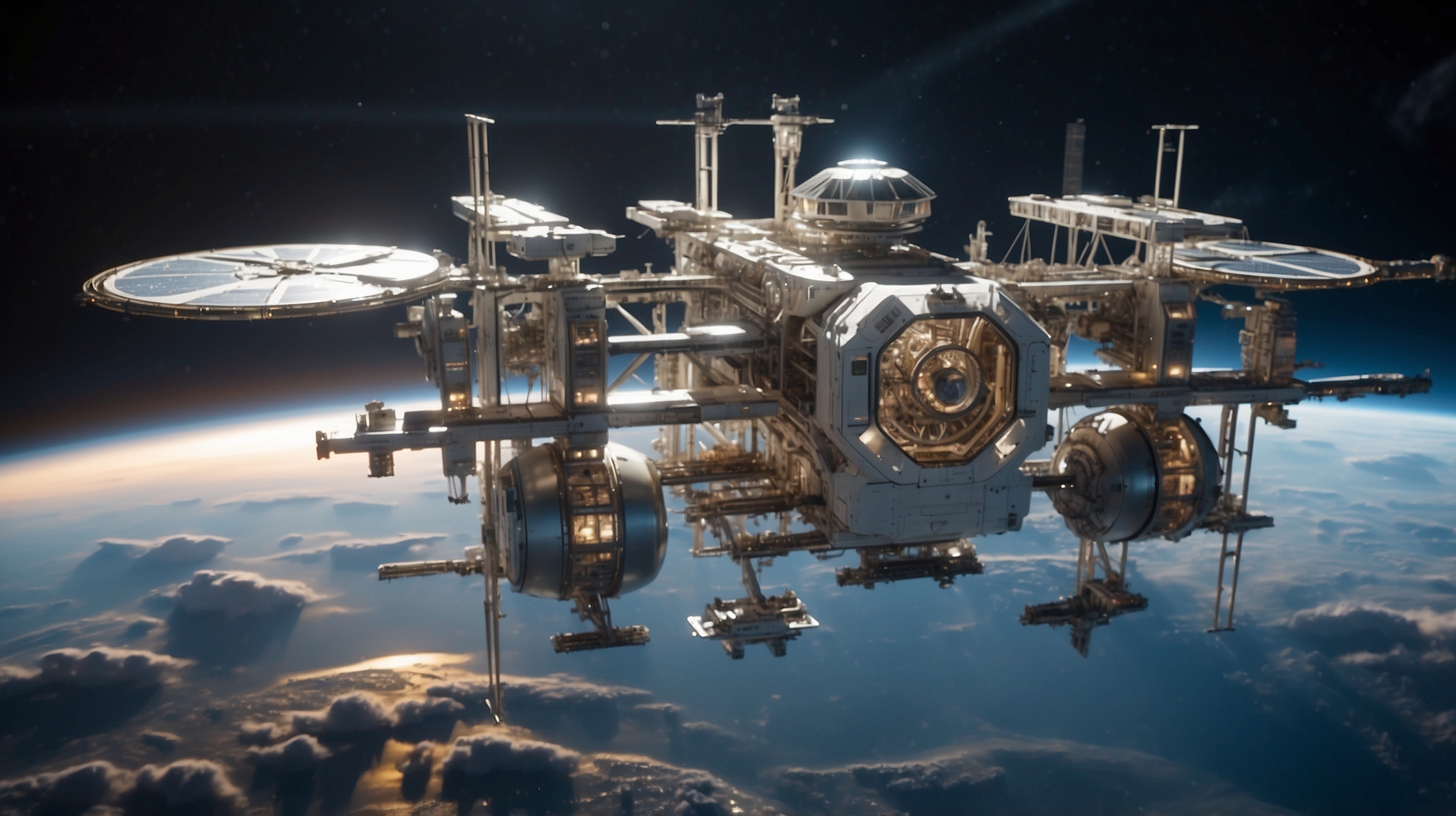
NASA has confirmed its intent to retire the International Space Station (ISS) by the year 2030, marking the end of an era in low Earth orbit (LEO). After more than two decades of groundbreaking science, international cooperation, and engineering ingenuity, the station will make its final descent into Earth’s atmosphere, with plans to crash into a remote area of the Pacific Ocean known as Point Nemo. This bold move signifies more than just the end of an orbital laboratory — it initiates a new chapter in commercial space activity as NASA transitions from primary operator to influential customer of new LEO destinations.
The retirement plan for the ISS is emblematic of a broader transformation in space strategy. Rather than continue investing billions into maintaining the aging infrastructure, NASA is turning toward the emerging commercial space sector. This pivot aims to create a sustainable ecosystem in low Earth orbit where privately owned and operated space stations take over many functions the ISS once held — including scientific research, international collaboration, and even tourism. For proponents of space commercialization, this is a watershed moment that could unlock economic opportunities both on and off-planet.
Key information about the ISS retirement and plans forward
| Event | Details |
|---|---|
| ISS Retirement Year | 2030 |
| Planned Deorbit Location | Point Nemo, South Pacific Ocean |
| Replacement Strategy | Privately owned commercial space stations |
| Operators Involved | NASA, Blue Origin, Voyager Space, Northrop Grumman, Axiom Space |
| Goal of Transition | Reduce costs, promote innovation, support LEO economy |
| Key Timeline | 2024–2028: Commercial habitat testing; 2030: ISS deorbit |
What changed this year in NASA’s ISS strategy
The decision to definitively schedule the retirement of the ISS by 2030 was driven in part by the platform’s aging components and increasing maintenance costs. Originally launched in 1998, the ISS was only expected to function for 15 years. However, thanks to regular funding and robust international partnerships, the orbiting laboratory has remained viable into its third decade.
In 2024, NASA formally outlined a budget and transition plan included in its International Space Station Transition Report. This document highlighted key challenges such as metal fatigue, microfractures, and the continued need for costly resupply missions. By shifting its strategy, NASA aims to avoid a potential funding bottleneck while embracing a more sustainable future in commercial LEO operations.
How commercial space stations will fill the void
NASA’s Commercial LEO Destinations (CLD) program is already in motion, having awarded contracts to companies developing next-generation orbital platforms. These include efforts like:
- Axiom Station: A modular station set to launch its first segment in the late 2020s, eventually detaching and operating independently.
- Orbital Reef: A research and hospitality station backed by Blue Origin and Sierra Space, designed as a “mixed-use business park.”
- Starlab: A single-launch platform under development by Voyager Space and Airbus, aimed at scientific and industrial use.
These commercial stations are anticipated to be in orbit and operational before the ISS is officially retired, minimizing disruption to ongoing research and international collaborations.
We’re making this transition to ensure continuous U.S. presence in low Earth orbit and foster the commercial markets of tomorrow.
— Phil McAlister, Director of Commercial Spaceflight, NASA
Why the retirement matters for science and industry
While the ISS has hosted more than 3,000 scientific experiments over its lifespan, the heavy cost and logistics of keeping it running now pose a risk to future exploration missions. NASA wants to redirect its focus — and funding — toward deep-space projects, such as Artemis missions to the Moon and crewed missions to Mars. Letting commercial providers handle LEO infrastructure could free up billions of dollars for those initiatives.
Industry leaders in biotech, materials science, ag tech, and pharmaceuticals have all voiced strong interest in continuing their work in microgravity. With more flexible and potentially cost-effective platforms coming online, commercial space stations could offer more personalized access and new types of facilities tailored for specific industries.
For science, this isn’t an end — it’s an evolution. The next generation of platforms will allow more researchers than ever to access microgravity labs.
— Dr. Janet Kavandi, Former NASA Astronaut & Sierra Space Executive
Who stands to benefit and who may lose out
| Winners | Losers |
|---|---|
| Commercial space companies | Government-funded ISS contractors |
| Private researchers and startups | Nations with limited space budgets |
| NASA deep-space mission funding | Some existing ISS research continuity |
| Space tourism and hospitality industry | ISS public education outreach |
The technical challenge of bringing the ISS down
Deorbiting one of the most massive objects ever launched into space is far from simple. The collective modules, solar panels, and structure weigh over 400 metric tons. NASA’s current plan is to use a combination of thrusters, robotic assistance, and controlled guidance to steer the ISS safely into Earth’s atmosphere.
The target site — Point Nemo in the South Pacific Ocean — is often called the “spacecraft graveyard.” It’s the farthest point from land and populated areas, making it the safest location for large debris to fall. Similar procedures were used in the past for Mir and other orbital structures, though none as large as the ISS.
International collaboration after the ISS
The ISS has long stood as a monument to peaceful global cooperation. Partners include the United States, Russia, Japan, Canada, and the European Space Agency. As each country weighs its participation in upcoming commercial projects, questions arise over future cooperation frameworks.
Some nations, such as Japan and the EU, have signaled interest in continuing their research efforts through partnerships with commercial providers. Russia, however, is charting a divergent path by focusing on development of its own independent station. These differing trajectories may redefine the contours of space diplomacy in the years ahead.
What this means for future generations
While the ISS’s retirement marks the end of one epoch, it also clears the path for a democratized next chapter. With commercial stations promising access to a more diverse array of participants — from educational institutions to small nations and private citizens — space is becoming an increasingly open frontier.
Humanity’s presence in space is shifting from experimental government-first propositions to more inclusive and economically viable ventures. The baton has now passed to entrepreneurial visionaries with bold aims — and perhaps bigger budgets.
The ISS was our gateway, our lab, and our home. Its legacy sets the stage for a more accessible and commercial era in orbit.
— Placeholder, Future Astronaut or ISS Program Veteran
Short FAQs about the retirement of the ISS
Why is NASA retiring the ISS?
The aging station is increasingly expensive to maintain. NASA wants to redirect funds to deep-space missions while enabling commercial operators to take over activities in low Earth orbit.
When exactly will the ISS be deorbited?
The ISS is scheduled to be deorbited in 2030, with a controlled crash into the Pacific Ocean.
What will happen to astronauts during the transition?
NASA plans to train and place astronauts aboard the new commercial space stations as they come online, ensuring continuity of space presence.
Are other space agencies involved in post-ISS planning?
Yes, agencies like ESA and JAXA are exploring partnerships with commercial space stations. Russia may pursue its own independent platform.
Will research in space continue after the ISS?
Yes, research is expected to expand as private stations offer more varied environments and easier access for private and academic users.
Is there risk in bringing down such a large structure?
There are risks, but NASA has selected a remote area for reentry and will use precise technology to ensure a controlled descent with minimal impact.
How can private companies build and profit from space stations?
Companies receive NASA support during development through grants and expertise. Profit will come from research partnerships, commercial leases, and even tourism.


