
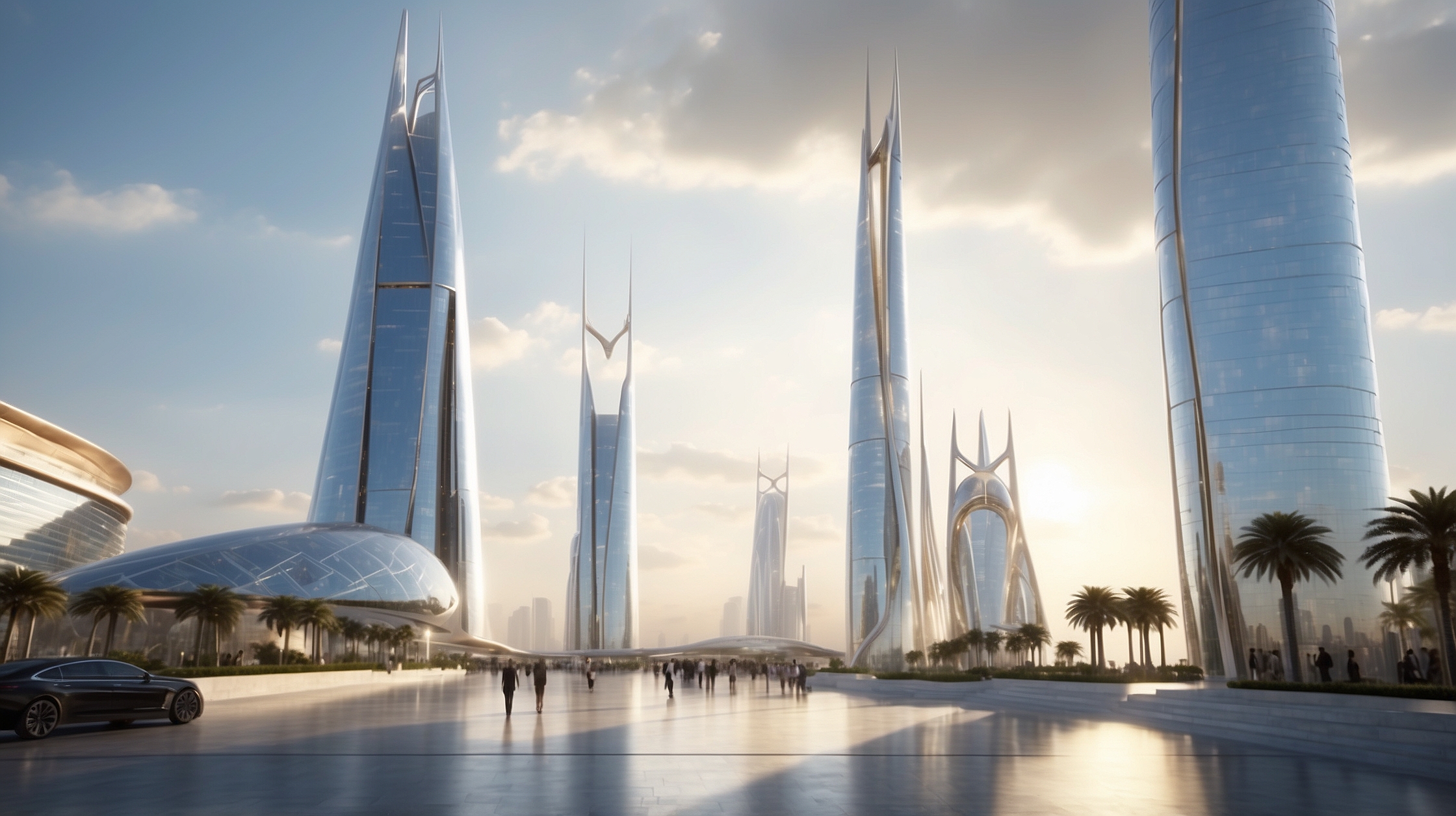
In an ambitious leap that aims to redefine the skyline of the Middle East, Saudi Arabia is reportedly gearing up to construct a skyscraper that will soar beyond 1,000 meters in height—overtaking Dubai’s iconic Burj Khalifa as the tallest building in the world. The project, which is still in preliminary planning stages, demonstrates Saudi Arabia’s intensified push to diversify its economy and cement its status as a global destination for tourism, innovation, and futuristic city planning.
Sources familiar with the matter reveal that the proposed skyscraper is intended to reside within Riyadh’s expanding urban perimeter. It marks a significant architectural and geopolitical statement for the Kingdom, which has already stunned global audiences with its vision for NEOM, The Line, and other mega-developments under the Saudi Vision 2030 initiative. This new project, if realized, could change not only the city’s skyline but the dynamics of urban competition in the Gulf region and beyond.
While the Burj Khalifa has long stood as the benchmark of modern engineering prowess and architectural height, Saudi Arabia’s new proposal signals a bold desire to ascend even higher—both literally and figuratively. Officials are keeping most of the details under wraps, but with initial construction cost estimates reportedly reaching $5 billion, it’s clear that this is no ordinary tower. It’s a monumental piece of Saudi Arabia’s long-term ambition to become a hub of futuristic mega-infrastructure and economic transformation.
Overview of Saudi Arabia’s 1km Skyscraper Plan
| Project Name | Unnamed Saudi Super-Tall Skyscraper |
| Proposed Location | Riyadh, Saudi Arabia |
| Proposed Height | Over 1,000 meters (1 km) |
| Est. Cost | $5 Billion |
| Developer | Public Investment Fund (PIF) – Reportedly |
| Status | Proposal / Initial Planning |
| Estimated Timeline | To be announced |
Milestone ambition for Saudi Arabia
The proposed skyscraper joins a growing list of giga-projects championed by Saudi Arabia’s Public Investment Fund (PIF), which is overseeing an array of futuristic developments as part of Crown Prince Mohammed bin Salman’s ambitious Vision 2030. This new tower is anticipated to not only shatter architectural records but to also symbolize national progress, technological advancement, and economic diversification in a post-oil world.
“This isn’t just about height; it’s about legacy,” an urban planning expert familiar with Gulf developments commented. “Saudi Arabia wants to show what’s possible when you marry heritage with hyper-modern ambition.”
This project could set a new global benchmark for vertical cities and integrated, future-ready infrastructure.
— Placeholder Expert, Urban Development Analyst
Unlike previous high-rise projects limited in mixed-use capacity, Saudi’s proposed skyscraper is expected to host commercial, residential, entertainment, and public spaces—effectively forming a vertical city. From luxury suites and retail zones to smart offices and tourism facilities, the building aims to pack voluminous utility into a vertical stretch that touches the sky.
A regional power play
The looming contest with the Burj Khalifa in neighboring UAE is inevitable. While Dubai’s record-setting skyscraper has reigned for over a decade, Saudi Arabia’s new vision could shift regional developmental prestige. With Riyadh pushing to position itself as a modern capital to rival New York or Shanghai, constructing the world’s tallest building is as symbolic as it is strategic.
The broader implications also extend into attracting foreign investment and bolstering non-oil sectors like tourism, real estate, and technology. This aligns with Saudi’s economic strategy to pivot from hydrocarbons to a diversified portfolio of global industries before the end of the decade.
Building taller is a massive statement of intent—about confidence, capability, and competition.
— Placeholder Expert, Middle East Geoeconomics Researcher
Engineering challenges and innovation opportunities
Building a structure that surpasses 1,000 meters is no mere architectural flourish—it involves rethinking conventional engineering protocols. Structural integrity under wind pressure, temperature variations, vertical transportation logistics, and sustainable energy usage are just some of the challenges that need to be addressed.
Developers are expected to use cutting-edge materials and smart technologies, possibly including carbon-reinforced concrete, AI-integrated climate management systems, and magnetic levitation elevators. These innovations are not just necessary—they will likely define the next era of skyscraper engineering globally.
Environmental sustainability also remains central to the project’s ethos. As part of Vision 2030, the Kingdom is aiming for eco-conscious building practices, including renewable energy sourcing, water conservation systems, and optimized waste management within the tower’s infrastructure.
Financing the vertical fantasy
With an estimated cost of $5 billion, the skyscraper will require significant capital. While the Public Investment Fund is expected to bankroll the majority of the project, opportunities for global partnerships with construction titans, architectural firms, and tech companies are likely. Strategic collaborations could accelerate progress and infuse the project with diverse expertise.
Saudi Arabia’s expanding sovereign wealth base, combined with revenues from incremental tourism and real estate development, is projected to sustain such high-stakes ventures. However, external observers will be closely watching how budget adherence and milestone tracking are maintained over what could be a decade-long timeline.
Could it surpass the Jeddah Tower?
Ironically, Saudi Arabia already holds ambitions for a 1km+ building: the long-stalled Jeddah Tower. Initially intended to break the same record, Jeddah Tower’s construction has been on hold since 2018 due to delays and financial issues. This leaves the door open for Riyadh’s new project to seize the crown.
Market analysts argue that this re-energized push for a new world’s tallest structure might reflect a learning curve from past setbacks. It presents a symbolic moment of resurgence—doubling down on engineering capability while selectively avoiding earlier administrative pitfalls.
The new skyscraper in Riyadh may be born from the lessons of the Jeddah Tower. It’s Saudi 2.0 in vertical ambition.
— Placeholder Expert, Global Infrastructure Analyst
Winners and losers from the looming skyscraper race
| Winners | Losers |
|---|---|
| Saudi Arabia’s real estate and tourism sectors | Dubai’s monopoly on record-breaking architecture |
| Construction and engineering firms | Jeddah Tower’s viability |
| Saudi Vision 2030 agenda | Environmental critics (if sustainability not addressed) |
| Global architecture and technology innovators | Traditional urban centers |
Next steps and expected announcements
As of now, the tower remains in its conceptual phase. Future updates are expected regarding contractor assignments, architectural design reveals, and ground-breaking ceremony timelines. The industry—and the world—will be keeping a watchful eye as Riyadh enters the stratospheric race.
In the coming months, look for feasibility reports, environmental impact disclosures, and public-private partnership announcements that will shape the skyscraper’s foundation, both literally and figuratively.
Frequently Asked Questions (FAQs)
Where will the new Saudi skyscraper be located?
The tower is reportedly set to be constructed in or near Riyadh, Saudi Arabia’s capital city.
How tall is the proposed skyscraper?
The building is planned to exceed 1,000 meters, making it the world’s tallest if completed.
Who is financing the project?
Initial financing is expected to come from Saudi Arabia’s Public Investment Fund, with potential for international partnerships.
When will construction begin?
No official groundbreaking date has been announced. The project remains in early planning stages.
What will the skyscraper contain?
The building is anticipated to include residential, commercial, entertainment, and public spaces across mixed-use vertical zones.
Will the skyscraper be environmentally sustainable?
Sustainability is expected to be part of the design, but exact ESG strategies are yet to be detailed.
Is this different from the Jeddah Tower?
Yes. The new tower is a separate initiative located in Riyadh, whereas the Jeddah Tower is an earlier stalled project located in Jeddah.
How does this impact the Burj Khalifa’s status?
If built to scale, this tower would dethrone Dubai’s Burj Khalifa as the tallest building in the world.


