
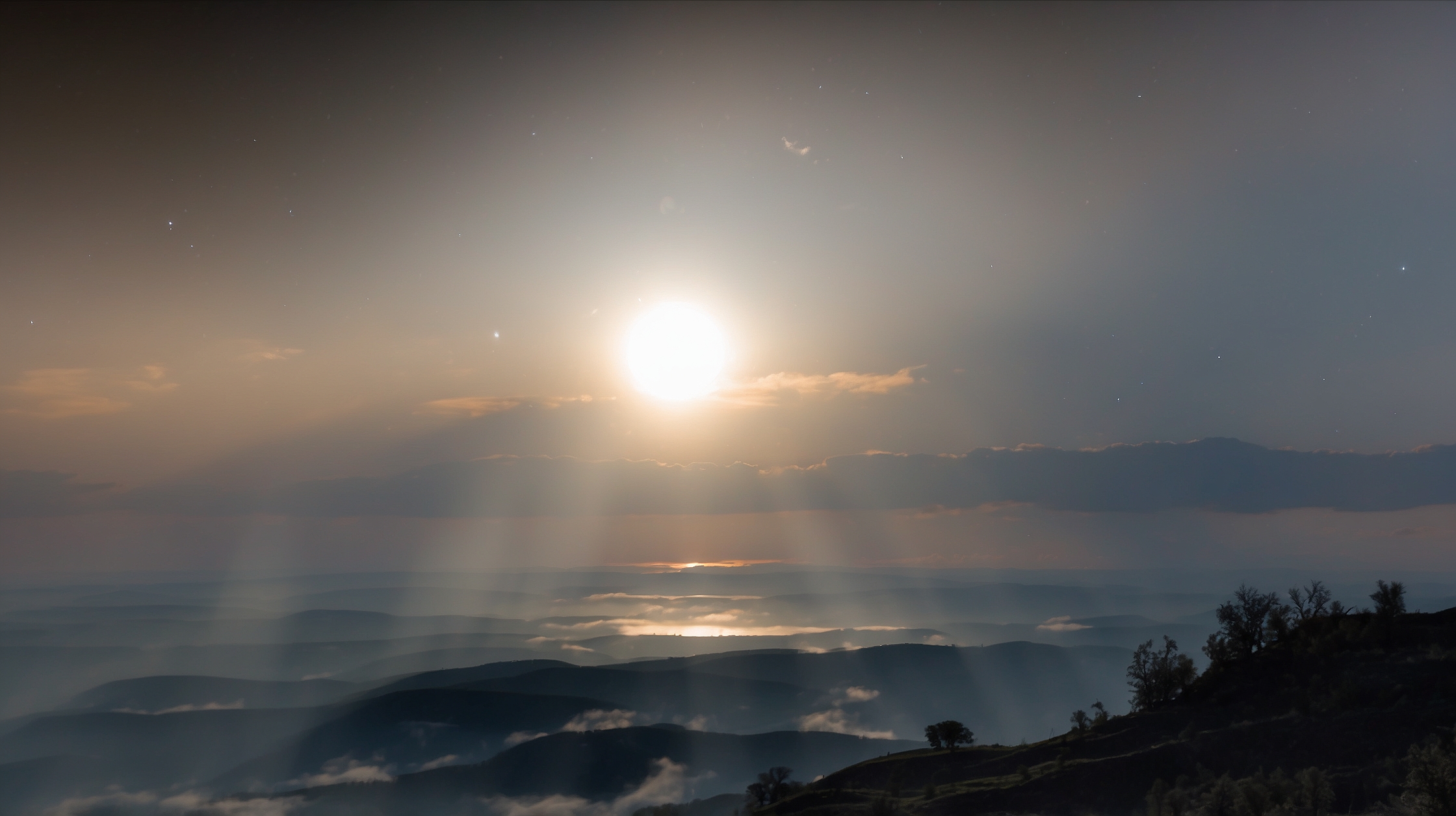
Get ready to witness an unforgettable celestial phenomenon — the **longest solar eclipse of the century** is set to take place, and it promises a moment unlike any other. For several minutes, the sky will darken in what could appear almost like a false night, bringing awe and scientific curiosity to the millions poised to experience it. This rare astronomical event is not just a visual spectacle but a milestone in our century’s space observation calendar.
Solar eclipses have been studied and celebrated across cultures for thousands of years. But this one is truly exceptional — not only because of its duration, but because of the regions it will sweep over, the clarity expected in visibility, and the scientific opportunities it presents. If you’ve ever wanted to witness nature’s most majestic shadow play, *now is the time to prepare*. Let’s break down everything you need to know, from timing and location to what to expect during those eerie minutes when the sun disappears.
Key facts about the century’s longest solar eclipse
| Event | Longest solar eclipse of the 21st century |
| Date | August 2, 2027 |
| Type | Total solar eclipse |
| Maximum Duration | 6 minutes and 23 seconds |
| Regions Affected | Northern Africa, Middle East, parts of Europe |
| Best Viewing Spots | Egypt, Saudi Arabia, Libya, Morocco |
| Estimated Viewership | Over 250 million people |
Why this eclipse is historic
While solar eclipses happen every one to two years somewhere on Earth, **a total eclipse with a duration exceeding six minutes is extremely rare**. On **August 2, 2027**, the Moon will pass directly in front of the Sun in a perfect alignment with Earth, casting a shadow onto the planet’s surface that will result in over **6 minutes of total darkness** in certain regions — the longest such duration this century.
What makes this eclipse even more significant is the combination of its **path across densely populated and culturally iconic regions** and the fact that it offers **one of the most optimal opportunities for observation and study**. Scientists are already gearing up to deploy solar observatories, atmospheric sensors, and shadow trackers during the event.
What changed this year to create the optimum conditions
Several celestial mechanics converge to make a solar eclipse not only possible but extended in duration. The distance between Earth and the Moon, Earth’s position in its orbit, and the Moon’s trajectory all affect an eclipse’s length. During this particular event:
- The Earth will be near **aphelion**, the farthest point from the Sun, making the solar disk appear slightly smaller.
- The Moon will be near **perigee**, its closest approach to Earth, allowing it to cover more of the Sun’s surface.
- The eclipse path falls largely over areas where **weather conditions are optimal for sky visibility** in August, which is vital for full viewing.
Together, these factors contribute to a prolonged eclipse experience, totaling **6 minutes and 23 seconds** at its peak near the Egyptian coast — the longest totality since July 2009 and unmatched until June 2150.
Where to watch and what to expect
Those in the **path of totality** will be treated to the full phenomenon — a darkened sky, cooler air, the sudden appearance of stars, and the surreal solar corona encircling the moon. Among the best places to experience the eclipse are:
- Luxor, Egypt – Expected to be a hot spot for astronomers and tourists, with over 6 minutes of totality
- Jeddah, Saudi Arabia – Offering coastal views and well-developed infrastructure for eclipse tourism
- Benghazi, Libya – Providing excellent atmospheric clarity during the eclipse
**Protective eyewear** is essential for every phase except during the mere minutes of totality, when the Sun is completely blocked. Public observatories and museums are also planning to host viewing events with telescopes and expert commentary. Major cities and nations in the eclipse’s path are preparing for an influx of visitors seeking to capture the moment.
Scientific value and research opportunities
The 2027 eclipse presents a **major opportunity for solar science**. Researchers plan to use state-of-the-art equipment to study the Sun’s outer corona, magnetic field anomalies, and even the effects of sudden darkness on plant and animal life. Scientists will also monitor temperature drops, wind behavior, and radiation variations in real time.
“The duration and visibility spectrum of the 2027 eclipse allow for extended and more comprehensive observation of the solar corona than we’ve had in decades.”
— Dr. Alina Romero, Astrophysicist
One of the key areas of focus will be the corona — the brilliant outer ring of the Sun that becomes visible only during totality. Understanding its structure and behavior helps us learn more about solar winds, space weather, and potential impacts on Earth-based technologies.
How governments and advisory groups are preparing
Recognizing the historic scale of this event, **governments in the Middle East and North Africa** have begun rolling out strategic plans to support public safety, educational outreach, and tourism initiatives. Mobile alerts, public service announcements, and availability of eclipse glasses are part of the preparations.
Local schools and universities are also integrating the event into curricular activities, promoting both **STEM education and cultural heritage** tied to celestial phenomena. Museums, planetariums, and cultural centers are organizing conferences, exhibitions, and real-time broadcasts for global audiences.
“We are combining science, tourism, and education to make this not just an event, but a legacy.”
— Fatima Najjar, Cultural Affairs Director, Egypt Ministry of Tourism
Travel tips for eclipse chasers
If you’re planning to travel to witness the eclipse, it’s important to **book accommodations and transport early**, especially in high-demand locations like Luxor or southern Spain, which fall on the outer edge of the eclipse path. Consider:
- Booking eclipse-specific tour packages, many of which include expert commentary
- Checking weather predictions and historical visibility trends when choosing a location
- Carrying ISO-certified eclipse glasses and a camera with solar filters
“With an event this rare, early planning is everything. Don’t underestimate how fast prime viewing spots will fill up.”
— Omar Latif, Eclipse Travel Consultant
Some regions may experience temporary spikes in travel and lodging prices as the date approaches, so flexibility and foresight are crucial for making the most of this once-in-a-century event.
Winners and losers
| Winners | Losers |
|---|---|
| Amateur astronomers | People outside visible range |
| Middle East tourism | Cloudy or rainy regions |
| Solar researchers | Late planners for travel |
Frequently asked questions about the 2027 solar eclipse
How long will the 2027 eclipse last?
The eclipse will last up to **6 minutes and 23 seconds** at its peak, making it the longest total solar eclipse of the 21st century.
Which countries will be able to see the full eclipse?
Countries under the path of totality include **Egypt, Libya, Sudan, Saudi Arabia, and parts of Spain and Morocco**.
Is it safe to look at the eclipse without glasses?
No. You must wear **ISO-certified eclipse glasses** during all phases except the brief moment of totality.
What makes this eclipse longer than others?
The Moon will be at its closest point to Earth while the Earth is farthest from the Sun, maximizing the Moon’s apparent size compared to the Sun.
Can I watch the eclipse online?
Yes, many observatories and institutions will be broadcasting the eclipse, but watching it in person offers a far more immersive experience.
When was the last time an eclipse lasted this long?
The last solar eclipse of comparable duration occurred in **July 2009**, lasting around 6 minutes and 39 seconds at peak.
What are scientists hoping to learn?
They aim to study the **solar corona**, magnetic fields, atmospheric reactions, and more — gaining insights into space weather.
Is travel expected to be affected?
Yes, regions in the eclipse path may see **increased travel demand**, especially in cities like Luxor, where eclipse tourism is strong.


