
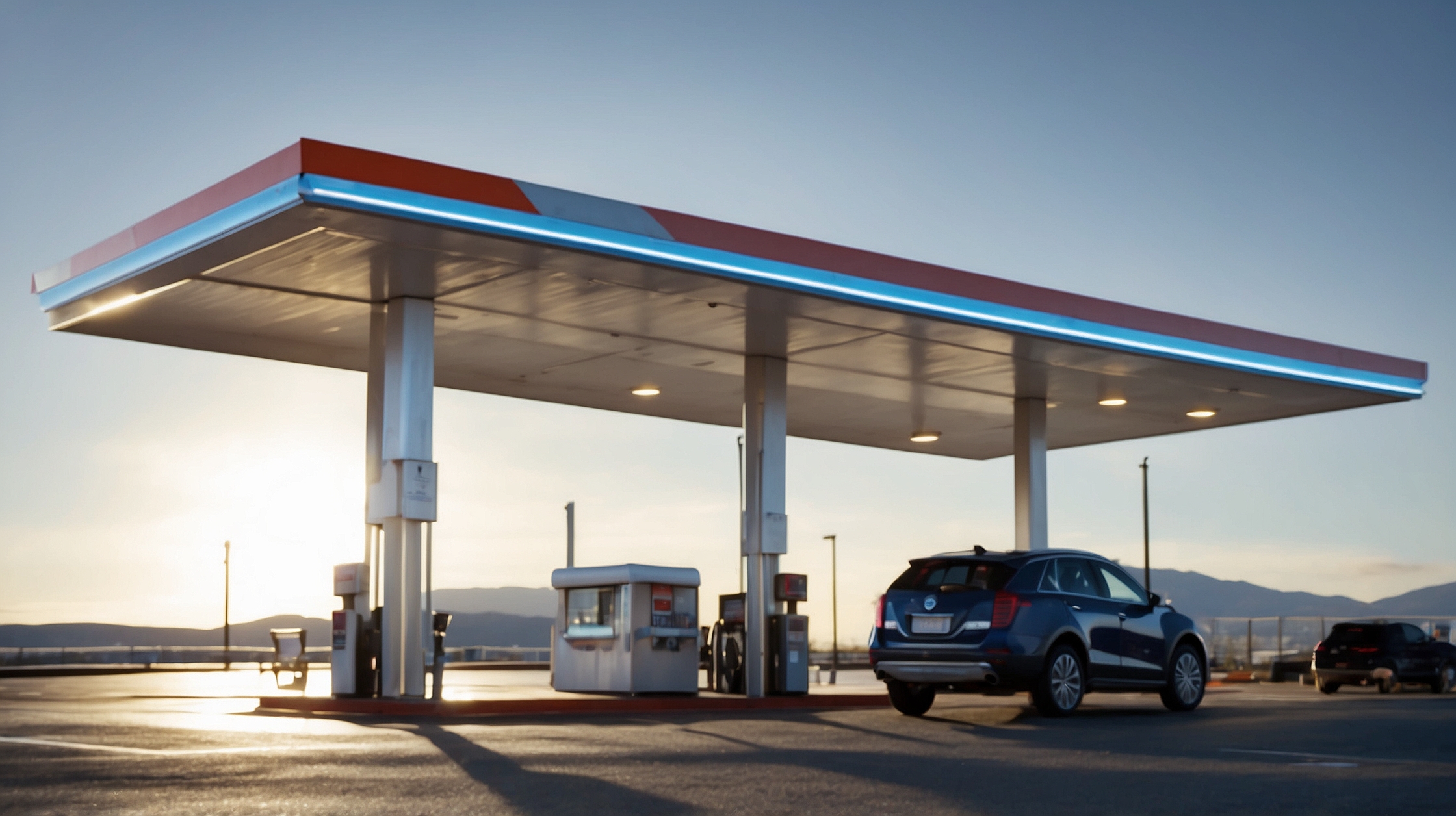
Starting January 17, drivers across the country will notice something new at gas stations: **mandatory labeling requirements that directly display fuel pricing and composition transparency** at the pump. This regulation aims to give consumers more informed choices while promoting environmental accountability and fair competition among fuel providers. By enforcing more transparent communication, authorities hope drivers can better understand what they’re paying for – not just the price per liter, but also the environmental and energy profile of their fuel.
The measure is part of a broader set of consumer information reforms intended to simplify daily decisions and nudge behavior toward cleaner alternatives. **Fuel suppliers are now legally required to display detailed information related to energy content, CO2 emissions, and comparative fuel values**. The initiative not only affects private motorists but also has implications for fleets, businesses, and municipalities intent on managing fuel efficiency and carbon footprint.
Key updates at a glance
| Category | Change |
|---|---|
| Effective Date | January 17, 2024 |
| Applies To | All gas stations in national territory |
| Information Displayed | Energy content, CO2 emissions, fuel cost per kilometer |
| Presentation Format | Graphics and comparative scale charts next to the fuel price |
| Legal Basis | Regulatory imposition through Ministry of Energy resolutions |
What changed this year for gas stations
Gas stations must now include comprehensive, **standardized informational graphics** alongside traditional per-liter fuel pricing. These new additions show comparative metrics such as Euro/km estimates, carbon output per liter burned, and fuel energy values. With this information, drivers can compare the ecological and cost impacts between traditional fuels (like gas oil or petrol) and alternatives like ethanol, compressed natural gas (CNG), or liquefied petroleum gas (LPG).
The government emphasizes that this initiative doesn’t involve altering the price-setting mechanisms or taxation. Instead, it enforces transparency without changing fuel economics. These transparency measures, involving visually comprehensible infographics, are mandated to be **clearly visible and permanently fixed** at each pump. Non-compliance may lead to fines or temporary revocation of operation licenses.
Who benefits most from the new labeling
With greater clarity at the point of purchase, both individual consumers and businesses can make smarter decisions. **Consumers interested in cost-per-kilometer efficiency or reduced carbon footprint** can easily identify which fuel options offer the best balance between budget and impact. For environmentally conscious drivers or businesses managing large fleets, this small visual shift could represent major cumulative savings.
| Winners | Why |
|---|---|
| Eco-conscious consumers | Transparent CO₂ emissions and energy stats enable greener choices |
| Fleet managers | Ability to choose fuel based on cost-efficiency and environmental data |
| Alternative fuel providers | Improved visibility may boost adoption of CNG, LPG, ethanol |
| Losers | Why |
| Dirty fuel suppliers | Greater transparency may encourage consumers to avoid high-emission options |
| Gas stations without compliance | Risk legal penalties and loss of consumer trust |
How drivers will see and interpret the new data
Once drivers approach the fuel station, they can expect informative tables near each pump. These include comparative graphics showing data like:
- Cost per kilometer for various engine types
- Total CO2 emissions over 100 kilometers
- Energy content measured in MJ/liter or equivalent units
The goal isn’t to bombard users with scientific terminology but to give simplified comparisons side-by-side, making it easier for consumers to make **eco-financially sustainable decisions**.
Government’s push for energy transition and transparency
The new labeling initiative fits within the government’s broader energy transition strategy. Authorities aim to reduce dependency on fossil fuels and lower national carbon emissions. **By helping citizens understand fuel profiles, they empower bottom-up contributions to national energy goals**.
Gas station owners are already adapting quickly to the change. While initial installation of new signage and staff retraining might introduce costs, the long-term benefits are projected to include higher consumer satisfaction and improved reputation for proactive stations.
“Enhancing consumer understanding through direct pump-information is a game-changer. It moves us towards responsible fuel consumption without mandating users’ choices.”
— Laura Mendes, Environmental Policy Analyst
What fuel providers are saying
Reaction across the fuel provider sector is mixed. Larger chains equipped with internal compliance departments have scaled the signage update smoothly, while medium to small operators have reported challenges sourcing accurate formatted data. However, many acknowledge that **fuel choice awareness is now a consumer expectation**, not a surprise.
Some local fuel associations have requested a short grace period for compliance, citing logistical setbacks and cost associated with updating pumps’ informational displays. Government officials have stated that enforcement will prioritize guidance before penalties, especially for good-faith efforts to transition within reasonable timelines.
Implications for fuel pricing behavior
While the law doesn’t regulate or affect direct pricing, experts speculate that **consumers may gradually shift toward more cost-efficient and eco-diverse fuel options** once presented with rich comparative data. Over time, this could rebalance demand among less-used fuels like LPG and biofuels, where environmental performance per kilometer often rivals conventional fuel.
“With this change, every trip to the gas station becomes an exercise in consumer education. You may still buy diesel—but now you know its broader impact.”
— Gustavo Ribeiro, Energy Market Advisor
Next steps for gas stations and drivers
All gas stations must verify whether their labeling aligns with mandated graphic content and positioning. Drivers, on the other hand, can start using this information to **optimize fuel costs and carbon responsibility**, particularly in urban environments where corporate fleets are rapidly switching to hybrid and LNG-powered alternatives.
Experts suggest drivers take snapshots of labeling for future reference. The side-by-side fuel comparison can also help car buyers or fleet managers determine which engines offer long-term efficiency, depending on local fuel availability.
Short FAQs
What exactly must gas stations display from January 17?
They are required to show energy content, CO2 emissions per liter, and cost-per-kilometer comparisons for various fuel types in a standardized graphic format next to the fuel price.
Does this change fuel prices?
No. The regulation mandates transparency only. It does not alter pricing mechanisms or taxes.
Are electric charging stations affected?
No. This regulation currently targets only liquid and gaseous fuels like petrol, diesel, LPG, and CNG.
What fuel types are compared in the new labels?
Typically, labels display data for unleaded petrol, diesel, ethanol/mixed blends, LPG, and compressed natural gas.
What happens to stations that don’t comply?
Non-compliant stations can face fines, warnings, or license suspensions, depending on the length and severity of violation.
How can drivers use this new information effectively?
Drivers should compare CO2 output and cost-per-km to select fuel better aligned with both budget and environmental values.
Who manages the standardization of these labels?
Label content and format are overseen by the Energy Ministry in conjunction with consumer protection bodies.
Will fuel pumps change physically?
No changes to the pumps themselves, but adjacent visible signage must now display infographic data according to regulatory standards.


