
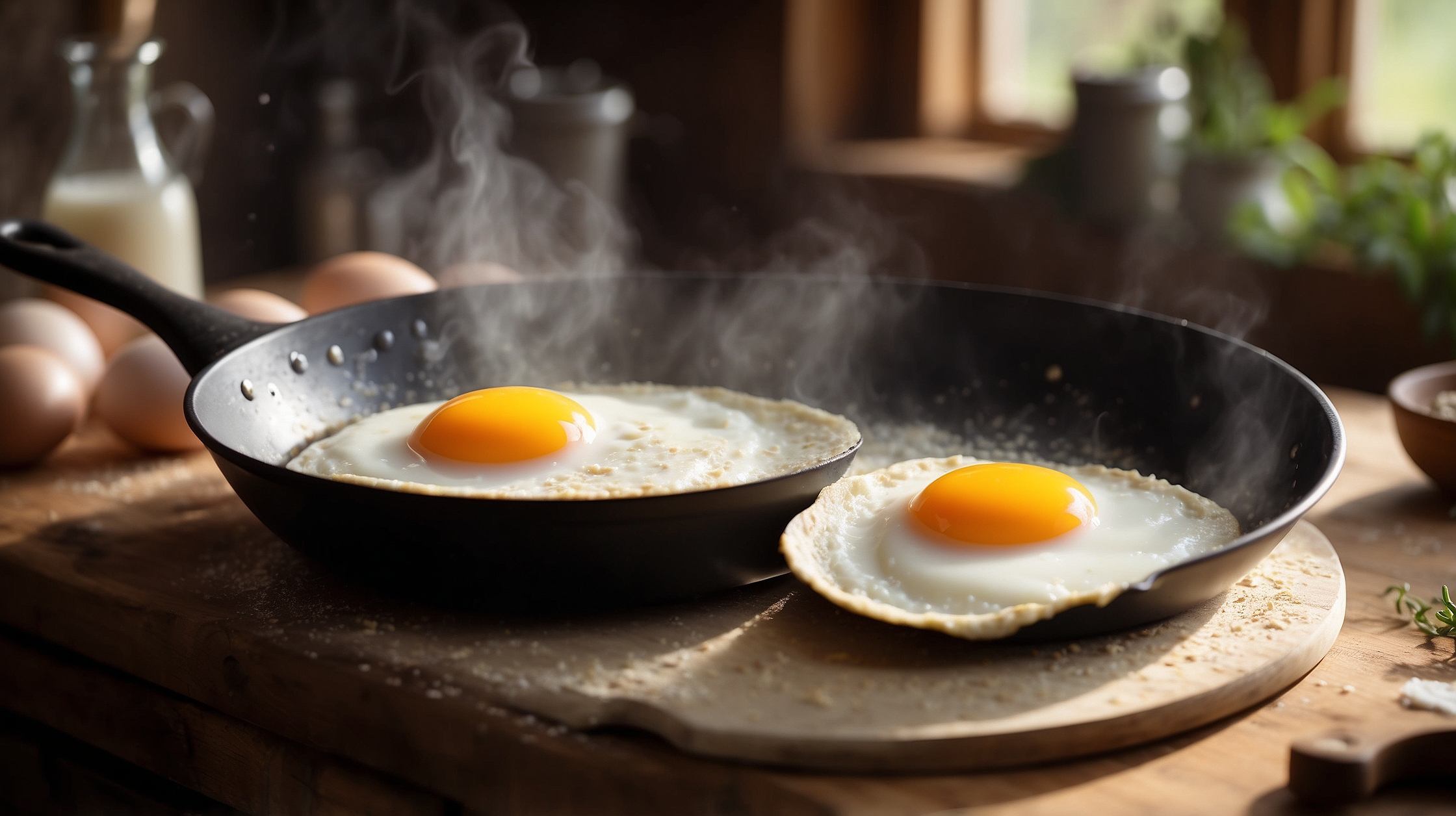
Cooking the perfect fried egg without any oil or butter might sound impossible to home chefs who spend their mornings scraping eggs off pans. But there’s a clever home hack that’s gaining viral popularity — and it’s simpler than you might think. With just a dusting of ordinary flour and a nonstick pan, you can cook flawless, golden-edged fried eggs that gently lift out of the pan, as if cooked in fat. This unique method revolutionizes a breakfast staple by combining ease, health benefits, and minimal cleanup.
The innovation lies in a **dry frying method** that replaces traditional fats with a dry layer between the egg and the pan. When flour is used strategically, it prevents sticking while giving the egg’s underside a slight crisp — without overcooking the yolk or adding calories. This trick not only benefits people watching their fat intake but also upgrades the kitchen game for anyone tired of broken yolks and stuck-on whites. More than just a trend, this might become a standard cooking method in health-conscious households.
Overview of flour method for nonstick fried eggs
| Feature | Details |
|---|---|
| Cooking Method | Dry frying using a dusting of flour on a nonstick pan |
| Fat Used | None (no butter or oil) |
| Main Tool | Nonstick skillet or frying pan |
| Ingredient Addition | 1/2 tsp plain all-purpose flour |
| Health Benefit | Reduces daily fat intake and calories |
| Time to Cook | 2–4 minutes depending on yolk preference |
Why this trick is transforming home kitchens
For years, pan-frying an egg without fat seemed impossible unless high-end nonstick cookware or specialized gadgets were involved. This flour trick changes that. By applying just a light coating of flour onto a hot dry pan, the flour forms a barrier that allows the egg to settle, cook, and lift without adhesion. This isn’t just an alternative — for many, it’s becoming the **preferred method** due to the unexpected crisp and clean finish it provides.
The simplicity is key. No preheating oil, no spatter, and no added calories. In fact, with **butter contributing around 100 calories per pat**, omitting it in a single fried egg saves a notable amount. Not to mention, your pan remains far easier to clean afterward. It’s a solution that’s practical, efficient, and cost-effective.
How to fry an egg using flour without oil or butter
The method seems surprising at first, but with a single try, most home cooks are sold. Here’s a basic breakdown of how to use the flour method effectively:
1. Preheat the pan
Use a medium-low flame to heat a dry **nonstick skillet**. Give it a minute or two to get warm — not hot. Too much heat burns the flour, which impairs the method.
2. Dust a thin layer of flour
Sprinkle roughly half a teaspoon of **plain all-purpose flour** onto the center of the pan. You can use a fine-mesh sieve to dust it evenly, though using your fingers works in a pinch. Shake or swirl the pan gently to spread it slightly if needed, but don’t make a thick coating.
3. Crack your egg directly over the flour
Without waiting, crack the egg on top of the flour. Let it settle without disturbing it. You’ll notice the white doesn’t grip the pan, and instead starts to cook with a soft edge.
4. Cover and allow to cook
For the best texture, cover the skillet with a small lid. This traps heat and helps the white set faster, without flipping. Cook for **2 minutes for soft yolk**, or up to **4 minutes for medium yolk**. Avoid moving it.
5. Serve with a gentle lift
Use a **thin silicone spatula** to carefully slide under the egg. You’ll be amazed — it lifts with no sticking, and the flour remains as a barely-there layer that crisps like fry batter.
Health benefits worth noticing
Eliminating oil or butter from even one meal a day can significantly alter your dietary proportions over time. That adds up — each tablespoon of oil contains roughly 120 calories and 14 grams of fat. By adopting this flour-based technique, individuals managing heart disease, cholesterol, or calorie intake can accomplish meaningful progress without sacrificing taste or texture.
Plus, using flour as an inert cooking barrier involves **no additives, emulsifiers, or engineered sprays**. It’s a pure, affordable staple that almost every pantry contains. Those with gluten intolerance can opt for rice flour, chickpea flour, or cornstarch — all of which work similarly well in tests.
What chefs say about this viral egg trick
“I was stunned. The flour forms a micro-barrier that doesn’t bond with the egg protein. It’s a food-safe chemistry hack that just… works.”
— Celine Garza, Culinary Instructor
“You won’t get the butter flavor, of course, but you’ll get smooth, controlled cooking every time. That matters more than people think.”
— Kai Raymond, Executive Chef
Tips to perfect your flour-fried egg
While the method is simple, these fine-tuning tips ensure flawless results:
- Use fresh eggs — the tighter the white, the better the structure.
- Control heat — moderate temperature gives crisp edges and set whites without rubbery yolks.
- Try flavored flours — seasoned flour, garlic powder, or paprika in tiny amounts can add subtle undertones.
- Let the pan cool before second egg — too much leftover heat scorches the flour.
Who benefits most from this technique
| Winners | Losers |
|---|---|
| Health-conscious eaters | Fans of rich, butter-heavy breakfasts |
| People with dietary fat limits | Those expecting a buttery taste profile |
| Egg-lovers struggling with sticking pans | Users of cast iron without seasoning layers |
| Anyone with calorie-reduced goals | Fans of classic over-easy egg technique |
Other innovative applications for this dry flour method
While designed for eggs, this technique opens doors to wider applications:
- Tofu Slices — prevents sticking during dry sautéeing or crisping
- Pancakes — avoid fatty greasing while maintaining a flip-friendly surface
- French Toast — dust pan lightly before drenching in batter to prevent sogginess-to-burn consequences
- Hash Browns — no oil needed for crisp base if placed over floured area
Precautions and things to avoid
While the trick is highly effective, avoid these common missteps:
- Don’t use **too much flour** — the egg may taste dusty or unevenly cooked
- Avoid pans with scratches — even flour won’t save eggs from sticking there
- Don’t overheat — flour should stay light beige, not browned
- Don’t fry multiple eggs at once – prioritize single-egg control during learning stages
Frequently asked questions about flour-fried eggs
Does the egg taste like flour?
Not at all. When used correctly in small amounts, the flour doesn’t interfere with flavor and may even enhance crispness subtly.
Can gluten-free flours be used?
Yes. Rice flour, cornstarch, and chickpea flour are good alternatives for gluten-intolerant users.
Will this ruin my nonstick pan?
No. Flour is harmless and actually reduces abrasion caused by steel utensils or abrasive scrubbing.
Can I make scrambled eggs this way?
This method is best for fried eggs. Scrambled eggs generally don’t benefit from the flour layer and can turn grainy.
Does it work on stainless steel pans?
It’s not recommended unless heavily preheated and carefully tested, since nonstick pans have smoother surface interactions.
How is this different from adding oil or sprays?
Flour creates a dry, natural separation layer. Sprays often include additives, propellants, and artificial compounds.
Is this technique safe for daily use?
Absolutely. It’s no different than adding minimal flour as a dusting or thickening agent in other recipes.
How can I make this egg taste richer without butter?
Try topping with herbs, nutritional yeast, or finish with a splash of truffle oil after cooking for flavor depth.


