
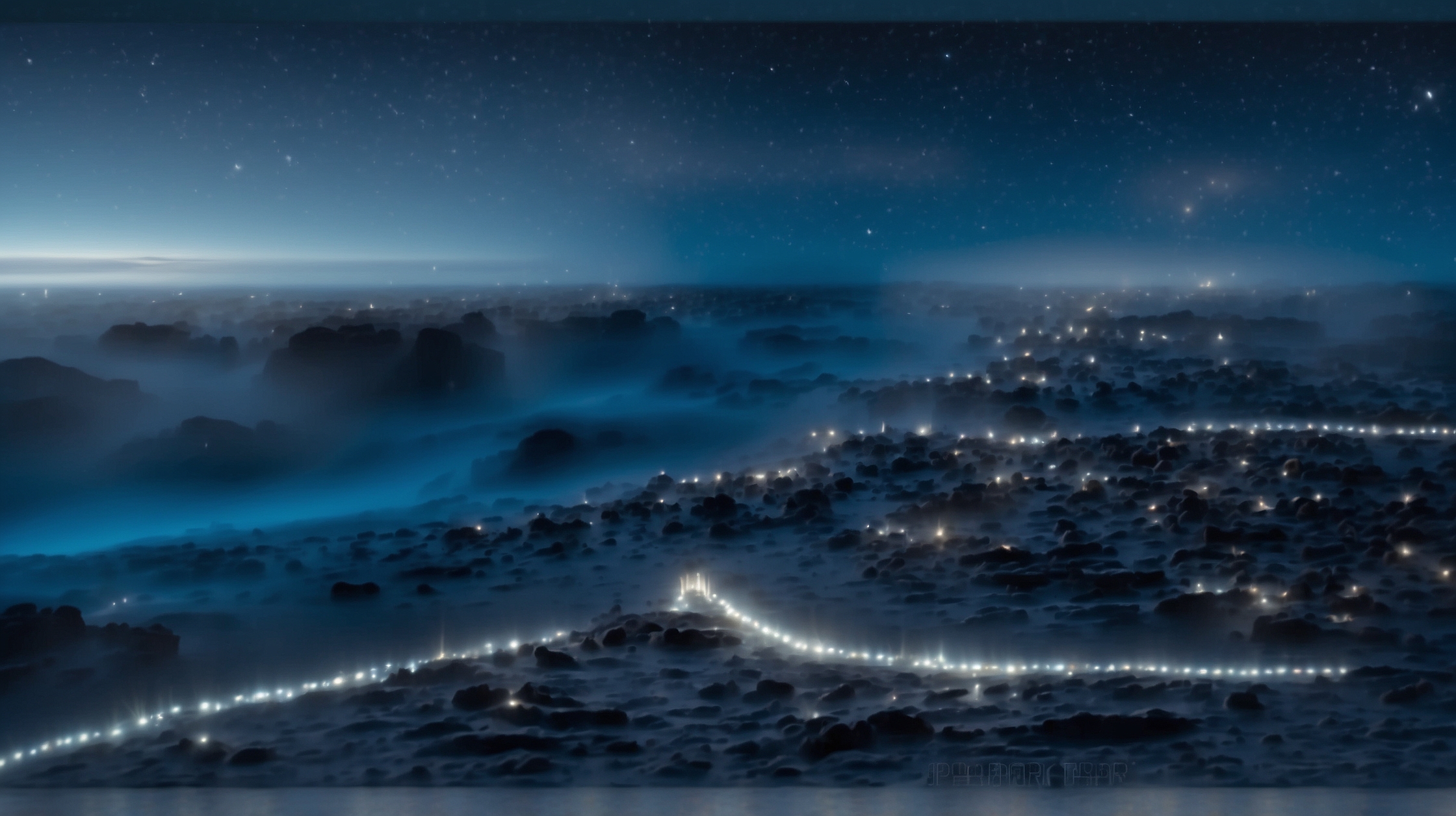
An extraordinary celestial traveler, Comet 3I/ATLAS, has recently become the subject of intense scientific fascination after new, high-resolution images captured it with unprecedented clarity. This interstellar visitor, only the third of its kind ever confirmed, sped through our solar system offering a rare chance for astronomers to observe and examine materials formed beyond our solar neighborhood. Using a network of terrestrial and space-based telescopes, researchers have been able to track the comet’s trajectory, document its chemical composition, and chart its unique behavior—conclusions that could reshape our understanding of planetary formation across the galaxy.
The global astronomy community has seized the opportunity to investigate 3I/ATLAS, an interstellar body hurled from an unknown origin and untethered by our solar system’s gravity. Its fleeting appearance summoned observations from the world’s most powerful observatories, drawing comparisons to previous interstellar objects like ‘Oumuamua and 2I/Borisov. What sets 3I/ATLAS apart is the stunning clarity and scale at which it has been imaged. This clarity has allowed scientists to observe the interaction of solar radiation with interstellar material in fine detail—an observation window nature rarely opens.
Key facts about comet 3I/ATLAS
| Aspect | Details |
|---|---|
| Official Name | Comet 3I/ATLAS |
| Type | Interstellar comet |
| Discovery Year | 2024 |
| Key Feature | Unbound hyperbolic orbit through solar system |
| Current Status | Exiting the solar system post-perihelion |
| Observation Tools | Multi-observatory: Hubble Space Telescope, Gemini Observatory, and more |
Why the clarity of recent images is historic
Unlike previous interstellar objects, 3I/ATLAS was photographed in multiple wavelengths—visible, infrared, and ultraviolet—across several international observatories, including the Hubble Space Telescope, the Gemini Observatory, and cutting-edge radio arrays. Images captured show the comet’s coma, tail structure, and orbital dynamics in unprecedented detail, revealing differences in compound behavior compared with native Solar System comets.
Whereas 2I/Borisov emitted a relatively familiar profile of water vapor and cyanide, 3I/ATLAS surprises researchers with traces of exotic ice compositions and possible dust configurations not previously observed. Imaging clarity was enhanced by favorable solar angles and minimal space debris during pass-by, a convergence scientists hailed as near miraculous.
“We’re looking at something that formed light-years away, likely in an entirely different star system. The compositional snapshots we have now are as close as we get to smelling an alien ocean.”
— Dr. Helena Myers, Astrophysicist, Columbia University
What changed this year for interstellar comet studies
Until now, observing such intricate details of rapidly moving interstellar objects was considered nearly impossible. Comets like ‘Oumuamua passed so quickly and behaved unpredictably, while 2I/Borisov, although more familiar, showed significant fragmentation. But 3I/ATLAS, thanks to better global coordination and upgraded sensing technologies, allowed scientists to prepare and deploy fast-tracking observational strategies that successfully captured the object as it moved through the inner solar system.
This shift marks a turning point in astronomy. The application of AI-assisted alignment systems, hypersensitive photometers, and real-time trajectory forecasting allowed observation crews across the hemisphere to adjust on-the-fly, coordinating continuous imaging and minimizing data loss. These protocols will likely set a new standard for how transient interstellar events are recorded in the future.
Where Comet 3I/ATLAS came from—and where it’s headed
Like a message in a cosmic bottle, 3I/ATLAS originated from an unknown planetary system far beyond the influence of our Sun. It was likely expelled from its home system by gravitational perturbations or the destruction of a stellar host. Its hyperbolic orbit confirms it is not gravitationally bound to the Sun, and after curving around its perihelion near the orbit of Venus, it is now on its outbound path toward the Oort Cloud and ultimately the interstellar void.
“Comets like 3I/ATLAS are time capsules. We believe this one may predate the Sun itself, giving us a glimpse of the conditions in protoplanetary disks far outside our own.”
— Dr. Mei Richardson, Institute for Planetary Physics
Breakthroughs in chemical analysis of the comet’s tail
Thanks to the clarity of 3I/ATLAS’s images, researchers have been able to spectroscopically dissect its tail in a way previously impossible. Preliminary analysis suggests the presence of complex hydrocarbons, nitrogen-rich ices, and unusual silicate grains—components rarely seen in typical Oort Cloud comets that stem from our own system. The presence of such materials further reinforces theories about planetary system diversity and supports the idea that solar systems form under a variety of chemical regimens.
Volatile tracers indicate the comet formed in a colder region than our Kuiper Belt, possibly hinting at a denser, more UV-shielded nursery environment. The imaging also revealed stratified jets along the comet’s sun-facing side, hinting at subsurface pockets of trapped gases—another signature of a low-radiation formation environment.
Scientific implications and what comes next
While 3I/ATLAS is already en route out of the solar system, the dataset it leaves behind may revolutionize our models for comet structures and interstellar ejection mechanisms. This comet’s readiness for observation has also ignited interest in establishing a Global Interstellar Alert Network (GIAN) which would allow astronomers to respond even more quickly to future visitors. GIAN could serve as a planetary watchdog with the capability to intercept both interstellar objects and potential impact threats in real-time.
Additionally, lessons from this mission may shape the design of new generation telescopes focused on outer solar system observations. Combined optical and thermal readings from 3I/ATLAS provide a template for identifying future interstellar bodies faster and with more precision. ESA and NASA are reportedly already aligning joint initiatives to design rapid-response missions targeted exclusively at such transient celestial visitors.
Has the public seen the images?
The clarity of Comet 3I/ATLAS’s imaging has not been a treasure solely held by researchers. Select photos and time-lapse renderings have been released for public viewing, igniting fascination within the astro-curious population. Social media platforms erupted with artistic interpretations and discussions under tags like #InterstellarComet and #ATLAS2024. This serves not only as a moment of scientific glory but also as a cultural moment that brought space science again to the public eye.
“Moments like these are why many of us became scientists. They remind us that wonder and discovery aren’t just for textbooks—they’re happening right now, overhead.”
— Dr. Ramesh Patel, Cosmochemist, University of Manchester
Short FAQs about 3I/ATLAS and interstellar comets
What is 3I/ATLAS?
3I/ATLAS is the third confirmed interstellar comet known to pass through our solar system, distinguished by its hyperbolic orbit and chemical composition unlike typical Solar System comets.
Why is it called 3I/ATLAS?
The “3I” denotes that it’s the third interstellar object. “ATLAS” refers to the Asteroid Terrestrial-impact Last Alert System, the telescope network that discovered it.
What’s unique about its images?
The images of 3I/ATLAS are the clearest ever captured of a comet from outside the solar system, revealing fine chemical and structural details previously unseen.
Can we send spacecraft to intercept such comets?
Currently, the speeds and unpredictable paths of interstellar comets make scheduled intercept difficult, but discussions about future rapid-response missions are ongoing.
Did 3I/ATLAS pose any threat to Earth?
No. Its trajectory did not bring it dangerously close to Earth and posed no impact risk.
How long will the data from 3I/ATLAS be useful?
Potentially for decades, as scientists continue to mine its high-resolution data to refine models of planetary formation, chemical evolution, and cosmic chemistry.
Where is 3I/ATLAS now?
It is exiting the outer boundary of the solar system, headed back into interstellar space.
Will we see more comets like this?
Yes, as observational technologies improve, scientists anticipate discovering interstellar objects more frequently—possibly several per decade moving forward.


