
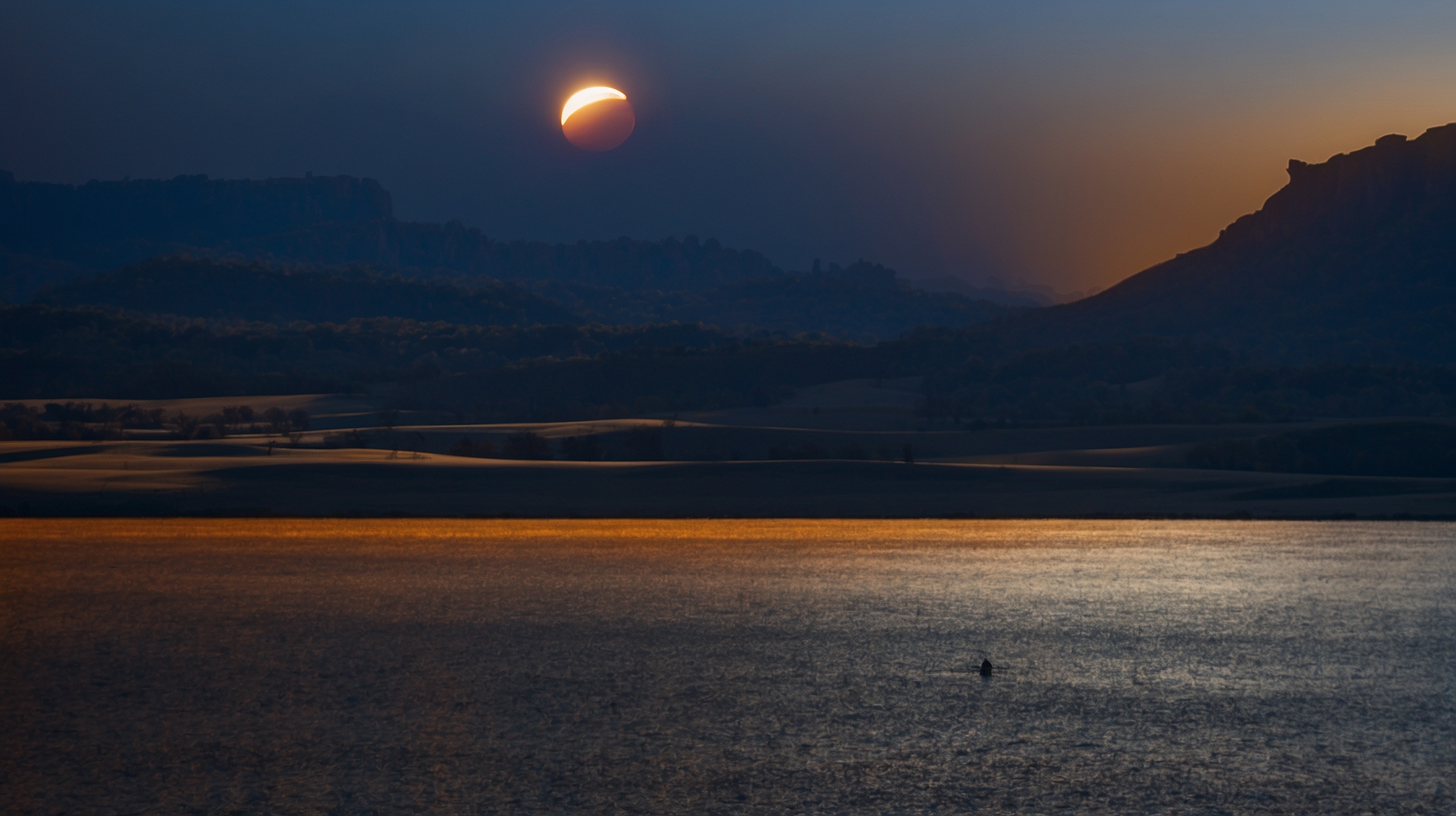
The cosmos has something extraordinary in store, and skywatchers across the globe are already marking their calendars. The longest solar eclipse of the century has been officially scheduled, and the upcoming celestial marvel is set to exceed initial expectations in both duration and visibility. Unlike typical eclipses that dazzle for just a few minutes, this eclipse will deliver an unusually prolonged blackout, offering an unforgettable experience for millions of viewers and researchers alike.
Scheduled for the second half of this decade, the event is anticipated to span a remarkable duration, surpassing previous estimates due to updated astronomical modeling and refined orbital calculations. As solar eclipses provide rare opportunities for both scientific exploration and visual amazement, this extended version is expected to captivate not only astronomers and experts but also families, tourists, and photographers around the world. Its timing and visibility make it a standout natural event of the 21st century.
Key details about the historic solar eclipse
| Event | Longest Solar Eclipse of the 21st Century |
| Date | Scheduled for August 2, 2027 |
| Maximum Duration | 6 minutes and 23 seconds |
| Type of Eclipse | Total Solar Eclipse |
| Peak Visibility Region | North Africa, Middle East, parts of Europe |
| Global Viewership Potential | Over 1.5 billion people |
Why this eclipse is unlike any we’ve seen in generations
The August 2027 eclipse is special for a number of reasons. Firstly, its estimated maximum duration of **6 minutes and 23 seconds** places it among the longest total solar eclipses not only of this century but also in recent memory. For comparison, most total solar eclipses last only 2-4 minutes. The added length offers exceptional conditions for viewing the solar corona, studying solar winds, and observing planetary alignments during the event’s totality.
Secondly, its wide geographic visibility means that a staggering number of people—more than 1.5 billion—will have a chance to experience the eclipse in part or full stages. The path of totality crosses key urban and rural corridors, making both scientific fieldwork and tourism significantly easier than many prior eclipses where visibility depended on being in remote, inaccessible areas.
Understanding the science behind prolonged eclipses
Solar eclipses occur when the Moon passes directly between Earth and the Sun, temporarily blocking the Sun’s light and casting a shadow on Earth. The duration of totality—how long the Sun is completely obscured—depends on several celestial factors, including the Moon’s elliptical orbit, Earth’s tilt, and the distance between celestial bodies at the time of alignment.
This eclipse’s extended length is due to the Moon being closer to Earth and the Earth near aphelion, where its orbit slows slightly. This combination maximizes the Moon’s apparent size and prolongs its journey across the Sun.
— Dr. Elise Romanov, Astrophysicist
The 2027 event occurs when both the Earth and Moon will be at near-optimal positions to maximize the eclipse duration. This makes it not only a brilliant event for amateur stargazers but a golden opportunity for solar researchers who often have just minutes to gather crucial corona and magnetic field data.
Where and how to watch the eclipse for best experience
The **path of totality** will sweep across parts of **North Africa**, pass through sections of the **Middle East**, and move into **southern Europe**. Countries such as **Egypt**, **Saudi Arabia**, and **southern Spain** are expected to offer some of the best vantage points. Urban centers near the eclipse path are already preparing for a wave of international eclipse chasers and scientists.
Tourism boards and travel operators are offering eclipse packages that combine sightseeing with specialized nighttime viewing setups. Cities along the eclipse corridor are building temporary viewing decks, while local authorities will enforce protective measures, such as restricted air traffic and regulated lighting, to ensure optimal dark sky environments.
How to prepare for a safe and memorable viewing
Watching the eclipse safely requires adequate preparation. Looking directly at the Sun during any phase of the eclipse without proper eye protection can cause permanent eye damage. Experts strongly recommend the use of **ISO-certified solar viewing glasses**, pinhole projectors, or telescopes equipped with properly installed solar filters.
While it’s a spectacular event, people must prioritize safety. Never look directly at the Sun during partial phases without approved eclipse eyewear.
— Prof. Martin Kim, Director of Solar Safety Initiative
In addition to safety equipment, consider securing accommodation and travel permits as soon as possible. Popular viewing stations are expected to become crowded as the date approaches. Apps and tools for eclipse tracking can also enhance your viewing experience with real-time updates on phases and totality durations based on your location.
“Winners” and “Losers” in terms of eclipse visibility
The geography of eclipse visibility often creates a divide in viewing experience. While some will witness a magical full eclipse, others may see only a partial event.
| Winners | Losers |
|---|---|
| Cairo, Luxor, Aswan (Full totality) | London, Paris, Berlin (Only partial eclipse) |
| Riyadh, Jeddah, Mecca (Near centerline) | New York, Toronto, Miami (Not visible) |
| Far southern Spain and Gibraltar | Most of South America and East Asia |
Implications for astronomy and global culture
This eclipse promises to reshape both scientific and cultural dialogues around celestial phenomena. With major observatories aligning resources to record the event across multiple spectra—from ultraviolet to infrared—data collected could redefine aspects of **solar dynamics, magnetic fields**, and even **gravitational wave theories.**
From a cultural perspective, historical sites in Egypt and Saudi Arabia are planning synchronized events that blend ancient solar worship rituals with modern science. For educators, it’s a unique opportunity to teach astronomy in real time, connecting ancient understandings with 21st-century discoveries.
Frequently Asked Questions about the 2027 Solar Eclipse
When is the longest solar eclipse of the century?
The longest solar eclipse of this century is scheduled for August 2, 2027.
How long will the eclipse last at its peak?
The duration of totality during peak eclipse will reach approximately 6 minutes and 23 seconds.
Which countries will experience totality?
Countries like Egypt, Saudi Arabia, Sudan, Yemen, and parts of Spain will experience full totality.
How can I safely view the eclipse?
Use ISO-certified eclipse glasses or solar filters. Never look at the Sun directly without protection.
What is the scientific significance of this eclipse?
It offers extended time to observe the solar corona, magnetic fields, and solar particle behaviors, contributing to breakthrough research.
Will the 2027 eclipse be visible in North America?
No, most of North America will not experience totality or significant visibility for this eclipse.
When was the previous longest eclipse?
The previous longest solar eclipse occurred on July 22, 2009, lasting about 6 minutes and 39 seconds.
What tourist spots are included in the eclipse path?
Historic cities like Luxor, Mecca, and Granada lie near or within the path of totality, making them top viewing destinations.


