
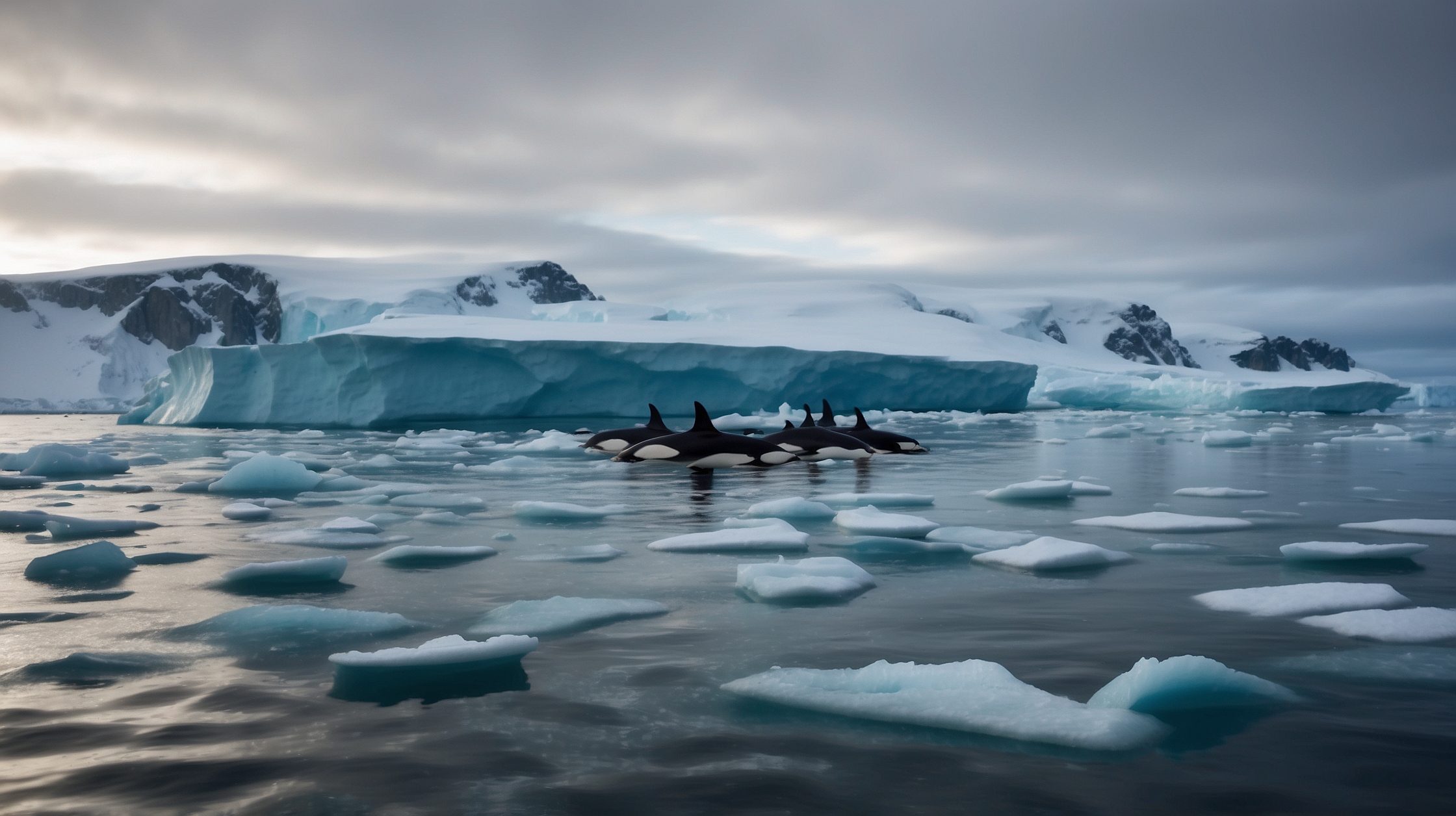
Greenland has officially declared a state of emergency after a troubling surge in orca whale sightings near its rapidly melting ice shelves, setting off alarms among environmental scientists, indigenous communities, and global climate watchdogs. The region, often viewed as ground zero for the impacts of global warming, is now facing pressures not only from the skies above and the earth below—but also from the sea.
Numerous orca pods have been observed venturing far deeper into Arctic waters than ever before, troubling experts who say the warmer temperatures are attracting marine apex predators that could disrupt the delicate ecosystem balance. Though majestic, these marine giants represent a symptom of a deeper, more insidious problem: the accelerating feedback loop of melting ice, warmer seas, and shifting ecosystems which may have colossal consequences for global climate dynamics.
The Greenlandic government, in coordination with local municipalities and the Kingdom of Denmark, has responded swiftly, calling for emergency measures to protect both human and ecological interests. Scientists are now convening to study if these changes could mark a tipping point in the Arctic’s rapidly shifting environmental narrative.
Overview of emergency declaration and orca activity
| Location | Southwestern and Eastern Greenlandic coasts |
| Who is Affected | Local Inuit communities, marine life, climate researchers |
| Emergency Actions | Marine patrol enhancements, climate monitoring escalated, ecological impact assessments |
| Main Concerns | Disruption of marine food chain, accelerated ice melt, navigational hazards |
| First Noted | Late April 2024 |
| Responsible Authorities | Greenland Government, Danish Environmental Ministry, Arctic Council |
Why orcas are appearing near Greenland’s melting ice shelves
The appearance of orcas near Greenland’s coasts is not entirely new, but the frequency and size of the pods being reported this year are unprecedented. Traditionally, orcas avoided these colder waters, but as ocean temperatures continue to rise, the icy northern routes become more accessible. This change in behavior is being observed as a direct result of climate change, with extensive ice melt opening new feeding pathways for predators.
The warming Arctic waters have become rich hunting grounds for orcas, who follow prey like seals and fish also relocating northward. Marine scientists caution that the orcas’ presence could threaten both endemic Arctic species and local fishing economies that rely on stable, predictable marine biodiversity.
We’ve seen a drastic increase not just in orca sightings but in their behavior—they’re staying longer, building territory. It points to a deeper ecological shift.
— Dr. Majken Petersen, Marine Ecologist, University of Greenland
How sea ice melt is accelerating the crisis
According to satellite data, Greenland lost nearly 300 billion metric tons of ice in 2023 alone. Much of this melting has been concentrated around key glacial fronts in the southeast and west—regions currently seeing large concentrations of orca activity. The correlation is worrying scientists across multiple disciplines who understand that the removal of thick ice barriers could cause structural collapses in the remaining shelf systems.
This not only leads to rising sea levels but increases global climate feedback loops—reflective ice is replaced by darker ocean water, absorbing more solar radiation and speeding up local warming. These dynamics create a self-reinforcing cycle that experts agree is extremely difficult to reverse once triggered.
Greenland is at a critical threshold. The dual forces of ice mass loss and ecological disruption from predators like orca are signs we may be approaching climate system tipping points.
— Lars Romer, Climate Analyst, Danish Meteorological Institute
Impact on indigenous communities and local fisheries
Inuit fishermen and coastal communities have voiced growing concerns as traditional fishing and hunting routes are being usurped by unexpected wildlife patterns. The region’s indigenous population relies heavily on subsistence fishing, particularly of cod, halibut, and smaller marine mammals—all potentially affected by the sudden influx of apex predators like orcas.
Moreover, the dangers posed by orcas to small fishing vessels are nontrivial. Reported incidents involving orca approaches to boats have already caused damage and fear, leading to emergency evacuations of some coastal areas and rerouting of local marine routes in Ilulissat, Nuuk, and Narsaq.
Our ancestors never spoke of orcas this far north in their lifetimes. This is new, and it’s frightening for families who depend on these waters.
— Aputik Thomsen, Local Seafarer, Narsaq
What experts are debating
Among scientific circles, the orca sightings have sparked debate on what they signify for future Arctic projections. While some argue that the presence of orcas is simply the ocean adapting to changing climate realities, others warn it could be a harbinger of ecosystem collapse—or at the very least, massive realignment.
One side of the community sees this as an opportunity to push public awareness and climate funding, while the other cautions against sensationalism that could undermine scientific credibility. What’s not debatable is that change in the Arctic is accelerating—and not in a direction anyone wants.
This isn’t about orcas alone—this is about what their presence says about cascading tipping points. We urgently need global cooperation on Arctic monitoring.
— Dr. Simone Aagaard, Arctic Council Environmental Advisor
Winners and losers in Greenland’s new marine landscape
| Winners | Losers |
|---|---|
| Orcas expanding feeding territory | Seals, Arctic cod, local marine mammal populations |
| Climate researchers gaining real-time case study | Greenlandic fishermen and indigenous communities |
| Environmental advocacy groups | Tourism industry hit by safety reroutes |
Emergency response and international involvement
Following the formal declaration of emergency, the Greenlandic administration has activated a joint environmental and maritime task force. Danish naval units with ice-class patrol ships are being deployed to monitor the situation, gather sonar and satellite data, and ensure safety near high-traffic ports and fjords.
Additionally, petitions have been submitted through the Arctic Council forums asking for global emergency climate funds, satellite reinforcements, and emergency relocation support for high-risk coastal villages. Analysts believe the current situation may fast-track Arctic disaster preparedness legislation currently stalled in regional parliaments.
What could happen next
The next 6 to 12 months are viewed as crucial. Should orca presence stay stable—or worse, expand—experts warn of multi-tiered consequences. These could include permanent marine migration changes, loss of native fauna, declining fish stocks, and downstream economic impacts on Greenland’s already fragile coastal economies.
Observers say that while orca sightings might seem like a curious development, they should be viewed as warning buoys drifting ever closer to the edge of a planetary emergency.
If the world can’t take what’s happening in Greenland seriously, where polar ice meets apex predators, what more will it take?
— Mikkel Larsen, Senior Analyst, Arctic Biodiversity Trust
Frequently asked questions (FAQs)
Why did Greenland declare an emergency?
Greenland declared an emergency due to an increase in orca activity near melting ice shelves, signaling accelerated ecological shifts possibly tied to climate change.
Are orcas dangerous to fishing communities?
Yes, orcas can pose threats to small boats and equipment, and may disrupt local fisheries by preying on fish or marine mammals essential to the ecosystem and to local economies.
Is orca migration to Greenland a new phenomenon?
Orcas have visited these waters before, but their numbers, frequency, and extended presence have grown significantly in 2024, prompting concern.
How does sea ice melt affect orca behavior?
Melting ice opens new sea routes and feeding grounds, enabling orcas to move further north and remain longer in Arctic waters.
What is the main concern with orcas near ice shelves?
The presence of orcas signals a major ecosystem shift that may jeopardize native species, destabilize food chains, and reflect broader climate risks.
What international actions are being taken?
International observers from the Arctic Council and Danish naval units have begun monitoring the situation, with potential climate aid requests pending.
Are there health risks for people in Greenland?
While orcas are unlikely to attack humans, disruptions to fisheries and marine traffic can affect food security, livelihood, and safety for Arctic communities.
How can the global community help?
Support through climate-focused funding, emergency monitoring, and public awareness campaigns can help amplify readiness and response in Greenland.


