
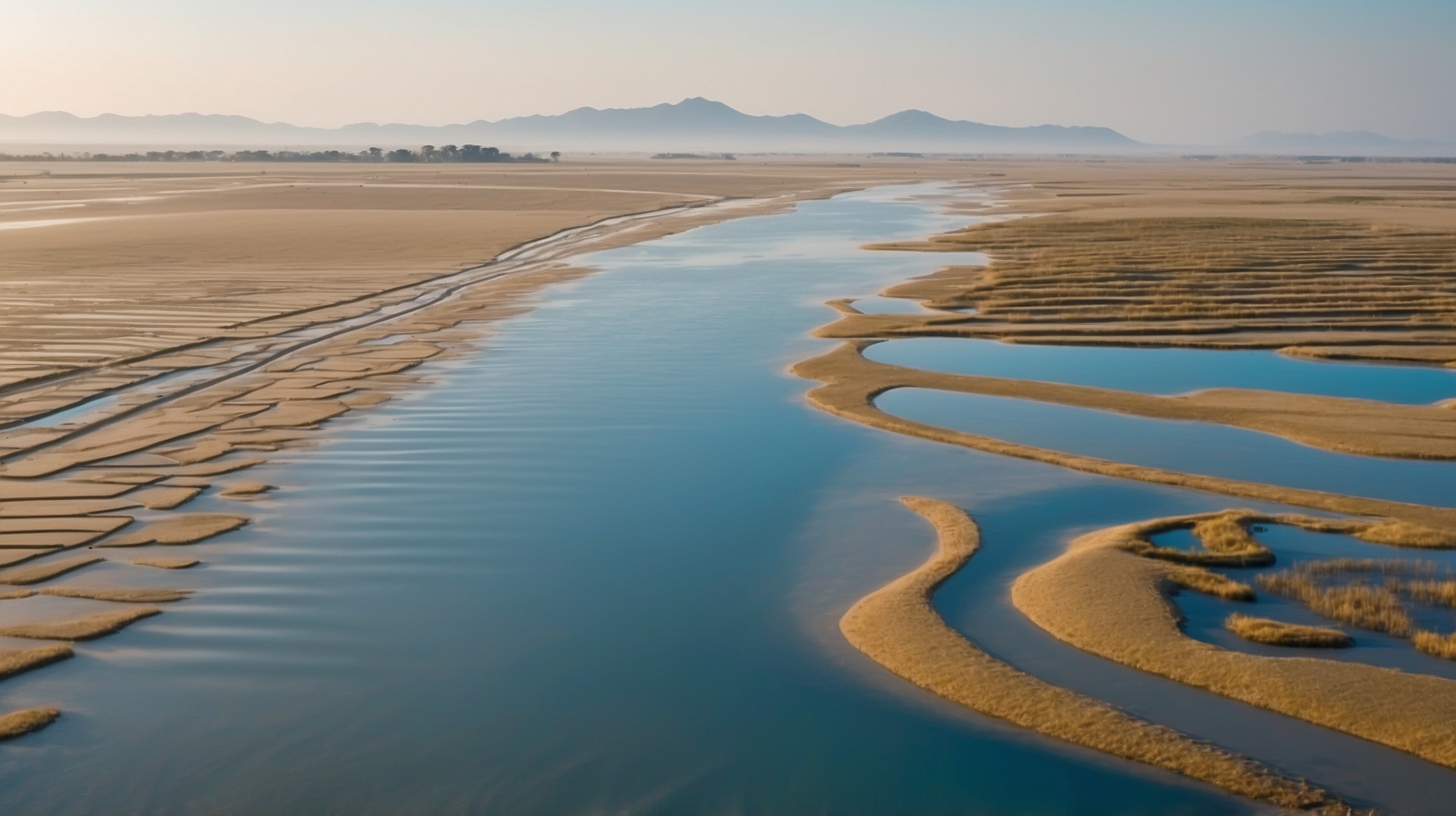
In one of the world’s most startling environmental transformations, China has successfully turned a stretch of arid desert in its remote northwest into a thriving hub of aquaculture production. Once deemed inhospitable due to its salty, alkaline land and intense aridity, the desert area—located in the Xinjiang Uygur Autonomous Region—now supports a booming fish and shrimp farming industry at a commercial scale. This remarkable shift reflects China’s larger strategy to solve food security concerns, energize rural economies, and adapt to long-term climate challenges.
The heart of this transformation lies in the Taklimakan Desert’s edge in the Aksu region, where modern irrigation, biotech, and the harnessing of underground saline water have converged to create an aquaculture oasis. By deploying cutting-edge shrimp-breeding technologies and managing environmental constraints with precision, China has not just resurrected a barren landscape—it has laid the foundation for a scalable aquaculture model in some of the world’s most unexpected places.
Overview of China’s Desert Aquaculture Project
| Aspect | Details |
|---|---|
| Project Location | Aksu region, Xinjiang, China |
| Main Commodities | Whiteleg shrimp, Cold-water fish (like trout) |
| Technology Used | Saline aquaculture systems, remote monitoring, low-temperature shrimp breeding |
| Source of Water | Underground saline water aquifers |
| Environmental Conditions | Salty, alkaline soil; low rainfall; extreme temperatures |
| Economic Impact | Job creation, increased exports, rural revitalization |
Why shrimp could thrive in a desert
Most would not associate vibrant shrimp ponds with deserts, but the whiteleg shrimp species (also known as Pacific white shrimp) has proven surprisingly adaptable. These shrimp are typically raised in saline coastal environments, but the discovery of underground brackish water under parts of the Xinjiang desert led scientists to trial inland aquaculture without inducing freshwater stress. With water sourced from deep saline aquifers, carefully monitored for temperature and pollutant levels, shrimp farming facilities have flourished—with some ponds producing nearly 2,000 kilograms per hectare in successful seasons.
One of the secret weapons in this success is the development of a **low-temperature-resistant shrimp breed**, tailored to the colder desert nights and seasonal shifts. Through partnerships between government institutions and private biotech firms, breeding programs have accelerated traits favorable for inland desert aquaculture, removing the need for constant climate control or artificial heating—significantly reducing energy expenses and carbon emissions.
From sand to supply chains: The full ecosystem model
Beyond the farms, entire ecosystems are being built to support desert aquaculture. Logistics centers, cold-chain infrastructure, storage facilities, and research labs now surround shrimp and fish farms, creating localized economic opportunities. This vertical integration has been crucial for scaling the operations to meet both domestic and international demand, particularly from high-end markets in southeast China and neighboring countries.
Fish such as salmon trout, which require cooler water temperatures, also benefit from this controlled desert environment. With freshwater input minimized and saline water filtered sustainably, the environmental cost is kept low while overall production profits grow annually. Several counties have started exporting these aquatic products, branding them as high-quality desert-raised seafood—a curiosity that appeals to conscious consumers.
“We’re harnessing the natural brine and sunlight of the desert and applying controlled biology—that’s innovation in harmony with nature.”
— Dr. Mei Li, Chief Aquaculture Scientist (placeholder)
How local communities benefit from the desert aquaculture surge
The revitalization of Xinjiang’s desert areas through aquaculture extends far beyond food production. For residents of Aksu and nearby counties, this industry represents **new economic life**. Many locals now work as technicians, maintenance staff, harvesters, and lab assistants. Women in particular, who often had limited employment options in rural areas, have found steady income in processing and packing operations.
This employment boom has also driven investments in roads, schools, and healthcare services. With migration out of Xinjiang being a persistent issue due to limited opportunities, aquaculture has become a **retention force**, encouraging young people to remain in or return to their hometowns. Government incentives and training programs are also designed to encourage farmers to adopt aquaculture in their own plots, converting non-arable land into productive assets.
What challenges do desert fish farms still face?
Despite the rapid success, the industry is not without its hurdles. **Infrastructure resilience**, especially in the face of sandstorms and seasonal freezing, remains a top concern. Protective coverings and underground piping systems need constant maintenance, which can drive costs up. Regulatory oversight is also needed to ensure that saline water extraction doesn’t deplete natural underground reservoirs or affect surrounding ecosystems.
Another challenge lies in **marketing**. Convincing consumers that shrimp and trout grown in the middle of a desert are safe, high-quality, and sustainable continues to require storytelling and third-party certifications. These are gradually being adopted, but gaining international trust is a long-term effort.
“Product credibility is everything. People ask, ‘Shrimp? In a desert?’ The science is solid, but perception takes time to change.”
— Zhao Wen, Export Manager, Xinjiang Aquafarms (placeholder)
China’s vision for replicating inland aquaculture success
Buoyed by success in Xinjiang, Chinese environmental engineers are identifying more **inland arid zones** where similar projects might take root. Plans are brewing in Inner Mongolia, Gansu province, and parts of Ningxia. With China aiming to reduce pressure on coastal ecosystems while still increasing seafood self-sufficiency, inland saline aquaculture is seen as a **national strategic priority**. Multiple ministries now coordinate on research, funding, and training programs related to desert aquafarming.
This vision also aligns with China’s climate adaptation blueprint, where minimizing water use, leveraging previously unused land, and balancing carbon output are key priorities. If perfected, the model could be exported internationally to other arid and semi-arid countries seeking food production ingenuity without heavy freshwater dependence.
Will desert aquaculture affect global seafood prices?
Though it’s still early, the numbers are promising. As domestic supply increases, China’s demand for imported shrimp and trout could decline, potentially reducing global prices or redirecting existing export flows. At the same time, high-efficiency desert farms could inspire similar cost-effective operations globally, increasing total available volumes and pushing markets toward greater sustainability standards.
“This isn’t just about shrimp—it’s about **climate-smart agriculture** transforming economically invisible zones into hubs of innovation.”
— Prof. Guo Liang, Environmental Policy Analyst (placeholder)
FAQs about China’s desert fish and shrimp farms
How do shrimp survive in the desert?
They are raised using saline water extracted from underground aquifers. Specialized shrimp breeds have been developed to withstand lower temperatures and harsh conditions.
What species are currently being farmed?
Main species include whiteleg shrimp and cold-water fish like salmon trout, chosen for their commercial value and adaptability.
Is the seafood safe to eat?
Yes, the shrimp and fish are raised under strict quality and environmental controls, often exceeding coastal farm regulations.
Does the process harm the environment?
No significant harm has been documented so far. The farms use saline water unsuitable for agriculture and aim to preserve local ecosystems through efficient use.
Who benefits from desert aquaculture in China?
Local communities benefit from job creation, infrastructure development, and new economic opportunities. The national economy gains from improved food security and exports.
Can this model be used in other countries?
Yes. Many arid or semi-arid countries with underground saline resources could adopt similar models, depending on local environmental and economic conditions.
How does this fit into China’s broader food strategy?
This is part of a larger push to ensure national food security, diversify rural economies, and reduce ecological pressure on coastal areas.
What are the future plans?
China plans to expand this model to other inland provinces, improve breeding technologies, and position desert aquaculture as an exportable solution for food challenges worldwide.


