
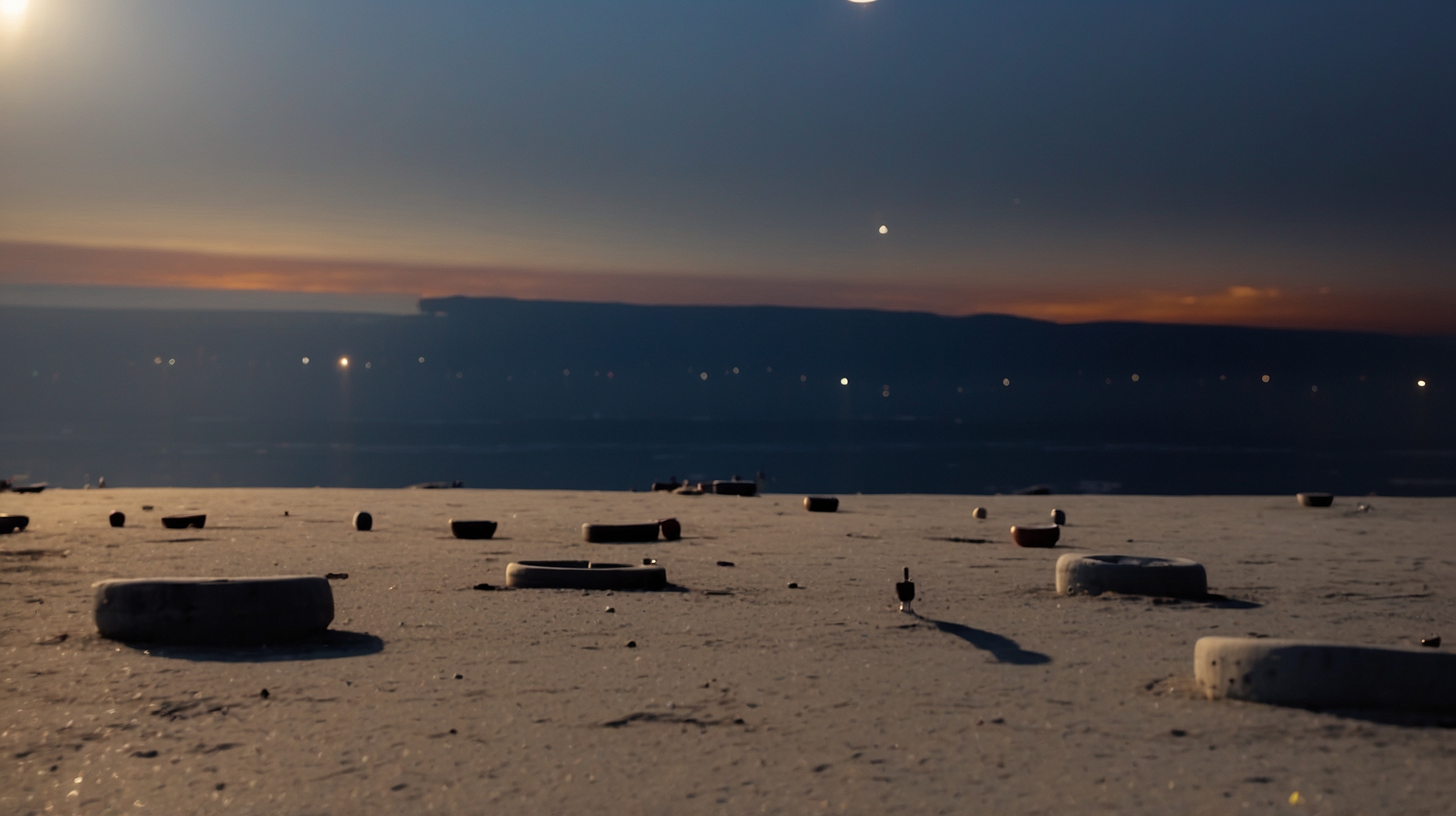
The universe is set to put on a dazzling display as the century’s longest **total solar eclipse** is poised to darken skies and captivate millions across the globe. During this awe-inspiring astronomical event, **day will briefly turn to night**, with the Moon moving directly between Earth and the Sun, casting its shadow and blocking the Sun’s light fully in a rare cosmic alignment. With favorable weather conditions and a well-positioned eclipse path, this celestial spectacle is expected to be visible to more people than any total solar eclipse in recent history.
Unlike partial eclipses or even annular ones—which leave a ring of fire around the Sun—this total solar eclipse will cause complete darkness in the areas lying in the path of totality. It offers not just a magnificent view for skywatchers but also a treasure trove of **scientific opportunities** for astronomers. The event’s record-breaking **duration of totality** makes it a once-in-a-lifetime phenomenon not just for casual observers but also for researchers and eclipse chasers worldwide. With travel, technology, and awareness at an all-time high, millions are preparing for this celestial show in ways that simply weren’t possible during previous eclipses.
Key facts about the century’s longest eclipse
| Event | Century’s Longest Total Solar Eclipse |
| Date | September 2, 2027 |
| Maximum Duration of Totality | 7 minutes, 11 seconds |
| Best Viewing Locations | Northern Africa, Middle East, parts of Southern Europe |
| Next Eclipse of Comparable Length | June 13, 2132 |
| Visibility | Partial or full views across three continents |
| Scientific Opportunities | Coronal studies, atmospheric research, gravitational tests |
Why this eclipse is different from the rest
What distinguishes this eclipse from others in our lifetime is its **unprecedented duration of totality**. Most total solar eclipses last just a few minutes; however, this one will bring over 7 minutes of midday darkness to a narrow path stretching over thousands of kilometers. That extra time allows scientists to push the boundaries of solar research normally constrained by short eclipse windows.
“This is not just another eclipse; it’s a celestial record-breaker,” said Dr. Salim Kader, an astrophysics researcher based in Cairo. “We’ll be able to study the solar corona at unprecedented resolution for a longer period, making this a goldmine for solar science.”
Moreover, this eclipse offers a rare opportunity for people in major population centers to experience totality without having to travel far. Several Egyptian and Saudi Arabian cities will lie directly in the line of maximum eclipse, allowing millions easy access to prime viewing areas—something that astronomers and eclipse enthusiasts usually have to travel around the world to find.
Best locations for viewing the total eclipse
The **path of totality** will begin over the eastern Atlantic and sweep across parts of Northern Africa, the Middle East, and Southern Asia. Cities in Egypt like Luxor and Aswan will lie within this path, granting viewers some of the clearest and darkest views possible. The visibility improves the chances of enjoying a stunning experience, weather permitting.
Other regions including southern Spain and parts of Oman will see a **partial eclipse**, providing a good show but lacking the full impact and darkness of totality. Traveling even a few hundred kilometers could make the difference between watching the moon fully cover the Sun and seeing only a crescent-shaped obstruction.
“If you can get to an area inside the path of totality, the visual and emotional impact is life-changing.”
— Dr. Lila Mendez, Professor of Astronomy
How scientists will use this rare opportunity
A total solar eclipse of this magnitude is more than a visual treat—it’s a bonanza for **solar scientists and physicists**. One of the biggest focuses will be the Sun’s corona—the outermost layer of its atmosphere, which becomes visible only during total eclipses. Researchers will study the corona to gain insights into **solar flares, coronal mass ejections**, and mysterious thermal properties that have puzzled scientists for decades.
The extended duration gives astronomers more time to collect **high-resolution data**, test equipment, and even experiment with gravitational wave detection. Space agencies and research institutions are expected to deploy high-altitude balloons, satellites, and observatories strategically along the eclipse route to maximize data collection capabilities.
“An eclipse like this offers a laboratory in the sky. We can investigate magnetism, plasma flow, and heat transfer under ideal conditions.”
— Dr. Reza Al-Hakim, Leading Solar Physicist
Why a longer eclipse is so rare
The duration of a total solar eclipse depends on several **precise astronomical conditions**: the distance between Earth and the Moon, the Earth’s location in its orbit, and the relative positions of the Sun and Moon. These align approximately only once every several decades, making such a long-duration eclipse extremely rare.
In this 2027 eclipse, the Moon will be closer to Earth in its elliptical orbit, thus appearing larger in the sky. At the same time, Earth will be near its aphelion—the farthest distance from the Sun—making the Sun appear relatively smaller. These combined factors result in a **perfect alignment** and maximum coverage, offering the longest totality of the 21st century.
Preparing to experience the eclipse safely
Watching any solar eclipse requires **proper eye protection**. Looking directly at the Sun without designated eclipse glasses can cause permanent eye damage. Only when the Moon fully covers the Sun during the few minutes of totality can it be viewed safely without protection—and even then, observers must be extremely cautious.
In the regions expecting the longest eclipse duration, local governments and astronomy organizations are already preparing **public viewing festivities**, educational seminars, and safety awareness campaigns. It’s recommended that viewers plan early, as travel and lodging in high-visibility zones are likely to become scarce as the date approaches.
Big winners and those who miss out
| Winners | Losers |
|---|---|
| Residents in Egypt, Saudi Arabia, and Yemen | Regions outside the path of totality, including Northern Europe |
| Astrophysicists and solar researchers | Tourists without proper eye safety gear |
| Astronomy enthusiasts and eclipse chasers | Urban areas with high air pollution or cloud cover |
What changed this year in terms of eclipse readiness
One major development this year is how prepared countries are for large-scale celestial events. The integration of **AI-powered tracking tools**, live drone feeds, and augmented-reality eclipse simulations has revolutionized how people can safely enjoy the event. Educational outreach is also at an all-time high, giving schools and communities the resources they need to both enjoy—and understand—what they’re witnessing.
Smartphone apps now allow users to track the eclipse’s path in real-time based on GPS locations, while local governments are coordinating logistics like traffic control, crowd safety, and public viewing zones with an unprecedented level of detail. Compared to even a decade ago, this eclipse will be the most interactive and widely accessible yet.
Short FAQs about the 2027 Total Solar Eclipse
When is the total solar eclipse happening?
The total solar eclipse will take place on **September 2, 2027**.
Where can I see the total eclipse?
The best places to view totality will be in **Egypt, Saudi Arabia, and parts of Northern Africa and the Middle East.**
How long will totality last?
The maximum totality will last up to **7 minutes and 11 seconds**, making it the longest of the century.
Is it safe to look at the eclipse?
Only during the **brief period of totality** is it safe to look at the eclipse without protection. At all other times, use certified eclipse glasses.
Why is this eclipse so important?
Its **record-breaking duration** allows for extended scientific observation and provides a stunning natural display unlike any other in this century.
Will this eclipse be visible in Europe?
Parts of **southern Spain** will see a partial eclipse, but most of Europe lies outside the path of totality.
What happens if it’s cloudy during the eclipse?
Cloud cover can obscure visibility entirely. Consider traveling to regions with historically **clear skies** during this time.
Will this event be broadcast or streamed?
Yes, many organizations are planning **live broadcasts and virtual experiences**, especially useful for those unable to travel to the eclipse path.


