
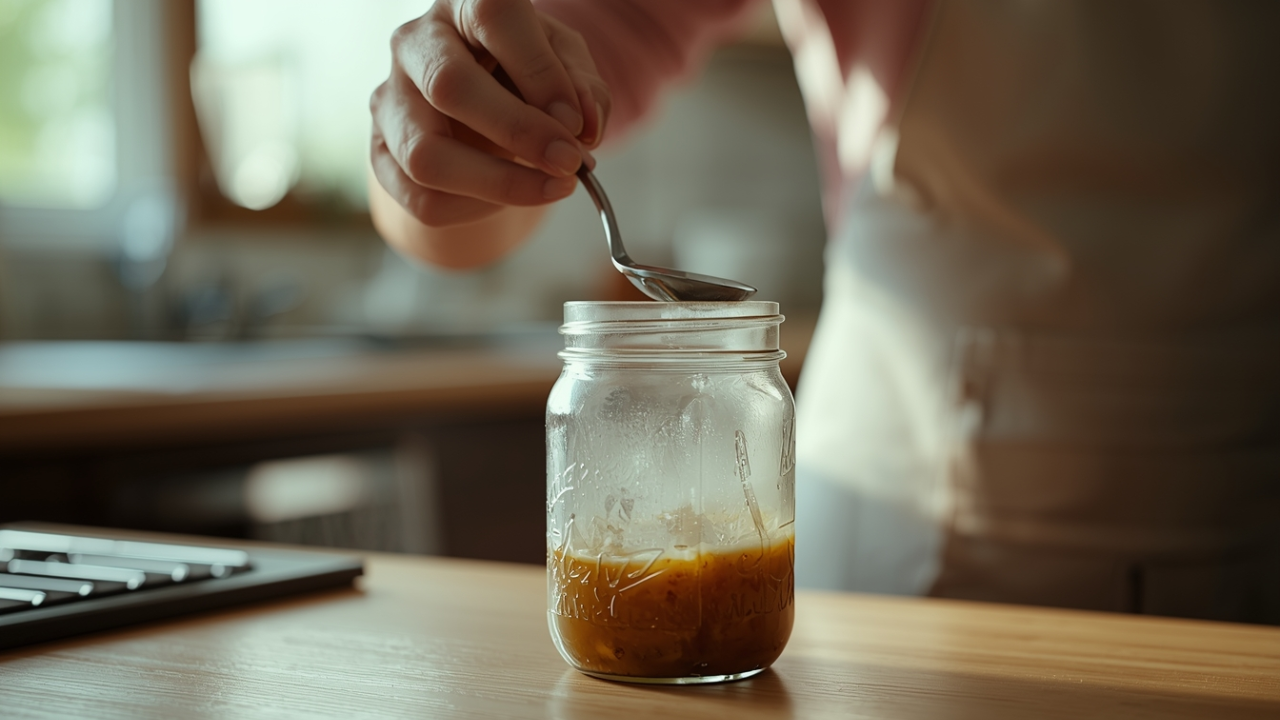
Almost everyone has experienced the frustrating moment when a jar refuses to open. You twist harder, wrap the lid in a cloth, and maybe even hand it to someone else for help — but the lid stays locked tight. Whether it’s pasta sauce, pickles, olives, or chickpeas, a stuck jar can quickly turn cooking into an irritating challenge.
Fortunately, there is a surprisingly simple kitchen trick that requires no expensive tools or strong grip strength — the spoon trick. This technique relies on basic physics rather than muscle power, making it one of the easiest and safest ways to open tightly sealed jars.
Why Jars Get Stuck in the First Place
To understand why the spoon trick works, it helps to know why jar lids become difficult to open.
Most commercially sealed jars go through a heat-sealing process during packaging. Food is placed inside the jar and heated to sterilise it. As the jar cools, the air inside contracts and creates negative pressure — essentially forming a vacuum.
This vacuum pulls the metal lid tightly against the glass rim, sealing the contents safely inside. While this process keeps food fresh for months or even years, it also creates the stubborn resistance people face when trying to open the jar.
That familiar popping sound when a jar finally opens is simply the vacuum seal breaking and allowing air back inside.
The Spoon Trick: Using Leverage Instead of Strength
The spoon method transforms an ordinary kitchen utensil into a small lever. Rather than forcing the lid to twist open, the technique focuses on breaking the vacuum seal that holds it shut.
Step-by-Step Guide to the Spoon Trick
- Choose the Right Spoon
Select a sturdy metal spoon with a rounded bowl and strong handle. Plastic spoons often bend or break under pressure. - Stabilise the Jar
Place the jar on a flat, stable surface such as a countertop. Hold it firmly to prevent slipping. - Locate the Lid Edge
Identify the point where the metal lid meets the glass rim. - Insert the Spoon
Slide the rounded tip of the spoon under the lid’s edge. Position it carefully between the lid and the glass. - Apply Gentle Leverage
Press the spoon handle downward slowly. This lifts the lid slightly and allows air to enter. - Move Around the Lid
Rotate the jar and repeat the process in several spots until you hear a soft hiss or pop.
Once the vacuum is released, the lid usually twists off easily with minimal effort.
Why the Spoon Trick Works So Well
Several design features make spoons particularly effective for this task.
Rounded Shape Protects the Jar
The curved bowl of a spoon reduces the risk of chipping or cracking the glass compared to sharp tools.
Improved Grip and Control
The handle provides leverage and allows precise pressure without slipping.
Force Multiplication
Leverage multiplies small amounts of force, meaning you do not need strong hands or wrists to succeed.
Convenience
Unlike specialised jar-opening gadgets, spoons are available in almost every kitchen.
Because of these advantages, many people consider the spoon trick the safest and simplest method for breaking jar seals.
Alternative Tools If a Spoon Is Not Available
While spoons are ideal, other kitchen tools can produce similar results if used carefully.
| Tool | How It Works | Risks |
|---|---|---|
| Butter Knife | Slide tip under lid and twist gently | Blade can slip or damage glass |
| Table Knife | Use as lever similar to spoon | Excess force may bend knife |
| Fork | Hook a tine under lid edge and pry carefully | Tines may slip or snap |
| Jar Opener Tool | Designed to grip or lift lid | Requires storage and purchase |
Among these options, blunt tools are generally safer than sharp ones. The goal remains the same — release the vacuum seal, not force the lid open.
Common Mistakes People Make When Opening Jars
Frustration can lead to risky techniques that may damage the jar or cause injury.
Banging the Jar on the Counter
This can crack the glass base or deform the lid, making it even harder to open.
Using Extremely Hot Water
While mild warmth can help expand metal lids, sudden temperature changes may shatter glass jars.
Stabbing the Lid with a Knife
This is highly dangerous and can result in serious hand injuries if the blade slips.
Using Improvised Clamps or Tools
Excessive pressure may crush the jar or damage the lid seal.
The spoon trick works because it targets the root problem — internal pressure — rather than relying on brute force.
When a Jar Should Not Be Opened
Sometimes resistance is not the main concern. It may signal food spoilage or contamination.
Before attempting to open a jar, check for warning signs:
- Bulging or swollen lid
- Rust, dents, or damage on the lid
- Leaking or sticky residue around the rim
- Cloudy liquid or unusual colour inside
- Strange bubbling or odour
These signs may indicate bacterial growth, especially in homemade preserved foods. In such cases, discarding the contents is the safest option.
Why This Trick Matters Beyond Convenience
The spoon trick is not just about saving time in the kitchen. It also promotes independence and accessibility for people who struggle with grip strength or joint pain.
Individuals who may benefit include:
- Older adults with arthritis
- People recovering from hand injuries
- Children learning to cook independently
- Individuals with limited wrist mobility
By replacing strength with technique, this simple method allows more people to handle everyday cooking tasks confidently.
A Real-Life Kitchen Scenario
Imagine preparing dinner on a busy weekday evening. Pasta is cooking, vegetables are ready, and the sauce sits sealed in a stubborn jar.
Instead of struggling for several minutes, you grab a spoon and:
- Insert it under the lid edge
- Apply gentle leverage in three or four spots
- Hear a small pop as air enters
- Twist the lid open instantly
The entire process takes less than 30 seconds and keeps your cooking routine stress-free.
With practice, the technique becomes almost automatic.
Understanding the Science of Leverage in the Kitchen
The spoon trick is a practical demonstration of leverage — one of the basic principles of physics. Leverage allows small forces applied at longer distances to move or lift heavier objects.
This concept appears in many kitchen tools, including:
- Nutcrackers
- Bottle openers
- Can openers
- Long-handled tongs
Learning how leverage works helps reduce strain on joints and improves efficiency during cooking tasks.
Simple Kitchen Habits That Reduce Strain
Beyond opening jars, small adjustments can make everyday cooking easier:
- Use cutting boards at comfortable heights
- Choose knives suited to your hand size
- Hold pans close to your body when lifting
- Use non-slip mats under bowls and jars
These habits improve safety and comfort while cooking.
A Small Trick With Big Practical Value
The spoon trick proves that simple solutions often outperform complicated tools. By understanding how vacuum seals work and using basic leverage, anyone can open stubborn jars quickly and safely.
Whether you are cooking alone, helping family members, or teaching children kitchen skills, this method offers a reliable and accessible solution.
Next time a jar refuses to open, skip the frustration and reach for a spoon. Sometimes, the simplest kitchen tools deliver the smartest results.


