
Each year, the Wildlife Photographer of the Year reminds us that nature is neither staged nor softened. It is raw, magnificent, unforgiving — and fragile. Organized by the Natural History Museum in London, the competition is considered one of the most prestigious platforms for wildlife photography worldwide.
In 2025, more than 60,000 photographers submitted their work. After rigorous selection, only 24 images remain in contention for the public’s People’s Choice Award. Each finalist captures a moment that might otherwise have gone unseen — moments of beauty, brutality, resilience, and loss.
If you had to choose just one image to represent the state of our planet, which would it be?
Nature’s Endless Struggle
One of the most talked-about photographs was taken in Hokkaido, Japan. The image shows a sika deer carrying the severed head of a rival tangled in its antlers. The scene is unsettling. Yet it reflects the stark reality of dominance battles during rutting season.
The photographer’s account suggests the stag may have dragged its rival’s body for days before freeing itself. It is not an easy image to look at. But it is honest. Nature does not sanitize survival.
A Pause Before the Inevitable
Another finalist transports us to Hudson Bay, Canada. A polar bear and her three cubs rest quietly on land during the summer thaw. The scene feels peaceful — almost tender.
But context changes everything. As sea ice seasons grow shorter due to climate change, polar bears are forced to spend longer periods ashore, where food is scarce. What appears serene may in fact be a portrait of adaptation under pressure.
The Last Gaze
In Svalbard, Norway, a young polar bear cub stares directly into the camera. The portrait is intimate, almost pleading.
Shortly after the photograph was taken, tragedy struck. The cub and its mother wandered too close to human settlements. The mother was shot after being deemed a threat. The cub, later considered aggressive, was also killed.
The image freezes a life at the edge — a quiet reminder of how thin the boundary has become between wildlife and expanding human presence.
The Weight of Extinction
One photograph from Murchison Falls National Park in Uganda shows a massive pile of confiscated wire traps. Collected over a single year, the heap represents countless unseen injuries and deaths.
Some traps are set for subsistence hunting. Many, however, are tools of organized poaching. The scale of the pile transforms abstraction into reality. Conservation is no longer theoretical when confronted with such evidence.
A Fragile Survivor
Yet among these powerful contenders, one image quietly eclipses the rest.
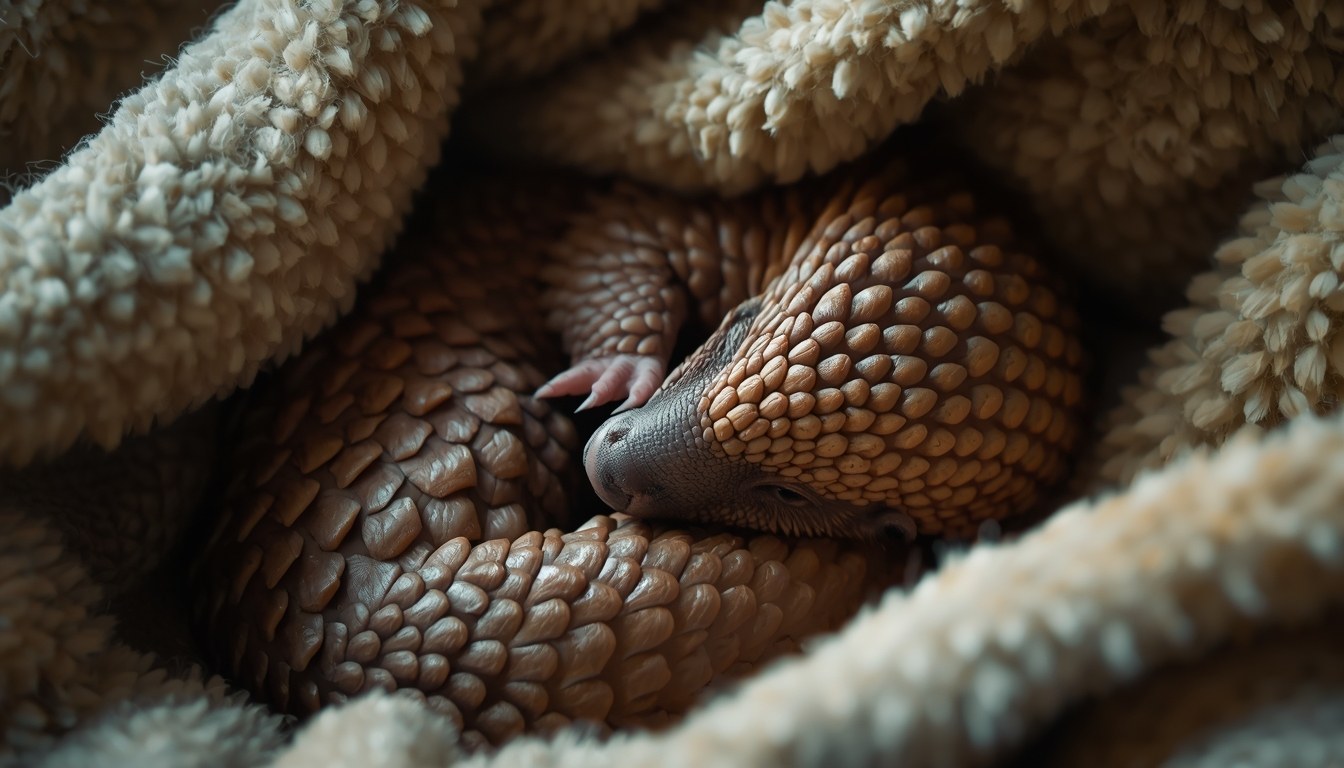
Taken in South Africa, it shows a baby pangolin curled beneath a soft blanket at a rescue center. The animal is small, vulnerable, almost defenseless. There is no violence in the frame. No spectacle. Only tenderness — and the weight of what is missing.
The pangolin’s mother was killed by poachers.
Pangolins are the only mammals covered in protective keratin scales. Ironically, those same scales have made them the most trafficked mammals in the world, driven by demand in illegal wildlife trade networks.
The photograph does not shock. It does not dramatize. Instead, it invites reflection. It forces us to confront a quieter tragedy — the kind that unfolds far from headlines.
Why This Image Matters
Wildlife photography is not merely about aesthetics. At its best, it becomes testimony.
The pangolin portrait stands out because it bridges distance. It makes conservation personal. It shifts the narrative from numbers and statistics to an individual life interrupted.
The strength of the Wildlife Photographer of the Year competition lies precisely here: these images ask us not only to admire nature, but to reckon with our role in its fate.
Sometimes, one image is enough.


