
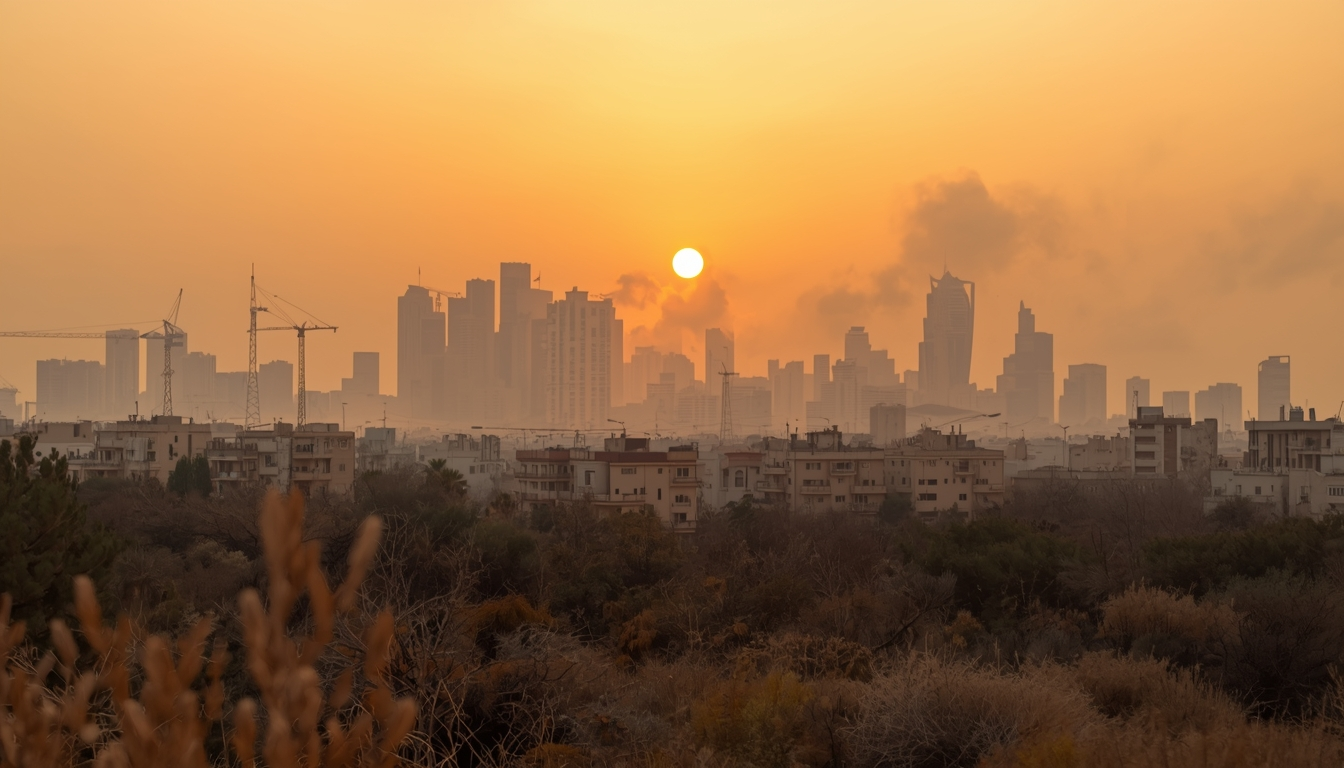
A difference of just a few miles can separate tolerable heat from dangerous living conditions. Two neighboring cities may face sharply contrasting temperature extremes depending on vegetation cover, building density, and urban design. This contrast is known as the urban heat island effect — a phenomenon that amplifies temperatures in built-up areas compared to surrounding regions.
As global warming accelerates, these localized heat pockets are expected to intensify. A new study from the University of East Anglia warns that in a world reaching +2°C above preindustrial levels, certain cities could experience disproportionately severe warming — in some cases exceeding +3°C.
With current global temperatures already hovering around +1.4 to +1.5°C, the +2°C threshold may be reached as early as 2050.
Why Some Cities Will Heat Faster Than Others
Climate projections typically examine global atmospheric patterns and greenhouse gas emissions. However, city-level outcomes depend heavily on local characteristics:
- Urban density and concrete coverage
- Green space availability
- Geographic location
- Proximity to water bodies
- Regional climate patterns
Researchers analyzed 104 medium to large cities worldwide, each with populations between 300,000 and 1 million residents. Their findings reveal that tropical and subtropical cities are particularly vulnerable.
Tropical and Monsoon Regions at Greatest Risk
The study indicates that 81% of cities located in tropical climates are projected to warm faster than surrounding areas under a +2°C global scenario.
Cities in monsoon-influenced regions are especially exposed, including those in:
- India
- China
- Niger
- Benin
Additional countries flagged in the research include Brazil, Morocco, Algeria, Turkey, Afghanistan, Egypt, Iraq, Mali, Angola, Mexico, Thailand, and even parts of the United States.
Cities Facing Extreme Seasonal Heat
Among the urban areas expected to endure especially intense heat during peak seasons are:
- Jalandhar
- Patiala
- Fuyang
- Shangqiu
- Kirkuk
- Assiut
In these locations, projected warming may surpass +3°C — even if global temperatures stabilize at +2°C.
Other cities likely to experience significantly amplified urban heat compared to neighboring areas include:
- Marrakech
- Fayetteville
- Birmingham
- Wichita
- Greenville
On average, annual temperatures in some of these cities could rise nearly one degree higher than nearby urban regions. While that may appear minor statistically, the impact during heatwaves could be severe — increasing risks of dehydration, cardiovascular stress, infrastructure strain, and energy demand spikes.
Urban Design Will Shape Survival
According to projections from the United Nations, exceeding +2°C warming is increasingly likely. For cities already prone to extreme heat, adaptation strategies must begin immediately.
Key mitigation measures include:
- Expanding green spaces and tree canopies
- Reducing concrete and asphalt surfaces
- Implementing reflective or heat-resistant building materials
- Improving ventilation corridors within dense neighborhoods
- Enhancing water management systems
In a warming world, geography alone will not determine outcomes. Urban planning decisions made today will influence whether future cities remain habitable or become dangerously overheated environments.
A Future Unevenly Distributed
Global warming does not impact every region equally. For some cities, temperature increases will be amplified by design, density, and climate patterns. The result will not simply be hotter summers — but potentially harsher living conditions that challenge health systems, infrastructure, and economic stability.
The climate crisis is global. Its consequences, however, will be intensely local.


