
The planet’s environmental safety margins are shrinking. According to a new assessment from the Potsdam Institute for Climate Impact Research, Earth is on the verge of crossing a seventh planetary boundary — a threshold that could further destabilize global ecosystems.
The boundary in question: ocean acidification.
Understanding Planetary Boundaries
Fifteen years ago, researchers identified nine planetary boundaries — ecological limits that define the “safe operating space” for humanity. These thresholds represent the environmental conditions that allowed civilization to develop and thrive during the relatively stable Holocene era.
Once crossed, these boundaries increase the risk of irreversible environmental shifts.
In recent years, six of the nine have already been exceeded. The latest Planetary Health Check, which will now be updated annually, warns that ocean acidification is rapidly approaching the danger zone.
The Hidden Cost of Carbon Absorption
Oceans absorb roughly 30% of the carbon dioxide emitted by human activities. This natural buffering system slows atmospheric warming, but it carries a chemical consequence.
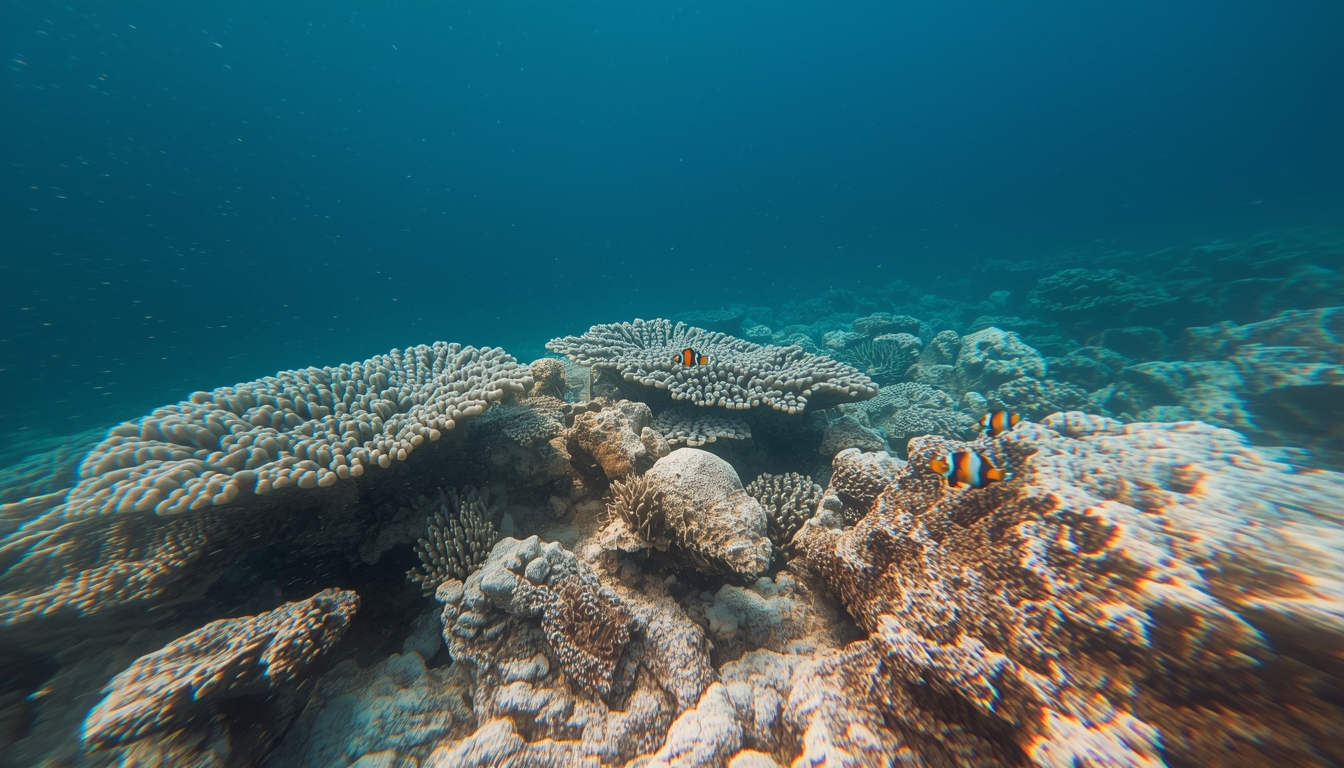
When seawater absorbs carbon dioxide, it forms carbonic acid. As acidity rises and pH levels decline, marine ecosystems begin to suffer. Coral reefs weaken. Shell-forming organisms struggle to build and maintain their structures. Plankton populations — the foundation of the marine food web — are disrupted.
Over time, the effects cascade throughout the oceanic food chain.
Even more concerning, increasing acidity reduces the ocean’s ability to absorb future carbon dioxide, weakening one of the planet’s most important climate regulators.
Today, atmospheric CO₂ concentrations are approximately 50% higher than pre-industrial levels. Researchers warn that even rapid emission reductions may not immediately stop further acidification, due to the delayed response of ocean systems and the long atmospheric lifetime of carbon dioxide.
In other words, some degree of continued chemical change may already be locked in.
Six Boundaries Already Exceeded
Ocean acidification would mark the seventh boundary pushed beyond safe limits.
The six already significantly breached include:
- Climate change
- Deforestation and land system change
- Biodiversity loss
- Freshwater depletion
- Nitrogen cycle disruption (largely from agricultural fertilizers)
- Chemical pollution from synthetic substances
These boundaries are not isolated. They interact and reinforce one another. For example, deforestation reduces carbon storage, which accelerates climate change, which in turn intensifies ocean warming and acidification.
The result is a tightly connected system under growing strain.
Why This Matters
Crossing a planetary boundary is not a symbolic event. It represents movement away from environmental stability toward greater uncertainty and potential tipping points.
Ocean acidification threatens coral reef systems that support millions of livelihoods worldwide. It disrupts fisheries, food security, and marine biodiversity. It also undermines the ocean’s role as a climate stabilizer.
The warning from scientists is not abstract. It reflects measurable chemical changes occurring now.
A Call for Systemic Action
The report emphasizes that environmental crises can no longer be treated in isolation. Climate change, pollution, land use, and ocean health are interconnected components of a single planetary system.
Addressing one issue while ignoring others will not restore balance.
The window to maintain Earth within a stable and resilient state is narrowing. Avoiding further destabilization will require coordinated global action, sustained emission reductions, ecosystem restoration, and systemic transformation across energy, agriculture, and industry.
The message is clear: the planet is approaching a critical threshold — and the choices made in the coming years will determine whether that line is crossed.


