Maria thought she had discovered the ultimate bathroom cleaning shortcut. After watching several viral videos on TikTok, she mixed baking soda, white vinegar, and dish soap exactly as instructed. The videos promised bright white grout lines in minutes — no expensive chemicals, no professional help required.
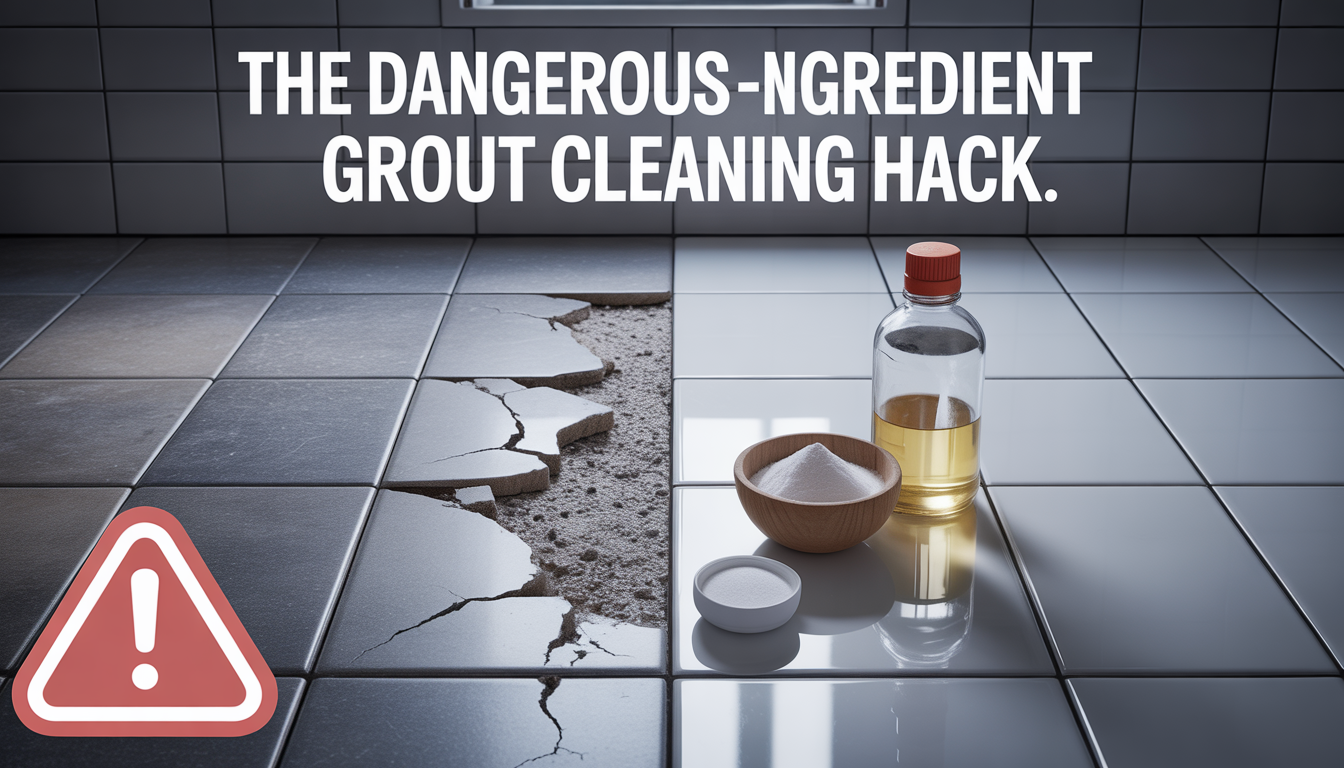
At first, it seemed to work. The mixture fizzed dramatically, stains appeared to lift, and her bathroom floor looked cleaner. But within weeks, the grout began cracking, crumbling, and discoloring. What looked like a miracle solution quickly turned into a costly repair project. Instead of saving money, she now faced thousands of dollars in restoration work.
Professionals across the tile and restoration industry are increasingly calling this three-ingredient grout cleaning trick a “dangerous fraud.” Not because it never cleans — but because of what it does beneath the surface.
Why the Three-Ingredient Recipe Became So Popular
The formula sounds harmless enough. Baking soda acts as a mild abrasive. Vinegar dissolves mineral buildup. Dish soap lifts dirt and grease. It feels natural, affordable, and easy. That combination is precisely why the hack spreads so quickly online.
Short-form videos show dramatic bubbling reactions and instant “before-and-after” transformations. Viewers see foam forming and assume it signals deep cleaning power. Comments flood in praising the results. The visual chemistry makes it convincing.
But according to experienced contractors, what people interpret as cleaning power is actually a chemical reaction that damages grout’s structural integrity.
What Actually Happens When You Mix Baking Soda and Vinegar
The reaction between baking soda (a base) and vinegar (an acid) creates carbon dioxide bubbles. That fizzing effect may look satisfying, but chemically it neutralizes both ingredients, reducing their cleaning effectiveness while simultaneously exposing grout to acid.
Grout is a porous material made primarily of cement-based compounds. Acidic solutions, even mild ones like vinegar, slowly erode cement. When applied repeatedly or scrubbed aggressively, vinegar can weaken grout bonds and create microscopic fractures.
Meanwhile, baking soda’s abrasive texture can scratch the grout surface. Those scratches create tiny openings that attract dirt and moisture. Dish soap may help lift grime, but it can also leave behind residue if not thoroughly rinsed.
The short-term result may look clean. The long-term result can be surface erosion, cracking, and moisture penetration.
The Hidden Dangers Beneath the Surface
Professionals warn that grout damage is not just cosmetic. Once grout begins to deteriorate, it loses its ability to seal gaps between tiles. Water can then seep beneath the tile surface, leading to serious problems.
Moisture intrusion behind walls or under flooring can trigger mold growth, weaken adhesives, and compromise subfloor structures. What begins as a harmless cleaning experiment can escalate into structural damage that costs thousands to repair.
The most alarming part, according to contractors, is that viral cleaning videos rarely include safety guidance. Vinegar can irritate skin and eyes. The mixture can splash during scrubbing. In poorly ventilated spaces, strong odors may cause respiratory discomfort.
Many homeowners attempt the hack without gloves, protective eyewear, or adequate ventilation. That lack of precaution compounds the risk.
The Real Cost of DIY Grout Mistakes
Professional tile repair specialists report a noticeable rise in grout deterioration linked to DIY cleaning methods. While exact costs vary depending on square footage and damage severity, full grout replacement in a bathroom can easily exceed $1,500 to $3,000. In more extensive cases involving water damage, repairs may climb even higher.
What makes the situation frustrating for professionals is that proper grout cleaning products are relatively inexpensive. A high-quality pH-neutral grout cleaner typically costs less than $20 and is specifically formulated to protect cement-based materials.
In contrast, repairing compromised grout often requires removal, reapplication, sealing, and sometimes tile replacement.
Why “Natural” Doesn’t Always Mean Safe
There is a growing perception that household pantry ingredients are automatically safer than commercial cleaners. While baking soda and vinegar have legitimate cleaning uses in certain contexts, grout is not one of them.
Grout requires balanced cleaning solutions that maintain a neutral pH level. Acidic substances gradually dissolve cement components. Even if the damage is not immediately visible, repeated exposure accelerates deterioration.
Professionals emphasize that natural ingredients can still be chemically reactive. The absence of synthetic chemicals does not guarantee safety for all surfaces.
What Professionals Recommend Instead
Licensed contractors and tile specialists consistently advise using pH-neutral cleaners designed specifically for tile and grout. These products remove stains without eroding grout composition.
Routine maintenance plays a major role in preventing discoloration. Weekly light cleaning prevents buildup from becoming deeply embedded. Proper ventilation after showers reduces moisture accumulation, which limits mold and mildew growth.
Experts also recommend sealing grout annually. Grout sealant creates a protective barrier that reduces porosity and makes future cleaning easier. This preventive step significantly extends grout lifespan.
For heavily stained grout, professional steam cleaning or extraction services provide deep cleaning without chemical erosion.
Warning Signs Your Grout May Already Be Damaged
If you have used the viral three-ingredient hack, it is important to monitor for early warning signs. Cracking, crumbling edges, powdery residue, and uneven discoloration can indicate structural weakening.
Another red flag is persistent dampness along grout lines. If grout feels soft or spongy, moisture may have penetrated beneath the tiles.
Early intervention can prevent more extensive damage. Consulting a tile professional for inspection may save significant repair costs later.
Frequently Asked Questions
Is vinegar ever safe for tile cleaning?
Vinegar may be safe on certain surfaces like glass, but it is not recommended for cement-based grout due to its acidic properties.
Can damaged grout be repaired without full replacement?
Minor surface damage may be patched, but severe erosion usually requires complete removal and re-grouting.
How often should grout be sealed?
Most professionals recommend resealing grout once per year, depending on usage and moisture exposure.
What is the safest way to clean grout at home?
Use a pH-neutral commercial grout cleaner, wear gloves, ensure good ventilation, and follow manufacturer instructions carefully.
Conclusion
The viral three-ingredient grout cleaning trick may look impressive on social media, but professionals warn that its long-term consequences can be costly and damaging. While baking soda, vinegar, and dish soap create a dramatic fizzing reaction, that same reaction can erode grout and compromise its structural integrity.
In the quest for affordable and natural cleaning solutions, many homeowners unintentionally create expensive repair problems. Understanding the chemistry behind the hack reveals why experts strongly discourage its use.
Sometimes the cheapest shortcut turns into the most expensive mistake. When it comes to grout care, investing in proper products and preventive maintenance is far safer than trusting viral trends.