
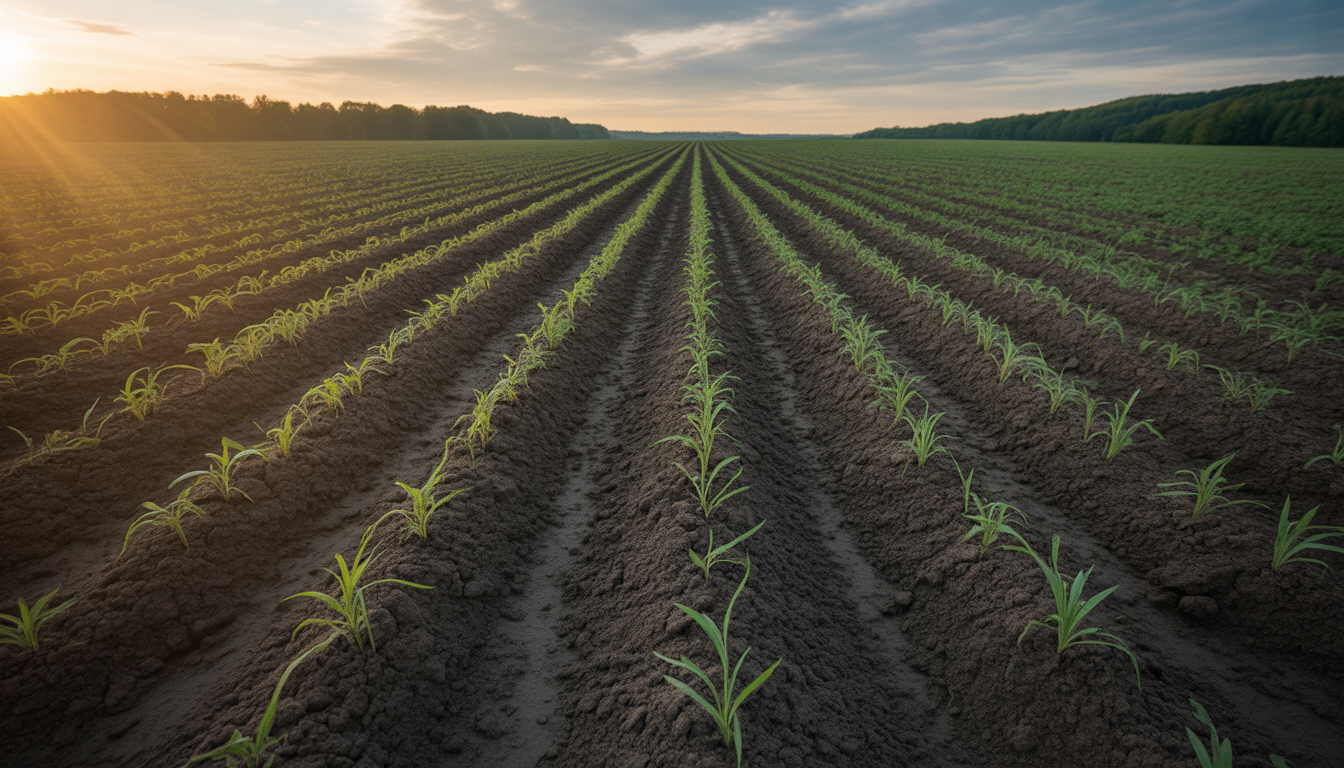
Maria Petrov steps out of her farmhouse near Kharkiv and breathes in the cool morning air. The scent isn’t floral or fresh from rain—it’s deeper, richer. It’s the smell of soil so fertile it has sustained generations.
She kneels at the edge of her wheat field and lifts a handful of earth. It’s so dark it appears almost black, crumbling softly in her palm like fine chocolate. Her grandmother used to say this land was worth more than gold. Watching trucks line up during harvest season, Maria understands why.
What she’s holding is chernozem soil—often called “black earth.” This remarkable soil type has transformed vast regions of Ukraine, Russia, and Kazakhstan into some of the most productive agricultural zones on the planet. And it quietly helps feed nearly 400 million people worldwide.
The Black Gold That Built Empires
Chernozem didn’t earn its reputation by chance. Across the Eurasian steppes, fields stretch under open skies, their surface darker than the shadows cast upon them. The richness runs deep—literally. In many areas, nutrient-packed layers extend 60 to 100 centimeters, sometimes reaching a full meter below ground.
Dr. Viktor Kozlov of Moscow Agricultural University describes it as nature’s savings account. The soil’s intense darkness comes from thousands of years of accumulated organic matter.
The process behind it is simple but extraordinary:
- Grassland plants grew and died in place for millennia.
- Cold winters slowed decomposition just enough to preserve nutrients.
- Warm summers encouraged deep root systems.
- Layer upon layer of organic material built up over time.
The result? A soil rich in carbon, nitrogen, phosphorus, and other essential nutrients—naturally balanced and incredibly productive.
Today, chernozem covers approximately 230 million hectares across Eastern Europe and Central Asia, making it one of the most valuable agricultural resources on Earth.
Why Chernozem Matters to Your Dinner Table
The numbers behind chernozem soil reveal why it plays such a crucial role in global food security:
| Property | Chernozem Soil | Average Farmland |
|---|---|---|
| Organic Matter Content | Up to 15% | 2–4% |
| Typical Depth | 60–100 cm | 20–30 cm |
| Wheat Yield Potential | 6–8 tons/hectare | 3–4 tons/hectare |
| Fertilizer Requirements | Low to Moderate | High |
These advantages translate into real-world benefits:
- Exceptional water retention reduces drought stress
- High natural nutrient density lowers fertilizer dependence
- Deep soil structure supports extensive root systems
- Strong organic matter content maintains long-term fertility
- Balanced pH supports optimal crop growth
Ukraine alone holds about 30% of the world’s chernozem, covering roughly 60% of its territory. Together with Russia and Kazakhstan, the region forms a powerful agricultural corridor responsible for nearly 30% of global wheat exports.
When Soil Becomes Geopolitical Power
Visit grain terminals in Odesa or Rostov-on-Don during harvest season, and you’ll see mountains of wheat and corn awaiting shipment to Africa, Asia, and the Middle East.
This abundance is made possible by chernozem soil—but it also creates global dependence.
When conflicts disrupt exports from this region, food prices spike. Import-dependent nations feel the strain immediately. What appears to be just soil becomes a central player in global economics and diplomacy.
Agricultural economist Dr. James Mitchell notes that while soil knows no borders, politics deeply influences how it is used—and who benefits from it.
A Resource Under Pressure
Despite its resilience, chernozem is not invincible.
Climate change threatens the delicate balance that formed it over thousands of years. Rising temperatures may accelerate organic matter breakdown. Shifting rainfall patterns could alter moisture levels critical for crop growth.
At the same time, intensive farming practices introduce additional risks:
- Soil erosion
- Compaction from heavy machinery
- Overuse of chemical inputs
- Declining organic matter levels
Sustainable approaches such as precision agriculture, cover cropping, and reduced tillage offer hope. Researchers across Eastern Europe are working to preserve what took nature 10,000 years to build.
For farmers like Maria, the future depends on balancing productivity with preservation—ensuring that the black earth remains fertile for generations to come.
Frequently Asked Questions (FAQs)
What exactly is chernozem soil?
Chernozem is a highly fertile black soil formed over thousands of years in grassland regions. It contains high levels of organic matter and supports exceptional agricultural productivity.
Why is chernozem more productive than typical farmland?
It contains up to 15% organic matter, retains water efficiently, requires less fertilizer, and produces significantly higher yields compared to average soils.
Which countries have the largest chernozem reserves?
Ukraine holds the largest share, followed by Russia and Kazakhstan.
Can chernozem be artificially created?
No. It forms over thousands of years under specific climate and ecological conditions that cannot be replicated artificially.
Is chernozem soil at risk?
Yes. Climate change, erosion, and unsustainable farming practices pose risks to its long-term fertility if not properly managed.
How deep does chernozem typically extend?
Most chernozem layers range between 60 and 100 centimeters deep, with some areas reaching nearly one meter below the surface.
Final Thoughts
Often called “black gold,” chernozem soil is one of the planet’s most powerful natural resources. It silently supports global food systems, influences international trade, and sustains millions of livelihoods.
Yet most people benefiting from it have never heard its name.
Beneath the fields of Eastern Europe lies a resource thousands of years in the making—one that continues to shape the future of global food security, one harvest at a time.


