
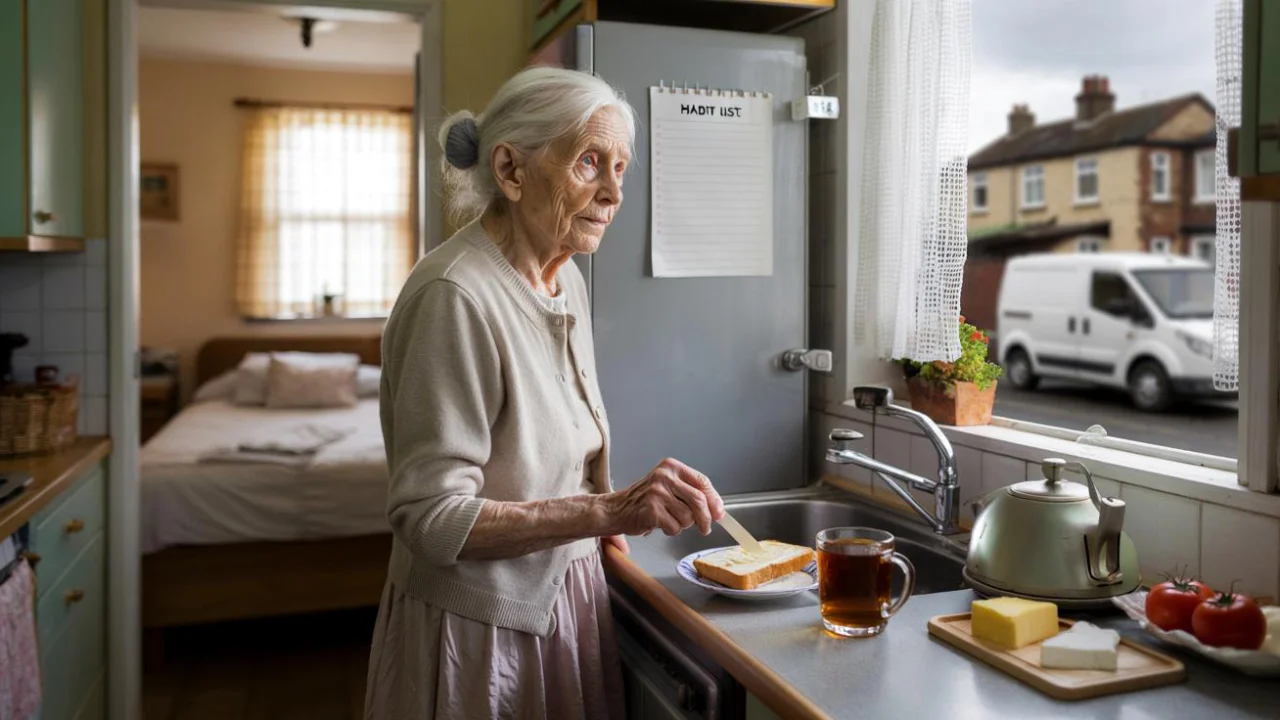
The morning alarm never sounds in Margaret’s house. At 101, her body clock still ticks like a Swiss watch, waking her at 6:45 AM without fail. She shuffles to the kitchen in worn slippers, puts the kettle on, and starts what she calls her “stubborn routine.”
Her neighbor, Mrs. Chen, often watches from across the street as Margaret emerges for her daily walk. “That woman puts me to shame,” Mrs. Chen admits. “I’m 30 years younger and I struggle to get out of bed some mornings. She’s out there rain or shine, moving like she’s got somewhere important to be.”
What Mrs. Chen doesn’t know is that Margaret does have somewhere important to be—she’s walking away from the care home that claimed three of her closest friends last year. Each step is a small rebellion against the white van that parks on her street, collecting neighbors who’ve given up on independence.
The Science Behind Margaret’s Stubborn Independence
Margaret’s centenarian daily habits aren’t just charming quirks—they’re backed by decades of research on healthy aging. Her routine creates what gerontologists call “functional reserve,” the extra capacity that helps older adults bounce back from illness or setbacks.
“We see this pattern repeatedly in our longest-lived patients,” explains Dr. Sarah Mitchell, a geriatrician who has studied centenarians for over 20 years. “It’s not about one magic habit, but rather the cumulative effect of small, consistent choices made over decades.”
Margaret’s approach mirrors findings from Blue Zones—regions where people routinely live past 100. These areas share common threads: regular physical activity, strong social connections, purposeful daily routines, and what researchers call “cognitive engagement.”
The key difference? Margaret figured this out on her own, through trial and error, and sheer determination to stay out of institutional care.
Breaking Down a Centenarian’s Daily Blueprint
Margaret’s daily habits follow a surprisingly simple pattern that any age group could adopt. Here’s what keeps her moving at 101:
| Time | Activity | Purpose |
|---|---|---|
| 6:45 AM | Natural wake-up, no alarm | Maintains circadian rhythm |
| 7:00 AM | Strong tea, single toast slice | Consistent nutrition timing |
| 8:30 AM | 20-minute neighborhood walk | Daily movement, social contact |
| 10:00 AM | Household tasks (laundry, cleaning) | Functional fitness, purpose |
| 12:30 PM | Fresh-cooked lunch | Cognitive engagement, nutrition |
| 2:00 PM | Reading or crossword puzzle | Mental stimulation |
| 4:00 PM | Tea with neighbor or phone call | Social connection |
| 6:00 PM | Light dinner, early bedtime prep | Digestive health, sleep hygiene |
The most striking aspect isn’t what she does—it’s what she refuses to give up. Margaret still:
- Climbs stairs to her bedroom every night (refuses a downstairs bed)
- Carries her own groceries home (though she now uses a wheeled cart)
- Argues with the TV news (cognitive engagement, she insists)
- Tends to three houseplants (“Something needs to depend on me”)
- Writes letters by hand to her great-grandchildren
The Powerful Psychology of “I Refuse”
Margaret’s mantra—”I refuse to end up in care”—reveals something crucial about successful aging. It’s not just about physical health; it’s about maintaining agency over one’s life choices.
“There’s enormous psychological power in the word ‘refuse,'” notes Dr. James Harrison, who specializes in geriatric psychology. “It implies active choice rather than passive acceptance. Margaret isn’t just aging—she’s actively managing her aging process.”
This mindset shapes every decision. When her arthritis flares, she doesn’t stop cooking—she adapts. She bought ergonomic utensils and a higher chair for the kitchen table. When winter ice made walking dangerous, she created an indoor routine, marching in place while watching morning news.
The fear that drives her isn’t death—it’s dependence. She watched her sister enter care at 89 and saw how quickly independence eroded. “She stopped making choices,” Margaret recalls. “First little ones, then bigger ones. Within six months, she couldn’t remember how to make tea the way she liked it.”
What Margaret’s Story Means for the Rest of Us
Margaret’s centenarian daily habits offer lessons that extend far beyond reaching 100. Her approach suggests that independence in later life isn’t about genetics or luck—it’s about intentional, consistent choices made throughout life.
The most powerful insight? Start early, but it’s never too late to begin. Research shows that even people in their 80s can build functional capacity through consistent daily habits.
“People often ask me what pill Margaret takes,” says her doctor, Dr. Patricia Williams. “The answer is routine. She takes routine like medication—same dose, same time, every single day.”
Margaret’s approach also challenges common assumptions about aging. She doesn’t do yoga or meditation, doesn’t take expensive supplements, and has never seen a personal trainer. Her longevity strategy is built on ordinary activities done with extraordinary consistency.
Her advice for others? “Don’t wait until you need help to prove you don’t need help. Start stubborn early.”
Perhaps most importantly, Margaret’s story shows that aging doesn’t have to mean shrinking. Her world has physically contracted—she no longer drives or travels—but her daily engagement has intensified. Every habit serves multiple purposes: physical fitness, cognitive stimulation, social connection, and psychological empowerment.
As she puts it, “I may be getting smaller, but I’m not getting smaller on the inside. That van across the street? It’s got nothing on 70 years of stubborn practice.”
FAQs
What time does Margaret wake up every day?
Margaret naturally wakes up at 6:45 AM without an alarm clock, maintaining a consistent sleep schedule that supports her circadian rhythm.
How long does Margaret walk each day?
She takes a 20-minute neighborhood walk every morning at 8:30 AM, rain or shine, which provides both physical exercise and social interaction with neighbors.
What does Margaret eat for breakfast?
Margaret keeps it simple with strong tea (no sugar) and a single slice of buttered toast, eaten at the same time every morning to maintain routine.
Why does Margaret refuse to move to a care home?
She believes that entering care leads to loss of independence and personal choice, saying “If I go in there, I won’t come out again. I’ll shrink.”
What household tasks does Margaret still do at 101?
Margaret continues to do her own shopping, laundry, most of her cleaning, and climbs stairs to her bedroom every night to maintain functional fitness.
How does Margaret stay mentally sharp?
She reads challenging material daily, does crossword puzzles, writes letters by hand, and even argues with TV news as a form of cognitive engagement.


