
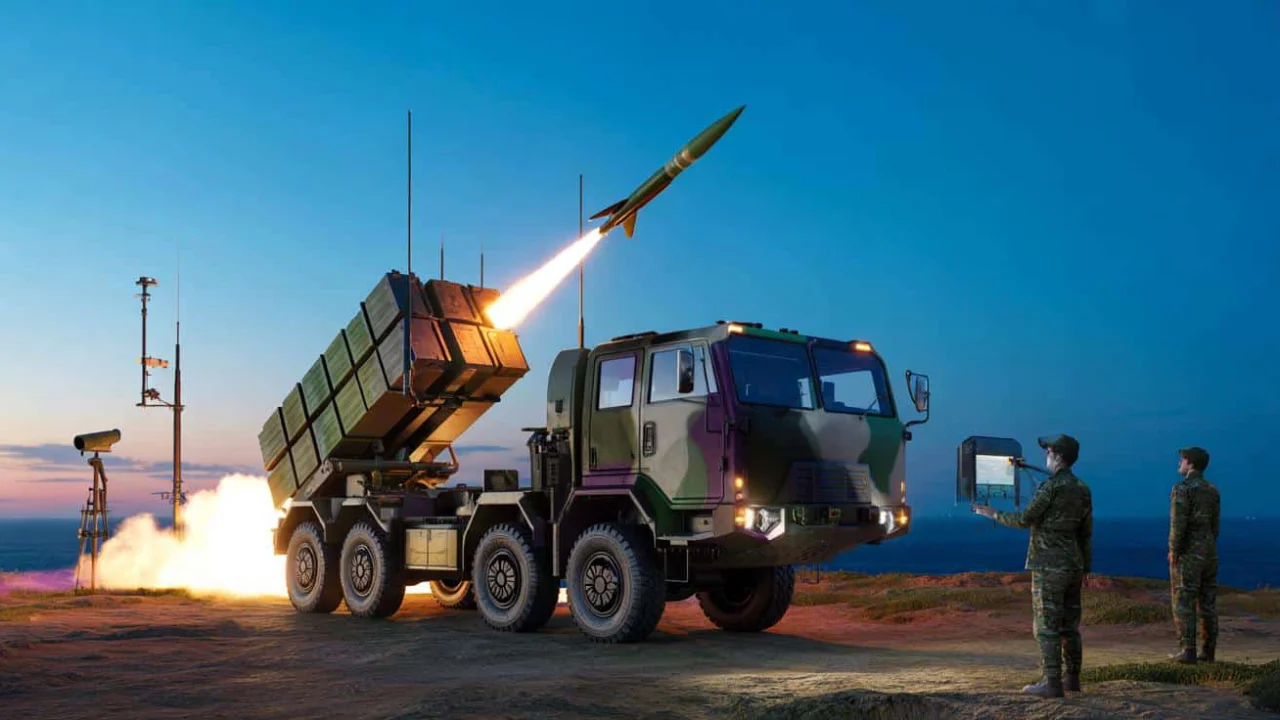
Captain Hiroshi Tanaka had seen plenty of military exercises during his 25 years in Japan’s Ground Self-Defense Force. But as he watched that camouflaged truck roll across the dusty field in Shizuoka prefecture, something felt different. The crowds gathered for the annual Fuji Firepower demonstration were expecting the usual display of tanks and artillery. What they got instead was a glimpse into Japan’s military future.
When the missile streaked across the sky, traveling farther than any land-based weapon Japan had ever publicly tested, Tanaka knew he was witnessing history. That wasn’t just another military truck—it was Japan’s bold statement to the world that the rules of regional security had just changed forever.
Japan’s Game-Changing Weapon Makes Its Debut
The long range coastal missile system that debuted at the Fuji Firepower exercise represents more than just advanced military technology. It’s Japan’s answer to an increasingly dangerous neighborhood, where aggressive neighbors test boundaries almost daily.
This upgraded Type 12 surface-to-ship missile can now strike targets up to 1,000 kilometers away. To put that in perspective, missiles launched from Japanese soil can now reach the waters around Taiwan, cover approaches to Shanghai, and defend Japan’s entire exclusive economic zone. That’s a massive expansion of Japan’s defensive reach.
“The extended range fundamentally changes how Japan can defend itself,” explains defense analyst Kenji Yamamoto. “Previously, Japanese forces had to wait for threats to come close to home waters. Now they can engage hostile forces while they’re still hundreds of miles away.”
The missile system rides on an 8×8 launcher vehicle that looks like an ordinary military truck from a distance. But underneath that camouflaged exterior lies some seriously advanced technology. Engineers have completely reworked the missile’s airframe to reduce its radar signature, making it much harder for enemy systems to detect and intercept.
Technical Specifications and Capabilities
Japan’s new long range coastal missile system brings impressive specifications that defense experts are calling a regional game-changer. Here’s what makes this weapon system so significant:
| Specification | Details |
|---|---|
| Maximum Range | 1,000 kilometers |
| Launch Platform | Mobile 8×8 truck launcher |
| Target Types | Ships, coastal facilities, land targets |
| Guidance System | Advanced seekers with stealth features |
| Deployment | Ground Self-Defense Force units |
The system’s mobility gives Japan a crucial advantage. Unlike fixed installations that enemies can easily target, these mobile launchers can hide anywhere and move quickly after firing. The missile’s improved guidance systems and reduced radar signature make it extremely difficult to shoot down once it’s in flight.
Key technological improvements include:
- Slimmer, stealthier airframe design
- Enhanced guidance and targeting systems
- Improved survivability against countermeasures
- Mobile launch platform for rapid deployment
- Extended range without sacrificing accuracy
“The engineering behind this system is remarkable,” notes military technology expert Dr. Sarah Chen. “They’ve managed to triple the range while actually making the missile harder to detect. That’s no small feat.”
Why Japan Needed This Weapon Right Now
Japan didn’t develop this long range coastal missile system in a vacuum. The country faces mounting security challenges from multiple directions, making advanced defensive capabilities essential for national survival.
China has dramatically increased its military presence around disputed territories. Chinese coastguard and naval vessels now regularly patrol near the Senkaku Islands, which Japan controls but China claims. These encounters happen so frequently that Japanese officials barely make news of routine incidents anymore.
North Korea presents an even more unpredictable threat. The regime regularly launches ballistic and cruise missiles that splash down dangerously close to Japanese territory. Some of these test flights have passed directly over Japanese airspace, triggering emergency alerts for millions of civilians.
Russia adds another layer of complexity to Japan’s security environment. Moscow has significantly expanded its military presence on the disputed Kuril Islands north of Hokkaido. These islands, which Russia seized at the end of World War II, remain a source of tension between the two countries.
“Japan finds itself surrounded by increasingly aggressive neighbors,” explains international relations professor Mark Thompson. “The long range coastal missile system gives Japanese forces the ability to respond to threats before they reach critical distances from populated areas.”
The timing of this weapon’s unveiling sends a clear political message. Japan wants potential adversaries to know that naval forces approaching Japanese waters now face precision strikes from hidden positions on land. This represents a fundamental shift in Japan’s defensive posture.
What This Means for Regional Security
The deployment of Japan’s long range coastal missile system will likely trigger responses from neighboring countries. China has already criticized Japan’s military buildup, calling it destabilizing to regional peace. North Korea typically responds to Japanese military developments with inflammatory rhetoric and additional missile tests.
For ordinary Japanese citizens, this weapon system represents both reassurance and concern. Many feel safer knowing their country can defend itself more effectively. Others worry that advanced military capabilities might make Japan a bigger target for hostile nations.
The system fits into Japan’s broader “counter-strike” doctrine, which gives the country the legal framework to hit enemy missile sites if an attack appears imminent. This represents a significant evolution from Japan’s traditionally passive defensive stance.
Regional allies view Japan’s new capabilities positively. The United States has encouraged Japan to take on greater responsibility for regional security. Australia and other Indo-Pacific partners see Japan’s enhanced defensive abilities as contributions to collective security against common threats.
“This missile system strengthens deterrence across the entire region,” argues strategic studies expert Colonel James Mitchell. “Potential aggressors now have to account for Japanese defensive capabilities when planning any military action in East Asian waters.”
The long range coastal missile system also changes naval calculations for any country considering aggressive action near Japan. Previously, hostile naval forces only had to worry about Japanese air and naval assets. Now they face precision land-based missiles that can reach them from unexpected directions.
As tensions continue rising across the Indo-Pacific region, Japan’s new missile capabilities provide a stabilizing influence. The system demonstrates that democratic nations can develop advanced defensive technologies to protect themselves without threatening others. Whether this leads to regional arms races or enhanced deterrence remains to be seen, but Japan has clearly signaled its commitment to defending its territory and interests.
FAQs
How far can Japan’s new long range coastal missile system reach?
The upgraded Type 12 missile can strike targets up to 1,000 kilometers away, covering Japan’s entire exclusive economic zone and reaching as far as Taiwan and Shanghai.
What makes this missile system different from previous Japanese weapons?
This system offers much greater range, improved stealth capabilities, and mobile launch platforms that can hide and move quickly after firing.
Which countries is this weapon system designed to counter?
While Japan doesn’t explicitly name targets, the system addresses threats from China, North Korea, and Russia, all of which have increased military activities near Japanese territory.
Can Japan legally use this weapon to strike first?
Under Japan’s “counter-strike” doctrine, the country can hit enemy missile sites if an attack appears imminent, but this requires careful legal and political consideration.
How does this affect regional security in East Asia?
The system enhances deterrence by giving Japan the ability to defend itself more effectively, though it may also prompt neighboring countries to develop countermeasures.
Will Japan deploy more of these missile systems?
While specific deployment numbers aren’t public, Japan is likely to acquire multiple units to cover different regions and ensure redundancy in its defensive capabilities.


