
Maria Santos was having her morning coffee in Manila when her phone buzzed with a news alert. “US launches intercontinental ballistic missile over Pacific.” Her heart skipped a beat. Living in the Philippines, she knew all too well what tensions in the Pacific meant for her family. But as she read further, she realized this wasn’t about an imminent threat—it was about America flexing its decades-old nuclear muscles in a carefully choreographed display of power.
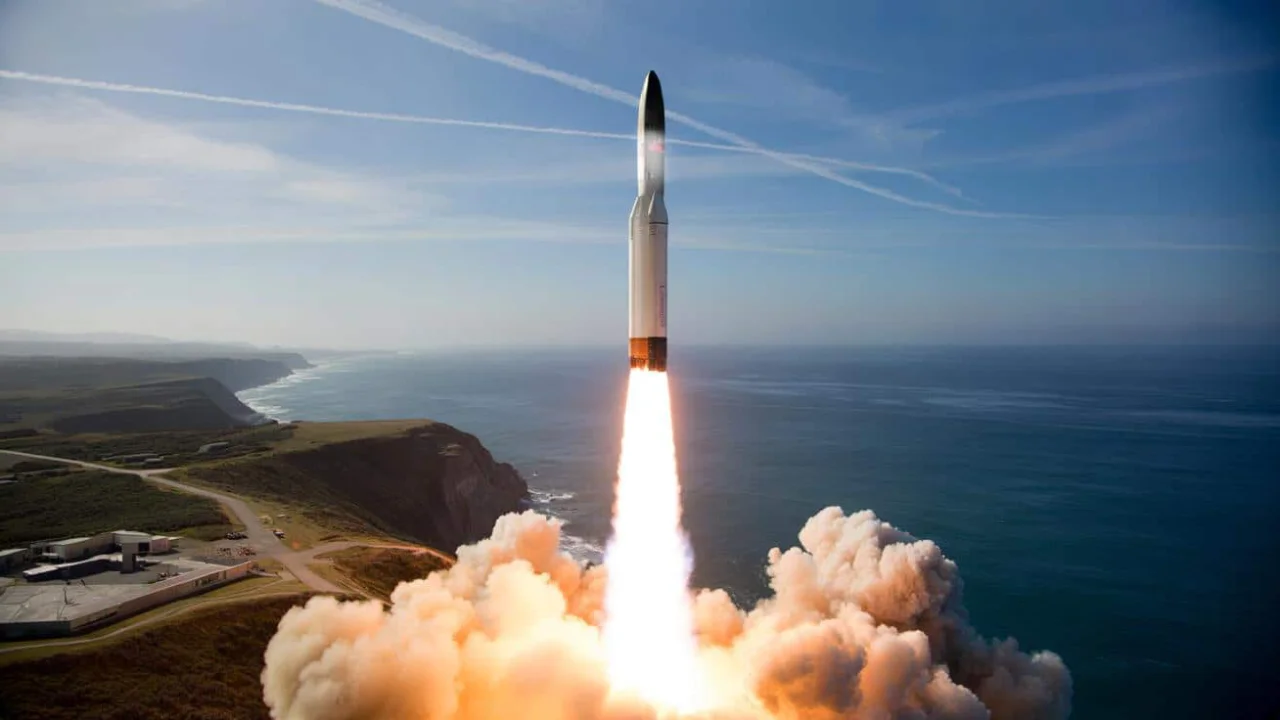
Thousands of miles away in California, at exactly 12:01 p.m. local time, a Cold War-era giant had just awakened from its concrete slumber and painted a fiery arc across the Pacific sky.
When a 50-Year-Old Missile Sends a 2025 Message
The Minuteman III missile that launched from Vandenberg Space Force Base on this particular day wasn’t just any routine test. Sure, the US Air Force Global Strike Command called it a “routine operational test,” but the timing and global context made it anything but routine.
This intercontinental ballistic missile has been America’s nuclear backbone since the early 1970s. Think about that for a moment—while most of us were upgrading our smartphones every few years, this missile system has been standing guard for over five decades. Yet it remains one of the most feared weapons on the planet, capable of delivering a nuclear warhead across 13,000 kilometers in roughly 30 minutes.
“The Minuteman III represents the ultimate insurance policy,” explains defense analyst Robert Kim. “It’s America’s way of saying we can reach anywhere, anytime, and our 50-year-old technology can still get the job done.”
The missile’s journey from California to the Marshall Islands covered 6,760 kilometers of open Pacific Ocean. Its target? The Ronald Reagan Ballistic Missile Defense Test Site on Kwajalein Atoll, where some of the world’s most sophisticated tracking equipment waited to record every millisecond of the weapon’s performance.
Breaking Down America’s Pacific Power Play
Let’s get into the nuts and bolts of what actually happened during this test. The Minuteman III missile carried a Mark 21 re-entry vehicle—essentially a dummy warhead designed for testing purposes. No nuclear material was involved, but everything else was as real as it gets.
Here’s what made this test particularly significant:
- Flight distance of 6,760 km demonstrated intercontinental reach capabilities
- Precision targeting showcased guidance system accuracy after five decades of service
- Real-time data collection provided insights into missile reliability and performance
- International observers could witness America’s continued nuclear deterrent capability
- Timing coincided with rising tensions in the Pacific region
The technical specifications paint a picture of devastating capability:
| Specification | Details |
|---|---|
| Maximum Range | 13,000 km |
| Flight Time | Approximately 30 minutes |
| Launch Weight | 36,000 kg |
| Warhead Capacity | Up to 3 nuclear warheads |
| Active Since | Early 1970s |
| Current US Arsenal | Approximately 400 missiles |
“What’s remarkable isn’t just that this system still works after 50 years, but that it works with pinpoint accuracy,” notes former Air Force Colonel Sarah Mitchell. “The engineering that went into these missiles in the 1960s and 70s was truly ahead of its time.”
Engineers at Kwajalein collected terabytes of data during the test. Every aspect of the missile’s flight was monitored—from the initial boost phase to the final moments of re-entry. The Reagan Test Site’s radar systems can track objects as small as a baseball traveling through space, providing unprecedented detail about the weapon’s performance.
What This Really Means for Global Security
For people like Maria Santos in Manila, this test represents both reassurance and concern. On one hand, America’s continued nuclear deterrent helps maintain stability in a region where tensions have been rising. On the other hand, any display of nuclear capability serves as a stark reminder of the destructive power that nations wield.
The test sends multiple messages to different audiences:
- To allies: America’s nuclear umbrella remains credible and effective
- To adversaries: Despite the system’s age, it remains a formidable deterrent
- To military planners: The data will inform future missile development and modernization
- To taxpayers: Their investment in defense spending continues to yield functional results
The broader implications extend beyond military posturing. Countries throughout the Pacific region are watching how America maintains its nuclear deterrent while simultaneously pursuing diplomatic solutions to regional conflicts.
“This test demonstrates continuity in American defense policy,” explains international relations expert Dr. James Wong. “It’s not about starting conflicts—it’s about ensuring everyone knows the consequences of starting one.”
The Minuteman III missile system is scheduled for replacement by the Ground Based Strategic Deterrent program sometime in the 2030s. Until then, these periodic tests serve as both maintenance checks and diplomatic statements.
For communities near missile bases, these launches have become part of life. Local economies benefit from the military presence, while residents understand they live near some of the most powerful weapons ever created. The tests provide jobs for thousands of engineers, technicians, and support staff who ensure America’s nuclear deterrent remains viable.
The precision required for these tests is staggering. Launch crews must account for weather conditions, atmospheric pressure, ocean currents, and even the rotation of the Earth. A miscalculation of just a few degrees could send the missile hundreds of kilometers off target.
“Every test is essentially a demonstration that we can hit exactly what we aim for, when we need to,” adds Colonel Mitchell. “That precision is what makes deterrence work—potential adversaries know we don’t just have powerful weapons, we have accurate ones.”
FAQs
How often does the US test Minuteman III missiles?
The US typically conducts 2-4 Minuteman III tests per year to verify system reliability and performance.
Could this missile actually reach any target on Earth?
With its 13,000 km range, the Minuteman III can strike targets on most continents from US-based silos.
How long has the Minuteman III been in service?
The missile system has been operational since the early 1970s, making it over 50 years old.
Are these tests expensive to conduct?
Each test launch costs several million dollars, but provides crucial data on system reliability and performance.
When will the Minuteman III be replaced?
The US plans to replace the Minuteman III with the new Ground Based Strategic Deterrent system in the 2030s.
Do other countries conduct similar missile tests?
Yes, other nuclear powers including Russia, China, and others regularly test their intercontinental ballistic missiles.


