
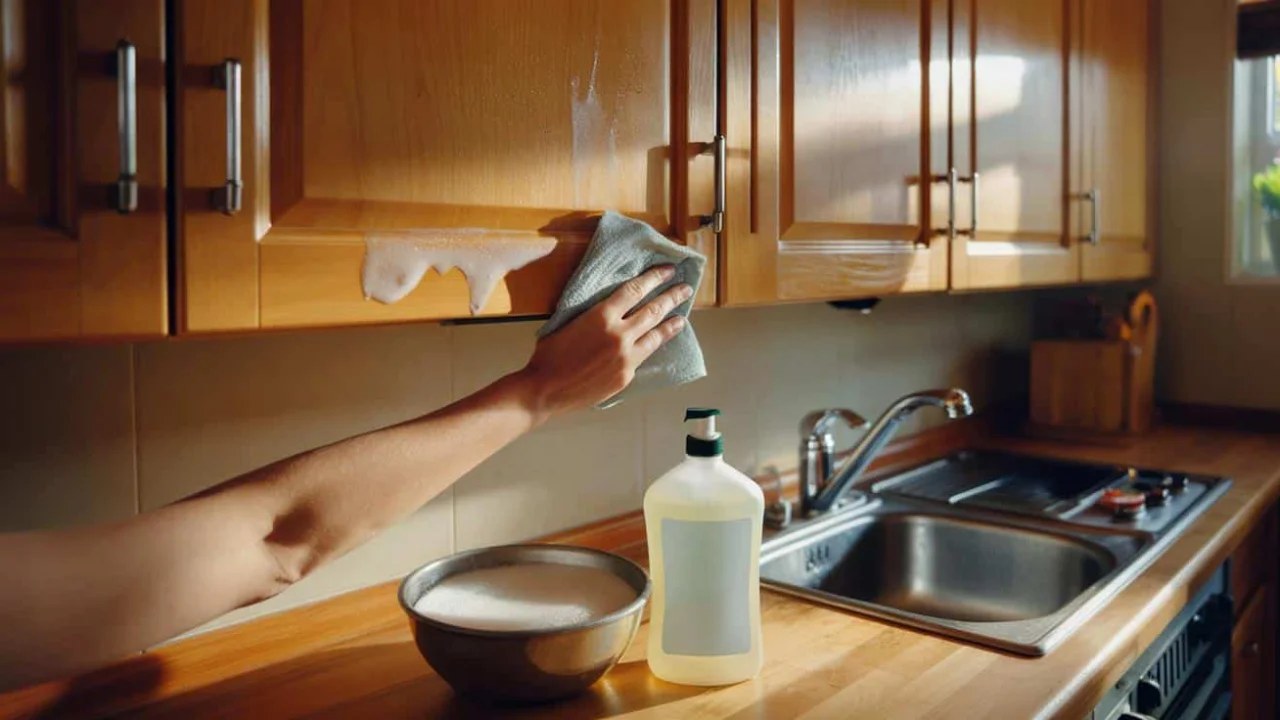
Sarah stared at her kitchen cabinets with that familiar mix of embarrassment and defeat. Company was coming in two hours, and those cabinet doors looked like they hadn’t been properly cleaned since the Obama administration. She’d already tried three different cleaners from under the sink, each promising to cut through grease “like magic.” Instead, the sticky film just seemed to rearrange itself into new patterns, mocking her efforts.
Her sister walked in, took one look at the situation, and laughed. “You’re overthinking this,” she said, walking straight to the dish soap by the sink. “This little bottle right here will make those grimy cabinets clean better than anything you’ll find in the cleaning aisle.”
That simple observation changed everything Sarah thought she knew about cleaning her kitchen.
Why the cleaning industry doesn’t want you to know this secret
The forgotten liquid hiding in plain sight is ordinary dish soap. Not the fancy cabinet cleaners with bold promises and premium price tags. Just regular liquid dish detergent that sits quietly beside your sink, doing the real work while expensive alternatives grab all the attention.
Professional cleaning companies and product manufacturers have built entire marketing campaigns around specialized cabinet cleaners. They’ll sell you wood-specific sprays, grease-cutting foams, and multi-step restoration systems that cost more than a week’s groceries. But here’s what they don’t advertise: dish soap was specifically designed to break down grease and oil at the molecular level.
“Most homeowners don’t realize that the grime on their cabinets is essentially the same as what’s on their dinner plates,” explains Maria Rodriguez, a professional house cleaner with 15 years of experience. “Dish soap cuts through cooking oils, food residue, and grease better than most specialized cleaners because that’s literally what it was made to do.”
The sticky film covering your cabinet doors comes from cooking vapors that float up from your stove and settle on nearby surfaces. Dust particles stick to this oily residue, creating layers of grime that build up over months and years. Standard household cleaners often just push this mess around, but dish soap’s surfactants actually break the bond between oil and surface.
The step-by-step method that transforms grimy cabinets
Getting grimy cabinets clean with dish soap requires the right technique. Here’s the method that professional cleaners have used for decades:
- Fill a bowl with warm (not hot) water
- Add 2-3 generous squeezes of liquid dish soap
- Stir until the water becomes cloudy and slightly slippery
- Dip a microfiber cloth in the solution
- Wring out excess water until the cloth is damp, not dripping
- Work in small sections, starting from bottom to top
- Use gentle circular motions to lift the grime
- Rinse your cloth frequently in the soapy water
- Follow with a clean damp cloth to remove soap residue
- Dry immediately with a soft towel
| Cabinet Material | Best Dish Soap Type | Water Temperature | Special Considerations |
|---|---|---|---|
| Painted Wood | Gentle, clear formula | Warm | Test small area first |
| Natural Wood | Mild dish soap | Lukewarm | Dry immediately |
| Laminate | Any dish soap | Warm | Can handle more scrubbing |
| Metal | Degreasing dish soap | Warm to hot | Polish afterward if desired |
The transformation happens quickly once you start. The first pass with your soapy cloth will turn gray or brown as years of accumulated grease lifts away. Don’t be shocked if the water in your bowl becomes quite dirty – that’s proof the method is working.
What professional cleaners discovered about dish soap
Commercial cleaning services have quietly relied on this technique for years. While they might bring impressive-looking equipment and branded products, many experienced cleaners reach for basic dish soap when dealing with kitchen grease.
“I’ve tried every cabinet cleaner on the market,” says Tom Chen, who runs a residential cleaning company in Chicago. “For everyday kitchen grime, nothing beats a good dish soap solution. It’s gentle enough for most finishes but strong enough to cut through years of cooking residue.”
The science backs up what cleaners have discovered through experience. Dish soap contains surfactants that reduce surface tension, allowing the cleaning solution to penetrate greasy films. These same molecules then surround oil particles and suspend them in water, making them easy to wipe away.
Professional-grade cabinet cleaners often contain similar surfactants, but they’re diluted with other ingredients like fragrances, preservatives, and marketing-friendly additives. The result is a more expensive product that may not clean as effectively as the concentrated dish soap you already own.
“The biggest mistake people make is thinking they need special products for every cleaning task,” explains Jennifer Walsh, a home organization specialist. “Dish soap handles about 80% of kitchen cleaning jobs better than anything else you can buy.”
Why this method works when others fail
Most cabinet cleaning failures happen because people use the wrong approach for the type of grime they’re fighting. Dust requires dry cleaning or light moisture. Water spots need acids like vinegar. But kitchen cabinet grime is primarily oil-based, which means it needs something that can break down fats and grease.
Many commercial cleaners rely on alcohol or ammonia to cut through grime. These ingredients can remove some surface dirt, but they’re not specifically designed to handle the oily residue that makes grimy cabinets clean seem impossible. Dish soap’s grease-fighting formula tackles the root cause of the problem.
The warm water temperature matters too. Heat helps dissolve greasy residue faster and makes dish soap more effective. Cold water won’t activate the surfactants properly, while hot water can damage cabinet finishes or cause soap to evaporate too quickly.
Another advantage: dish soap rinses away completely when you follow up with a clean, damp cloth. Many cabinet cleaners leave residue that actually attracts more dirt over time, creating a cycle where your cabinets get dirty faster after each cleaning.
The real cost comparison that will surprise you
A bottle of quality dish soap costs between $3-5 and contains enough product to clean your entire kitchen dozens of times. Compare that to specialized cabinet cleaners that cost $8-15 per bottle and might handle one thorough cleaning session.
The math becomes even more compelling when you consider effectiveness. Most people need multiple bottles of cabinet cleaner to get grimy cabinets clean because the first attempt often falls short. With dish soap, one thorough cleaning usually solves the problem completely.
Time savings matter too. The dish soap method typically requires one pass to remove grime, followed by a quick rinse and dry. Many commercial cleaners require multiple applications, waiting periods, and additional products to achieve similar results.
FAQs
Will dish soap damage my cabinet finish?
Dish soap is gentler than most commercial cleaners and safe for painted, laminate, and sealed wood finishes when used with the proper technique.
How often should I clean my cabinets with dish soap?
Most kitchens benefit from a thorough cabinet cleaning every 2-3 months, with spot cleaning as needed around high-use areas.
Can I use this method on cabinet hardware too?
Yes, dish soap works excellently on cabinet handles, knobs, and hinges to remove grease and fingerprints.
What if my cabinets are really heavily stained?
For stubborn grime, let the soapy cloth sit on the surface for 2-3 minutes before wiping to give the surfactants more time to work.
Is any brand of dish soap better than others?
Most quality dish soaps work well, but degreasing formulas like Dawn or Palmolive tend to be most effective on kitchen grime.
Should I remove cabinet doors before cleaning?
It’s not necessary for regular cleaning, but removing doors makes the job easier if you’re doing a deep clean after years of neglect.


