
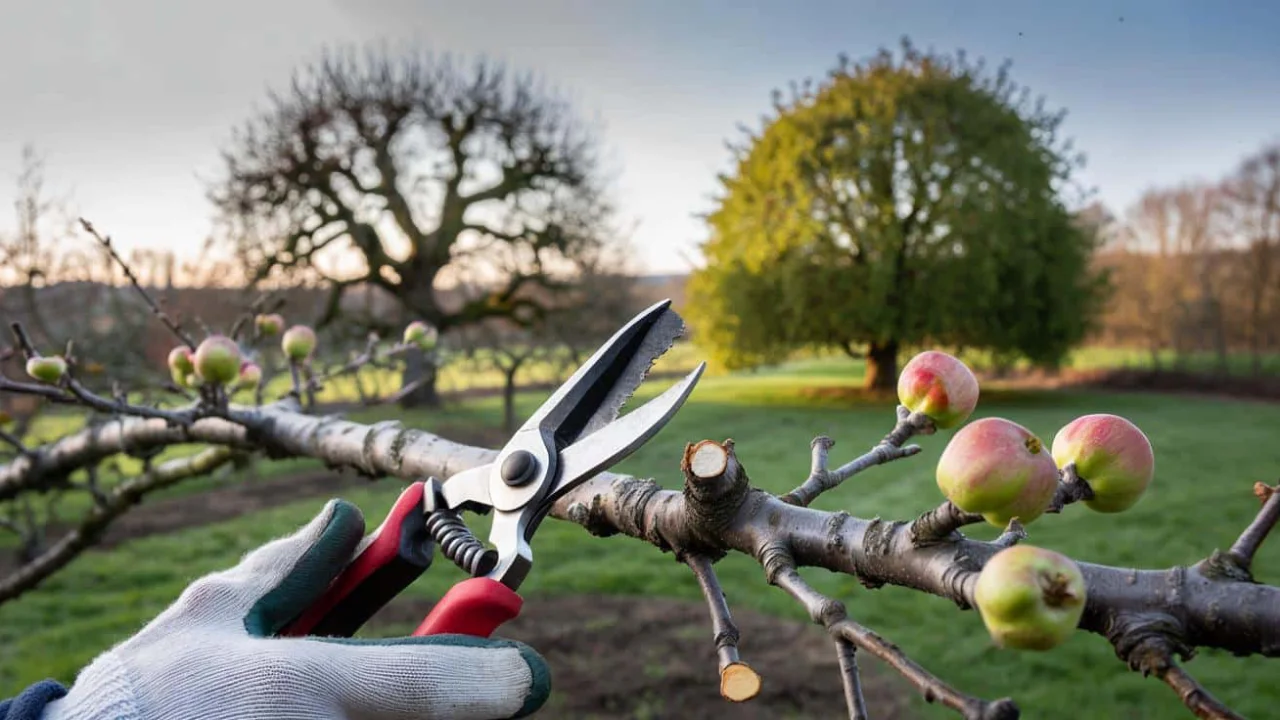
Sarah stared at her apple trees last February, bare branches reaching toward the gray sky like desperate fingers. Her neighbor’s orchard always produced baskets of crisp, ruby-red fruit while hers yielded maybe a dozen sad apples each season. “What am I doing wrong?” she wondered, watching him work methodically with pruning shears in the bitter cold.
That’s when she learned the secret that transforms mediocre apple trees into productive powerhouses. The difference wasn’t luck, genetics, or expensive fertilizers. It was one crucial step that most gardeners either skip entirely or do at the wrong time.
Apple pruning during late winter dormancy is the make-or-break moment that determines whether you’ll harvest abundant, beautiful fruit or watch another disappointing season slip by. Right now, while your trees look lifeless and forgotten, they’re actually preparing for the most important growth surge of the year.
Why This Cold Weather Window Changes Everything
February might seem like the worst time to think about apples, but it’s actually when the magic happens. Your apple trees have pulled all their energy down into their roots, essentially hitting the pause button on growth. This dormant state creates a perfect opportunity that only lasts a few precious weeks.
“Pruning while the tree is dormant lets you redirect its future energy from useless wood into future blossoms and fruit,” explains longtime orchardist Marcus Chen. “It’s like being able to edit a movie before it’s filmed.”
The moment temperatures start climbing consistently in March, sap begins rushing back up through the branches like a dam bursting. The tree awakens with explosive energy, pushing out new leaves, shoots, and hopefully, flower buds. But here’s the catch: if you haven’t pruned by then, the tree decides where all that energy goes.
And trees, left to their own devices, tend to make terrible decisions. They create dense tangles of crossing branches, send energy to weak wood instead of strong fruiting spurs, and prioritize vegetative growth over flower production. The result? Fewer apples, smaller fruit, and constant battles with disease in overcrowded canopies.
Smart apple pruning isn’t about making your tree look neat and tidy. It’s about becoming the director of an energy flow system, ensuring nutrients and resources flow to the branches that will actually produce the fruit you want.
Essential Tools and Preparation for Success
Before you step outside with pruning shears, you need the right equipment and a clear plan. Rushed pruning with dull tools causes more harm than good, creating ragged wounds that invite disease and pest problems.
Here’s your essential apple pruning toolkit:
- Sharp bypass hand pruners for branches up to ¾ inch diameter
- Long-handled loppers for limbs up to 1½ inches thick
- Pruning saw for larger branches requiring removal
- Rubbing alcohol or disinfectant wipes for cleaning blades
- Ladder or pole pruner for reaching higher branches safely
Clean cuts heal faster and resist infection better than jagged, torn wounds. Between each tree, wipe your blades with alcohol to prevent spreading diseases like fire blight, which can devastate entire orchards.
The most important tool, however, isn’t something you can buy. It’s patience. Spend at least five minutes walking around each tree, studying its structure from every angle. Look for these key problems:
| Problem | Impact | Solution |
|---|---|---|
| Crossing branches | Wounds from rubbing, disease entry points | Remove the weaker or less productive branch |
| Dead or diseased wood | Spreads problems, wastes tree energy | Cut back to healthy wood immediately |
| Vertical shoots (suckers) | No fruit production, blocks light | Remove completely at base |
| Crowded center | Poor air circulation, increased disease risk | Thin interior branches for light penetration |
“Think of light as another fertilizer,” notes fruit growing specialist Dr. Rebecca Martinez. “Every apple needs its own patch of sunshine to swell properly and build the sugars that create great flavor.”
The Pruning Technique That Multiplies Your Harvest
The secret lies in understanding how apple trees actually produce fruit. Unlike vegetables that grow on new shoots, apples form on specialized short branches called spurs that can produce for decades when properly maintained.
Your winter pruning should focus on three main cuts:
Thinning cuts remove entire branches back to their point of origin. These open up the canopy and eliminate competing growth. Always cut just outside the branch collar where the limb meets the trunk or parent branch.
Heading cuts shorten branches to encourage more lateral growth and spur development. Make these cuts just above an outward-facing bud to direct new growth away from the tree’s center.
Spur pruning involves shortening young shoots to 4-6 buds, creating the stubby branches where flowers and fruit will form. These cuts turn vigorous vertical growth into productive horizontal spurs.
The key is balance. Remove about 20-25% of the previous year’s growth on mature trees. Younger trees need lighter pruning to establish their framework, while older trees may require more aggressive renovation.
“I always tell people that proper pruning feels like you’re being too aggressive at first,” says veteran orchardist Tom Bradley. “But when you see the explosion of healthy growth and fruit production that follows, you realize the tree was actually begging for that kind of direction.”
What Happens When You Get It Right
The effects of proper winter apple pruning become visible within weeks. As temperatures warm, your strategically pruned trees channel their awakening energy exactly where you directed it. Strong, outward-facing buds burst into vigorous shoots. Shortened spurs develop fat flower buds instead of weak, whippy growth.
By late spring, the difference is dramatic. Pruned trees produce larger clusters of blossoms, better air circulation prevents common fungal diseases, and the improved light penetration helps fruit develop superior color and sugar content.
The harvest benefits extend far beyond just quantity. Well-pruned apple trees produce larger individual fruits with better flavor, color, and storage quality. The improved branch structure also makes harvesting safer and easier, while reducing the likelihood of limb breakage under heavy fruit loads.
Perhaps most importantly, consistent winter pruning creates a positive cycle. Each year’s careful cuts make the following year’s decisions clearer and easier. Your trees develop strong, balanced frameworks that can support heavy crops for decades.
Sarah’s story has a happy ending. After learning proper winter pruning techniques, her apple trees now rival her neighbor’s production. Last fall, she harvested over 200 pounds of beautiful, flavorful apples from trees that once barely produced a basket.
The transformation didn’t happen overnight, but it started with a single decision to grab her pruners on a cold February morning and take control of her trees’ destiny.
FAQs
When exactly should I prune my apple trees?
The ideal window is late winter while trees are fully dormant, typically February through early March depending on your climate zone.
Can I prune apple trees in fall or summer?
Avoid fall pruning as it can stimulate late growth vulnerable to frost damage, and summer pruning removes leaves needed for fruit development.
How much should I prune off each year?
Remove about 20-25% of the previous year’s growth on mature trees, focusing on dead, diseased, crossing, or inward-growing branches.
Will heavy pruning hurt my apple tree?
Proper dormant season pruning actually strengthens trees by redirecting energy to productive wood, though avoid removing more than one-third of the canopy in a single year.
Do young apple trees need different pruning than mature ones?
Yes, young trees need lighter pruning focused on developing strong scaffold branches, while mature trees require more aggressive thinning to maintain productivity.
What’s the biggest mistake people make when pruning apple trees?
The most common error is pruning too late in the season when sap flow has already begun, which wastes the tree’s stored energy and reduces fruit production.


