
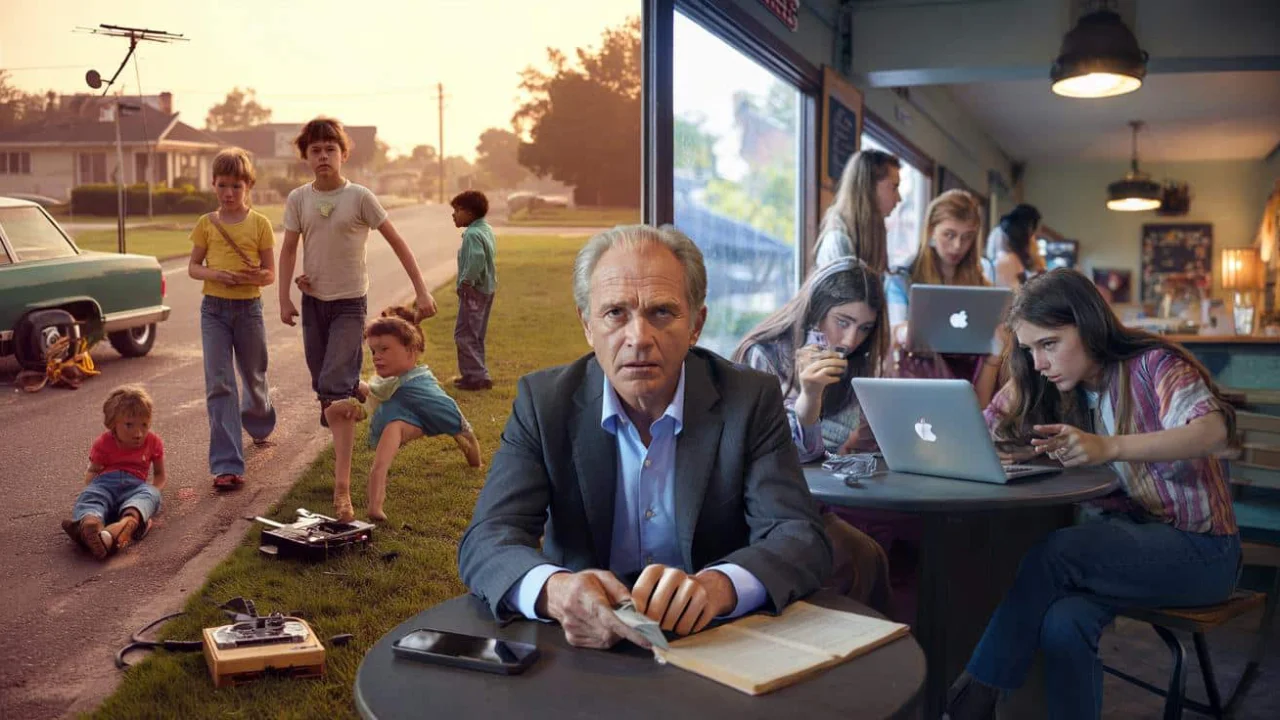
Sarah watched her teenage daughter have a complete meltdown because the delivery app was taking longer than expected. Twenty minutes of pacing, texting friends, and dramatically declaring she was “literally starving.” Meanwhile, Sarah’s own mother calmly suggested making a sandwich from what was already in the fridge. The contrast was striking – and it got Sarah thinking about the differences between generations.
That evening, she called her mom to ask about growing up in the 1970s. “We just dealt with things,” her mother said simply. “If something broke, you fixed it or lived without it. If you were hungry, you found food. If you were bored, you created something to do.”
It turns out psychologists have been studying this exact phenomenon. People raised in the 1960s and 1970s developed specific mental strengths that seem almost foreign in today’s world of instant everything and constant connectivity.
Why the 1960s and 1970s Created Mental Toughness
The 1960s 1970s mental strengths didn’t develop by accident. This generation grew up during a unique period when children had unprecedented freedom but limited safety nets. No cell phones meant parents couldn’t track every movement. No internet meant problems had to be solved in real time, using available resources.
“Children of this era experienced what we now call ‘benign neglect,'” explains Dr. Patricia Morrison, a developmental psychologist. “They were loved and cared for, but not micromanaged. This created incredible resilience.”
The result was a generation that learned to navigate uncertainty, solve problems independently, and maintain emotional stability without constant external validation or support.
The Seven Mental Strengths That Defined a Generation
Research shows that people raised during this era developed seven distinct psychological advantages that have become increasingly rare. Here’s what makes them mentally different:
| Mental Strength | What It Looks Like | Modern Equivalent |
|---|---|---|
| Self-Reliance | Solving problems independently first | Googling or asking for help immediately |
| Boredom Tolerance | Comfortable with unstimulated time | Constant need for entertainment |
| Risk Assessment | Calculated risk-taking without panic | Risk avoidance or reckless behavior |
| Delayed Gratification | Waiting without distress | Expecting immediate satisfaction |
| Social Navigation | Reading people and situations naturally | Relying on digital communication |
| Resource Management | Making do with what’s available | Expecting perfect conditions |
| Emotional Regulation | Processing feelings internally first | Immediate external expression |
1. Unshakeable Self-Reliance
When something broke, you fixed it or figured out how to live without it. When you got lost, you found your way home. This wasn’t seen as remarkable – it was just expected.
2. Comfort with Boredom
Long summer afternoons with “nothing to do” taught an entire generation that entertainment comes from within. They learned to sit with uncomfortable feelings instead of immediately seeking distraction.
3. Natural Risk Assessment
Climbing trees, riding bikes without helmets, and exploring neighborhoods alone taught intuitive risk evaluation. They learned the difference between reasonable risks and dangerous ones through experience, not rules.
4. Master-Level Delayed Gratification
Waiting for favorite TV shows, saving money for weeks to buy something special, or anticipating special occasions created deep patience muscles that modern instant gratification has largely eliminated.
5. Intuitive Social Skills
Without texting or social media, all communication happened face-to-face. This generation learned to read body language, understand social cues, and navigate complex human relationships in real time.
6. Creative Resource Management
Limited toys and entertainment options meant endless creativity. A cardboard box became a spaceship. Sticks became swords. Imagination filled every gap that modern technology now occupies.
7. Internal Emotional Processing
Without therapy culture or constant emotional check-ins, feelings were processed internally first. This created remarkable emotional self-sufficiency and stability.
How These Strengths Show Up in Daily Life
You can spot these 1960s 1970s mental strengths in everyday situations. Watch how different generations handle common problems:
When technology fails, older adults often remain calm while younger people experience genuine distress. When plans change unexpectedly, those raised in the ’60s and ’70s adapt quickly, while others may need time to emotionally process the disruption.
“I see it in my practice constantly,” says therapist Michael Chen. “Clients over 55 generally have better distress tolerance and problem-solving skills. They’re less likely to catastrophize minor setbacks.”
- They can sit quietly without stimulation
- They solve problems before complaining about them
- They maintain friendships without constant digital contact
- They handle uncertainty without immediate anxiety
- They find entertainment in simple activities
- They process emotions privately before sharing
What Modern Society Is Missing
The loss of these mental strengths has real consequences. Anxiety disorders among young people have skyrocketed. Attention spans have shortened dramatically. Problem-solving skills have declined as people immediately turn to external sources for answers.
“We’ve traded resilience for safety, independence for connection, and patience for speed,” notes educational psychologist Dr. Jennifer Walsh. “The trade-offs weren’t necessarily worth it.”
Modern parenting often focuses on protecting children from discomfort rather than teaching them to handle it. While this comes from love, it may inadvertently prevent the development of crucial mental strengths.
The good news? These abilities can still be developed at any age. It requires intentionally creating situations that mirror the natural challenges of 1960s and 1970s childhoods – managed difficulty, delayed gratification, and independent problem-solving.
Understanding these generational differences isn’t about nostalgia or criticism. It’s about recognizing what we might want to reclaim. The mental toughness developed during this era offers valuable lessons for building resilience in an increasingly complex world.
FAQs
Can people develop these mental strengths as adults?
Absolutely. While it’s easier to develop them in childhood, practices like meditation, deliberately waiting for things, and solving problems independently can build these skills at any age.
Were the 1960s and 1970s really better for child development?
Not necessarily better overall, but they created specific strengths that are valuable. Every era has advantages and disadvantages for development.
Why don’t modern children develop these same strengths?
Increased safety measures, constant connectivity, and instant access to information have removed many of the challenges that naturally built these mental muscles.
Are these strengths more important than modern skills?
Different skills are valuable in different contexts. The key is finding balance between traditional resilience and modern capabilities.
How can parents help children develop these mental strengths today?
Create opportunities for independent problem-solving, allow boredom, delay gratification occasionally, and model emotional regulation rather than immediately fixing every problem.
Do all people raised in the 1960s and 1970s have these strengths?
No, individual experiences varied greatly. However, the general cultural conditions of that era made these strengths more common than they are today.


