
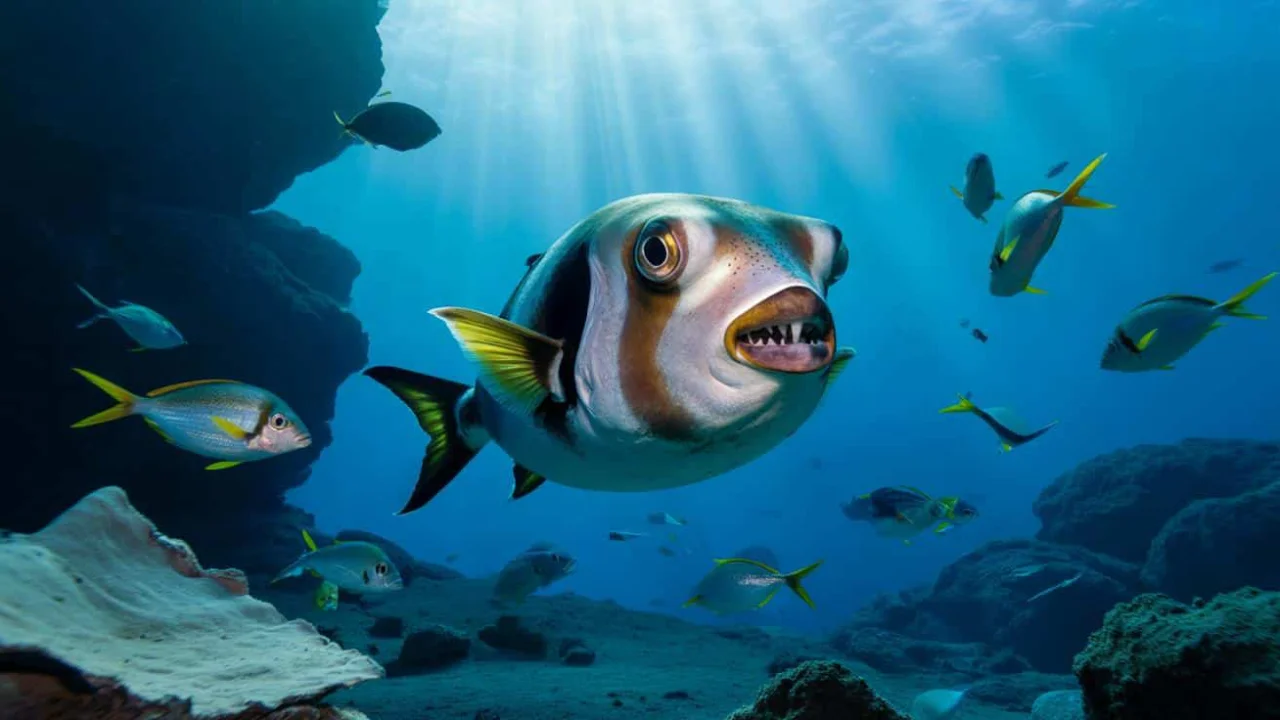
Maria Rosetti was pulling in her nets off the Croatian coast when she spotted something unusual. The silver fish with distinctive dark markings didn’t look like anything she’d caught in thirty years of fishing these waters. Her grandfather had taught her to recognize every species in the Adriatic, but this one was a mystery.
What Maria didn’t know was that she’d encountered one of the Mediterranean’s most dangerous new residents. That fish could have killed her family if she’d decided to cook it for dinner that night. Instead, her caution saved lives – she threw it back, unsure what it was.
Stories like Maria’s are becoming more common across the Mediterranean as an invasive pufferfish spreads through waters that were once safe and predictable.
The Silver-Cheeked Menace Taking Over Mediterranean Waters
The invasive pufferfish Mediterranean experts are tracking is Lagocephalus sceleratus, commonly known as the silver-cheeked toadfish. This isn’t just another fish swimming into new territory – it’s a toxic invader that’s reshaping entire marine ecosystems.
Originally from the warm waters of the Indian and Pacific Oceans, this pufferfish has established permanent populations across the Mediterranean basin. Croatian scientists from Juraj Dobrila University recently confirmed new sightings along the eastern Adriatic, adding to growing reports from Turkey, Egypt, Tunisia, Greece, Cyprus, Israel, and even France.
“What we’re seeing isn’t a temporary migration,” explains Dr. Elena Kovac, a marine biologist studying the species. “This pufferfish has found the Mediterranean to its liking and it’s here to stay.”
The fish arrived through the Suez Canal as part of what scientists call “Lessepsian migration” – species moving from the Red Sea into the Mediterranean. But unlike other newcomers, this pufferfish poses direct risks to human health.
A Toxic Time Bomb Swimming in Tourist Waters
The real danger of this invasive pufferfish Mediterranean populations are dealing with isn’t its bite – it’s what’s inside its body. Every part of this fish contains tetrodotoxin, one of nature’s most potent neurotoxins.
Tetrodotoxin works by blocking sodium channels in nerve cells, essentially shutting down the nervous system. The effects can begin within minutes of consumption and progress rapidly:
- First signs: Tingling around the mouth, dizziness, nausea
- Progression: Loss of coordination, slurred speech, muscle weakness
- Severe cases: Respiratory paralysis, unconsciousness, death
| Exposure Level | Symptoms | Timeline |
|---|---|---|
| Mild | Mouth tingling, nausea | 30 minutes – 2 hours |
| Moderate | Speech problems, weakness | 2 – 4 hours |
| Severe | Breathing difficulty, paralysis | 4 – 6 hours |
“There’s no antidote for tetrodotoxin poisoning,” warns Dr. Marco Santini, a toxicologist at Rome’s emergency medicine center. “We can only support the patient’s breathing and circulation while hoping their body clears the toxin naturally.”
What makes this particularly frightening is that cooking, freezing, or drying the fish doesn’t neutralize the poison. Even tiny amounts can be lethal.
Fishermen, Tourists, and Ecosystems Under Threat
The spread of this invasive pufferfish Mediterranean communities are witnessing affects multiple groups in different ways. Local fishermen are finding their nets filled with fish they can’t sell and don’t recognize.
Traditional fishing families like Maria’s are struggling to adapt. “My nets used to bring in sea bream, sardines, fish we’ve sold for generations,” explains Antonio Deluca, a fisherman from the Italian coast. “Now I’m catching these strange pufferfish that nobody wants to buy, and I’m worried about accidentally mixing them with good fish.”
Tourism operators are also concerned. Beach resorts across the Mediterranean are training staff to recognize the species after several close calls with curious tourists who picked up dead fish washed ashore.
- Beach cleaners now receive special training to handle suspicious fish safely
- Restaurants in affected areas are implementing stricter fish identification protocols
- Local health authorities are updating emergency response procedures
- Tourism boards are developing awareness campaigns for visitors
But the ecological impact might be even more significant. The invasive pufferfish Mediterranean ecosystems are dealing with is an aggressive predator that’s disrupting food chains.
“These fish eat everything – mollusks, crustaceans, smaller fish,” notes Dr. Sophia Gregoris, a marine ecologist. “They’re essentially vacuum cleaners of the sea floor, and native species haven’t evolved defenses against them.”
Climate Change Makes Everything Worse
Rising Mediterranean water temperatures are creating perfect conditions for this invasive pufferfish. Mediterranean waters have warmed by 1.5 degrees Celsius over the past century, making the environment more suitable for tropical species.
The fish reproduces rapidly in warmer waters, with females capable of producing thousands of eggs multiple times per year. Combined with few natural predators in Mediterranean waters, population growth is exponential.
“We’re seeing a perfect storm,” explains Dr. Ahmed Hassan, a marine biologist studying Red Sea migrations. “Warmer waters, reduced native fish populations from overfishing, and an open corridor through Suez – it’s like rolling out a red carpet for invasive species.”
Scientists are now tracking the species’ spread using a combination of fishermen reports, DNA sampling, and underwater surveys. Early detection systems are being developed to alert authorities when new populations establish themselves.
The economic implications are staggering. The Mediterranean fishing industry, already struggling with declining catches, now faces additional costs for fish identification training, disposal of toxic catches, and potential liability issues.
FAQs
How can I identify this dangerous pufferfish?
Look for a silver-colored fish with distinctive dark markings, a rounded body that can inflate, and a distinctive beak-like mouth.
What should I do if I catch one of these fish?
Never handle it with bare hands, don’t eat it, and report the catch to local marine authorities immediately.
Are Mediterranean beaches safe for swimming?
Yes, swimming is safe, but avoid touching any unfamiliar fish, whether alive or dead on the beach.
Can restaurants accidentally serve this toxic fish?
It’s possible, which is why many coastal restaurants are implementing stricter fish identification protocols with their suppliers.
Is the poison really that dangerous?
Absolutely – tetrodotoxin is extremely potent, and there’s no specific antidote available.
Will this fish eventually leave the Mediterranean?
Unfortunately, no – warming waters and abundant food sources mean this species has likely established permanent populations throughout the region.


