
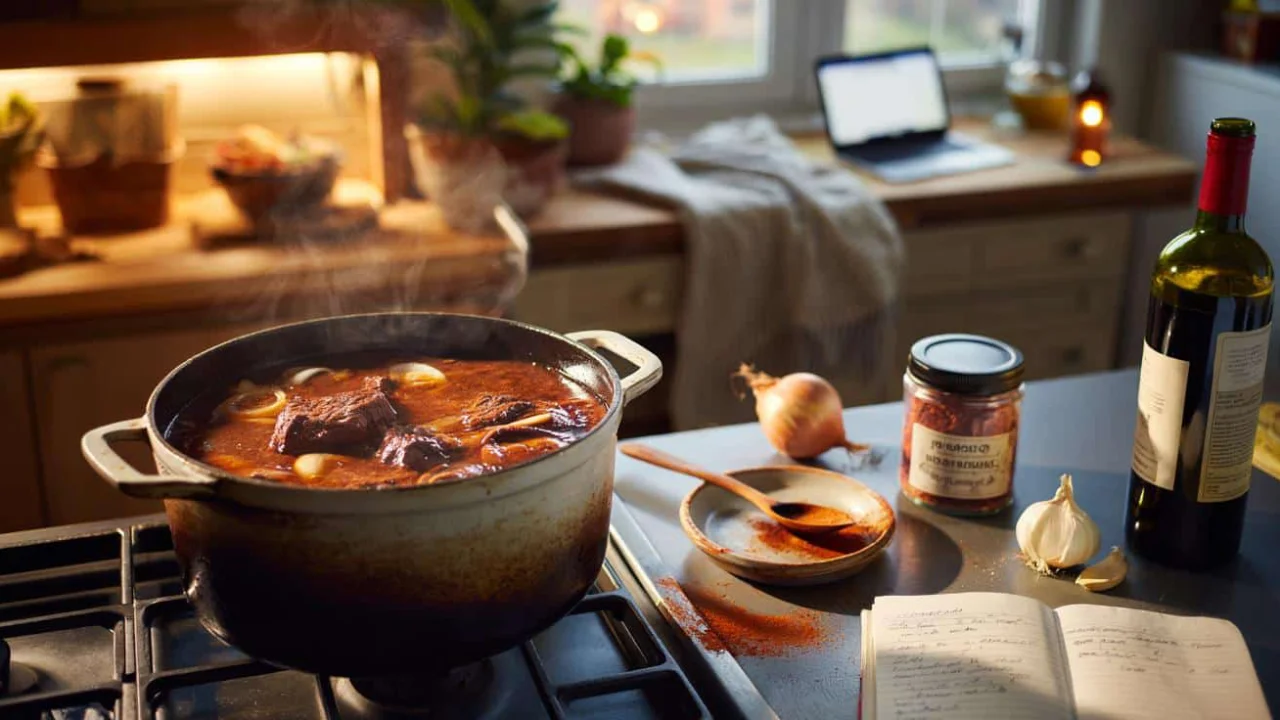
Last Thursday, I stood in my kitchen staring at a package of cheap chuck roast and wondering if I had the patience for what I was about to attempt. My phone buzzed with work emails, the dishwasher needed unloading, and Netflix was calling my name from the couch. But something about that marbled beef and the promise of a slow-simmered recipe made me push everything else aside.
Three hours later, I understood why people talk about cooking like meditation. The apartment smelled like a grandmother’s kitchen, my stress had melted away with the onions, and I had rediscovered something I’d forgotten in our rush-everything culture: the magic of letting time do the work.
That evening changed how I think about cooking, about slowing down, and about what happens when we stop fighting the clock and start working with it instead.
Why slow-simmered recipes are taking over stressed-out kitchens
A slow-simmered recipe isn’t just about cooking food longer. It’s about transforming tough, inexpensive cuts of meat into fork-tender perfection while filling your home with aromas that make everything feel more settled. The technique uses low heat over extended time to break down collagen and connective tissues, creating rich, complex flavors that quick cooking simply cannot achieve.
“When you slow-simmer, you’re essentially letting chemistry work in your favor,” explains Chef Maria Rodriguez, who runs a farm-to-table restaurant in Portland. “The long, gentle heat allows proteins to break down naturally, creating that melt-in-your-mouth texture people crave.”
The beauty of these recipes lies in their forgiving nature. Unlike delicate sautés or precisely timed roasts, slow-simmered dishes improve with time. An extra 30 minutes won’t ruin dinner—it might even make it better.
But the real appeal goes beyond the food itself. In our microwave-instant-delivery world, committing to a three-hour cooking process feels almost rebellious. It forces us to be present, to plan ahead, to embrace patience as an ingredient.
Essential elements that make slow simmering work
The foundation of any great slow-simmered recipe starts with understanding the basics. You need the right cut of meat, proper heat control, and strategic layering of flavors. Here’s what actually matters:
- Choose tough cuts with marbling – Chuck roast, short ribs, or pork shoulder work perfectly
- Brown everything first – This creates the Maillard reaction that adds depth
- Build your base – Onions, garlic, and aromatics need time to soften and sweeten
- Add liquid gradually – Wine, broth, or even beer should barely cover the meat
- Keep it low and steady – Gentle bubbling, not rolling boils
- Resist the urge to peek – Every lid lift releases heat and steam
| Cooking Method | Temperature | Time Range | Best For |
| Stovetop Simmer | Low heat | 2-4 hours | Stews, braises |
| Oven Braising | 300-325°F | 3-5 hours | Large cuts, pot roasts |
| Slow Cooker | Low setting | 6-8 hours | Set-and-forget meals |
| Dutch Oven | 250-275°F | 4-6 hours | Even heat distribution |
“The magic happens between hour two and three,” notes cookbook author James Patterson. “That’s when tough fibers completely surrender and flavors reach that perfect balance you can’t rush.”
How slow cooking is changing our relationship with time
Something interesting happens when you commit to a slow-simmered recipe on a busy weeknight. The first hour feels inconvenient—you’re stirring, checking, adjusting. But somewhere around the second hour, when the kitchen fills with deep, savory aromas, your entire evening shifts gear.
Dr. Sarah Chen, a behavioral psychologist who studies stress and daily routines, has observed this phenomenon in her research. “Slow cooking creates what we call ‘productive waiting,'” she explains. “Unlike passive activities like scrolling or binge-watching, tending a simmering pot gives people a sense of purposeful engagement with time.”
The practice forces us to plan ahead, which paradoxically makes us feel more in control of our schedules. You can’t decide at 6 PM to make a slow-simmered beef stew for dinner. That decision happens at 3 PM, or even the night before.
This planning creates a different relationship with mealtime. Instead of grabbing whatever’s fastest, you’re investing in future satisfaction. The delayed gratification becomes part of the pleasure.
For families, slow-simmered recipes create natural gathering points. Kids wander into the kitchen drawn by smells. Partners pause their evening routines to peek under the lid. The cooking process becomes as important as the eating.
Real-world benefits beyond the dinner plate
The impact of embracing slow-simmered recipes extends far beyond tender meat and rich sauces. Home cooks report better meal planning, reduced food waste, and significant cost savings. Tough, inexpensive cuts of meat—often half the price of premium steaks—become the stars of the show.
“I started doing slow braises on Sundays, and it changed my whole week,” shares home cook Lisa Martinez from Chicago. “Having that base ready means I can feed my family real food even on crazy weeknights.”
The financial benefits are substantial. A $15 chuck roast can feed a family of four for two meals, while providing leftover broth and sauce for future cooking. Compare that to takeout costs or even pre-made grocery store meals.
Health-wise, slow-simmered recipes pack vegetables seamlessly into every bite. Carrots, celery, and onions break down into silky sweetness. Even picky eaters don’t notice they’re consuming their daily vegetables when they’re melted into rich, savory sauce.
The batch-cooking aspect makes weeknight dinners manageable. One Sunday afternoon of slow simmering can provide three or four complete meals throughout the week. Freeze portions in family-sized containers, and you have homemade convenience food ready whenever you need it.
Getting started without overwhelming yourself
The beauty of slow-simmered recipes lies in their flexibility, but beginners often feel intimidated by the time commitment. Start with simple combinations: beef chuck with onions and red wine, pork shoulder with apples and sage, or chicken thighs with tomatoes and herbs.
Your equipment matters less than your patience. A heavy-bottomed pot with a tight-fitting lid works perfectly. Cast iron Dutch ovens are ideal, but any sturdy pot will do the job. The key is maintaining consistent, gentle heat.
Chef Rodriguez suggests starting with weekend cooking: “Begin on Saturday morning when you have time to monitor and adjust. Once you understand how your stove and pot work together, weeknight cooking becomes much easier.”
Don’t aim for perfection on your first attempt. Slow-simmered dishes are forgiving by nature. Too much liquid? Simmer uncovered to reduce. Not enough seasoning? Adjust near the end of cooking. The long cooking time allows for corrections along the way.
FAQs
How do I know when a slow-simmered dish is actually done?
The meat should fall apart easily with a fork, and the sauce should coat the back of a spoon. Taste for seasoning and adjust as needed.
Can I leave a slow-simmered recipe unattended for hours?
Yes, once it reaches a gentle simmer, you can safely leave it alone. Check occasionally and add liquid if needed, but avoid lifting the lid too often.
What’s the biggest mistake people make with slow simmering?
Using too high heat and rushing the process. Low and slow is the only way to achieve that perfect tender texture.
Can I make slow-simmered recipes ahead of time?
Absolutely. These dishes often taste better the next day as flavors continue to develop. They freeze beautifully for up to three months.
Do I need expensive cuts of meat for slow simmering?
No, tough and inexpensive cuts work best. Chuck roast, short ribs, and pork shoulder are perfect choices that become incredibly tender with slow cooking.
How do I prevent my slow-simmered sauce from being too thin?
Remove the lid during the last 30 minutes of cooking to allow excess liquid to evaporate, or mix a tablespoon of cornstarch with cold water and stir it in.


