
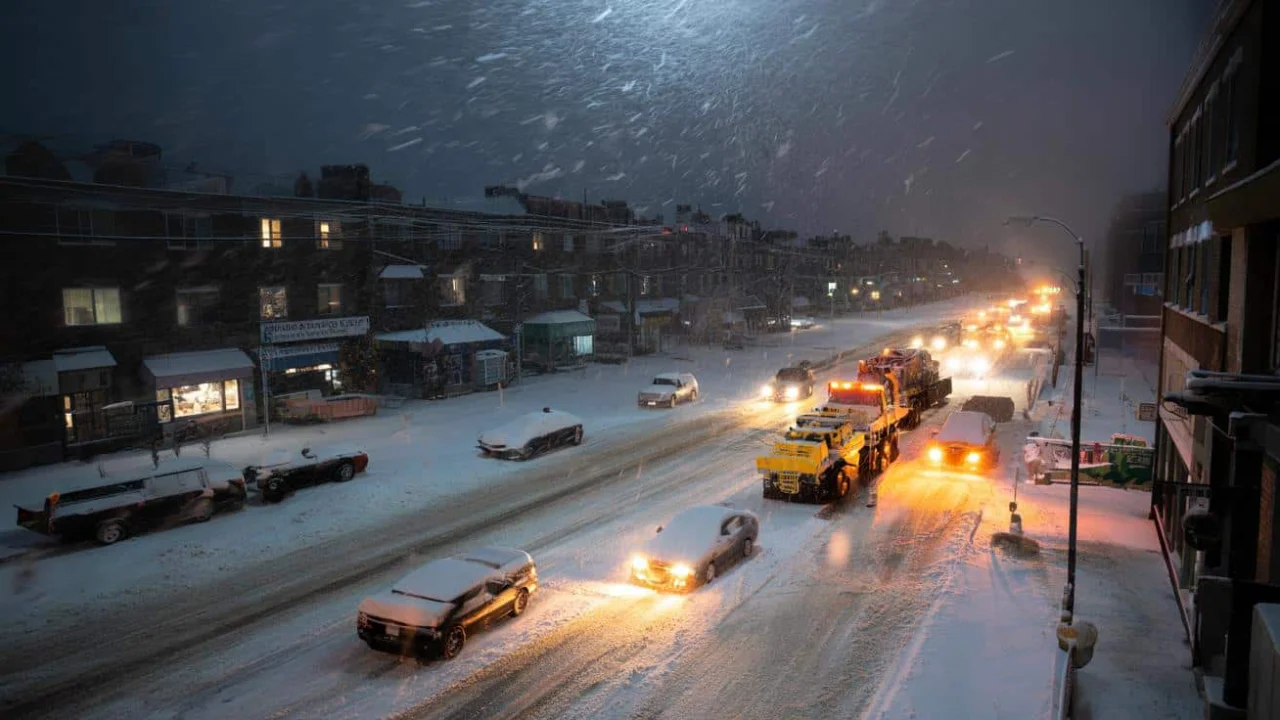
Sarah checks her phone one more time before bed, scrolling past the usual social media noise until she hits the weather alert that makes her stomach drop. The words “life-threatening conditions” glow on her screen as the first snowflakes tap against her bedroom window like tiny messengers of chaos.
She’s lived through plenty of winter storms, but something about tonight feels different. Maybe it’s the way her elderly neighbor across the street left his porch light on, or how the grocery store parking lot was packed at 8 PM with people grabbing milk and bread like they were preparing for the apocalypse.
Outside, the wind is already picking up, and those innocent-looking flakes are multiplying fast. By morning, her quiet suburban street could be buried under two feet of heavy snow, turning her Tuesday commute into a potentially dangerous gamble.
What makes tonight’s storm so serious
Weather officials across the region are pulling no punches with their language tonight. This isn’t your typical “bundle up and drive carefully” advisory. Emergency management teams are using phrases like “avoid all non-essential travel” and “life-threatening conditions” because they know what heavy snow can do when it arrives fast and furious.
The National Weather Service has issued blizzard warnings covering over 200 miles, with snowfall rates expected to reach 2-3 inches per hour at the storm’s peak. That’s the kind of accumulation that can bury cars and trap people in their homes before they realize what’s happening.
“When we see snowfall rates this intense, even our plows can’t keep up,” explains Mike Rodriguez, a veteran meteorologist with the regional weather service. “The roads become impassable within hours, not days.”
The storm system is particularly dangerous because it’s combining heavy snow with high winds, creating blizzard conditions that can reduce visibility to near zero. Add in rapidly dropping temperatures, and you have a recipe for serious trouble.
Here’s everything you need to know right now
The heavy snow event is expected to unfold in three distinct phases, each bringing its own challenges and risks for anyone caught outside.
| Time Period | Snow Rate | Total Accumulation | Wind Speed | Visibility |
|---|---|---|---|---|
| 10 PM – 2 AM | 1-2 inches/hour | 4-8 inches | 15-25 mph | 1/4 mile |
| 2 AM – 8 AM | 2-3 inches/hour | 12-18 inches | 25-35 mph | Near zero |
| 8 AM – 12 PM | 1-2 inches/hour | 16-24 inches | 20-30 mph | 1/2 mile |
Key dangers to watch for during this heavy snow event:
- Whiteout conditions on highways and major roads
- Power outages from heavy snow on tree branches and power lines
- Carbon monoxide poisoning from blocked exhaust pipes on vehicles
- Hypothermia and frostbite for anyone stranded outside
- Heart attacks from overexertion while shoveling heavy snow
- Roof collapses on older buildings unable to handle snow weight
“The biggest mistake people make is thinking they can outrun a storm like this,” warns Jennifer Chen, emergency management coordinator for the county. “Once that heavy snow starts falling at 2-3 inches per hour, you’re not going anywhere for a while.”
Why officials are begging you to stay home
Emergency responders aren’t just being cautious when they urge people to avoid non-essential travel during heavy snow events. They’re speaking from experience, having witnessed firsthand how quickly winter storms can turn deadly.
Last winter, a similar heavy snow event stranded over 300 vehicles on a single stretch of interstate. Some drivers waited eight hours for rescue, burning through their gas tanks trying to stay warm while emergency crews worked to reach them through impassable roads.
The human cost goes beyond inconvenience. Heavy snow storms kill an average of 70 people annually in the United States, with most fatalities occurring in vehicles. Heart attacks from snow shoveling claim another 100 lives each winter, often striking people who underestimate the physical demands of moving heavy, wet snow.
“Every time we get a storm like this, we see the same pattern,” explains Captain Lisa Thompson from the state police. “Someone thinks they can make a quick trip to the store or drive home from work, and then we’re pulling their car out of a ditch at 3 AM in blizzard conditions.”
The ripple effects extend beyond individual safety. When people venture out during heavy snow, they create additional emergencies that strain rescue resources. Fire departments and EMS crews who should be responding to heating failures and medical emergencies instead find themselves conducting risky vehicle rescues on icy highways.
Public transportation systems are already announcing shutdowns. Bus routes will suspend service by midnight, and the commuter rail is canceling all morning departures. Even delivery services are halting operations, recognizing that heavy snow makes their usual routes impassable.
What happens next in your neighborhood
While you’re hopefully staying warm inside, an army of workers will be battling the heavy snow throughout the night. Plow crews are already pre-positioning trucks along major routes, but they’re fighting an uphill battle against accumulation rates that can outpace their ability to clear roads.
Power companies have crews on standby, knowing that heavy snow often brings widespread outages. The wet, heavy snow that’s expected tonight is particularly dangerous for power lines, as it can accumulate quickly on branches that then snap under the weight.
School districts across the region have already announced closures for tomorrow, recognizing that even if the heavy snow stops by afternoon, bus routes will remain impassable for hours or even days. Some districts are planning remote learning days, while others are simply canceling classes entirely.
“We’re not taking any chances with this one,” says Dr. Maria Santos, superintendent of the regional school district. “When meteorologists use words like ‘life-threatening,’ we listen.”
Grocery stores and pharmacies are extending hours tonight before the heavy snow arrives, knowing that many residents are making last-minute preparations. However, most retail locations plan to close early tomorrow and may remain closed until roads are cleared.
FAQs
How much snow is considered “heavy snow” officially?
The National Weather Service defines heavy snow as accumulation rates of 4 inches or more in 12 hours, or 6 inches or more in 24 hours.
Should I run my car periodically if I’m stuck at home during heavy snow?
Only if absolutely necessary for heat, and make sure your exhaust pipe isn’t blocked by snow to prevent carbon monoxide poisoning.
When is it safe to drive again after heavy snow?
Wait until local authorities announce that roads are clear and safe, typically 12-24 hours after heavy snow ends.
What’s the difference between a winter storm watch and warning?
A watch means heavy snow is possible within 48 hours; a warning means it’s expected within 36 hours and conditions will be dangerous.
How can I tell if heavy snow is too much for my roof?
Look for sagging ceiling tiles, creaking sounds, or doors that suddenly won’t close properly – these can indicate dangerous snow loads.
What should I do if my power goes out during the heavy snow?
Stay warm with layers and blankets, avoid using outdoor heating devices inside, and report outages to your utility company.


