
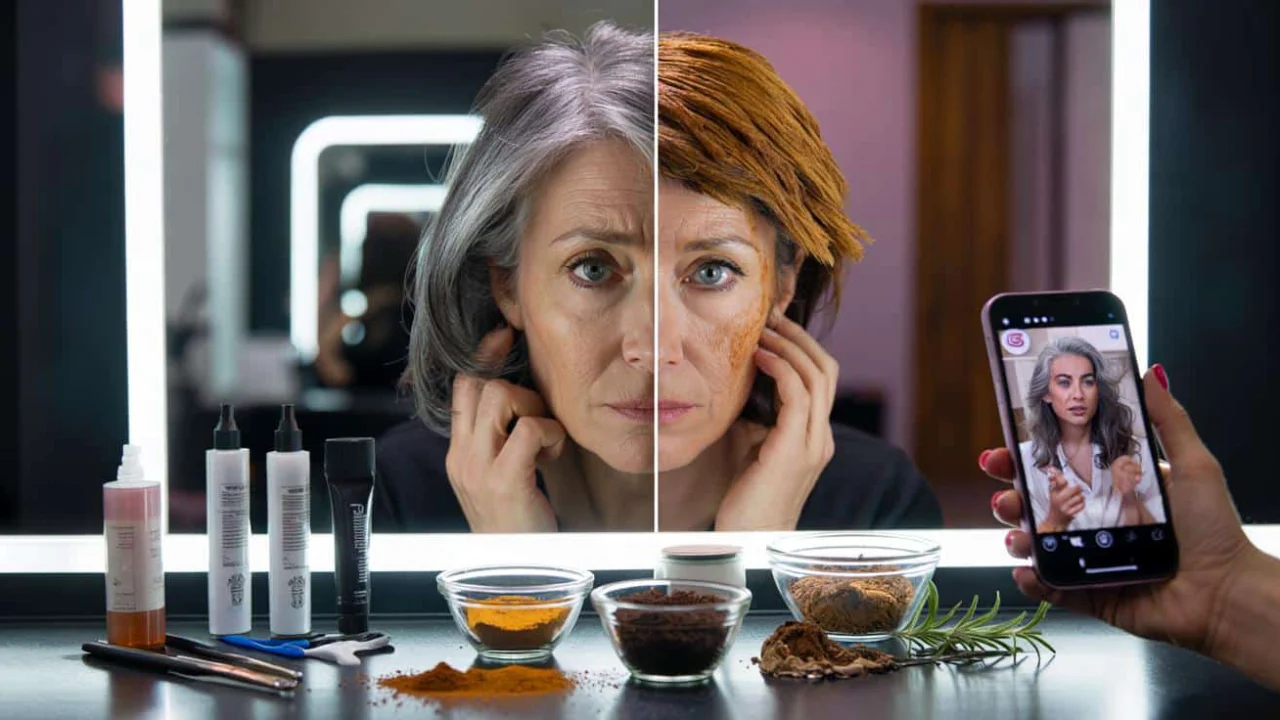
Sarah stares at her reflection in the bathroom mirror, picking through silver threads that seem to multiply overnight. At 47, she’s tired of the three-hour salon appointments, the chemical smell that clings to her clothes, and the $200 bill that hits her wallet every six weeks. When her sister sends her a TikTok video of a woman mixing coffee grounds and henna into a dark paste, promising “natural gray coverage that actually works,” Sarah feels something stir inside her chest. Hope, maybe. Or desperation.
She screenshots the recipe and heads to her kitchen cabinet, pulling out instant coffee and googling “henna powder near me.” But as she reads the comments under the video, her excitement wavers. Half the responses rave about miraculous results. The other half warn about allergic reactions, hair damage, and trips to the emergency room.
Sarah puts down her phone and sighs. Why does everything that promises to make life easier end up so complicated?
The Natural Gray Coverage Revolution That’s Splitting Medical Opinion
Across social media platforms, millions of people are abandoning traditional hair dyes for what they believe is a safer, more natural approach to covering gray hair. The movement combines ancient ingredients like henna and indigo with modern DIY recipes that promise chemical-free color and healthier hair.
The appeal is undeniable. Natural gray coverage methods claim to strengthen hair while coloring it, cost a fraction of salon treatments, and eliminate exposure to potentially harmful chemicals like ammonia and paraphenylenediamine (PPD). Influencers showcase dramatic transformations using kitchen ingredients, and online communities share detailed recipes for everything from coffee-based rinses to complex henna-indigo combinations.
But medical professionals are divided on whether these methods deliver on their promises or create new problems. Some dermatologists report seeing more patients with contact dermatitis and scalp irritation from “natural” products, while others praise the gentler approach for sensitive scalps.
“I’ve seen both sides of this trend,” says Dr. Maria Rodriguez, a dermatologist in Los Angeles. “Some patients thrive with plant-based colors, but others come in with reactions they never had from conventional dyes.”
What’s Really Inside Natural Gray Coverage Products
Understanding natural gray coverage requires looking beyond the marketing claims to see what these products actually contain and how they work on aging hair.
- Henna (Lawsonia inermis): Provides red-orange tones, strengthens hair shaft, can last 4-6 weeks
- Indigo: Creates brown to black shades when layered over henna
- Amla powder: Adds depth and shine, contains vitamin C
- Coffee and black tea: Temporary darkening agents with mild staining properties
- Rosemary and sage: May help darken hair gradually over multiple applications
- Metallic salts: Often hidden in commercial “natural” products, can cause unpredictable reactions
The reality is more complex than social media suggests. Many commercial “natural” hair colors contain preservatives, stabilizers, and processing aids that aren’t always disclosed clearly. Even pure plant powders can cause allergic reactions in sensitive individuals.
| Method | Duration | Gray Coverage | Potential Issues |
|---|---|---|---|
| Pure Henna | 4-6 weeks | Limited to red tones | Can’t lighten, builds up over time |
| Henna + Indigo | 3-5 weeks | Good for brown/black | Two-step process, unpredictable results |
| Coffee/Tea Rinses | 1-2 weeks | Minimal on stubborn grays | Requires frequent reapplication |
| Commercial “Natural” | 2-4 weeks | Variable | Hidden chemicals, inconsistent quality |
Trichologist Dr. James Chen explains the challenge: “Gray hair is structurally different. It’s often coarser and more resistant to color penetration. Natural methods work by coating the hair shaft rather than penetrating it, which means results can be unpredictable.”
The Medical Divide: Safety vs. Effectiveness
The medical community’s split opinion on natural gray coverage reflects deeper questions about cosmetic safety and consumer choice. Dermatologists who support the trend point to reduced chemical exposure and fewer severe allergic reactions compared to conventional hair dyes.
Dr. Lisa Park, a dermatologist in Chicago, shares a different perspective: “I’ve seen fewer cases of severe contact dermatitis since my patients started using pure henna and plant-based colors. The reactions we do see tend to be milder and resolve more quickly.”
However, critics argue that “natural” doesn’t automatically mean safer. Essential oils commonly used in DIY recipes can cause sensitization with repeated exposure. Poorly sourced henna may contain contaminants or additives. And the lack of standardization means consumers can’t be sure what they’re actually applying to their scalps.
The controversy intensifies when considering people with compromised immune systems, existing skin conditions, or those taking certain medications. What works safely for one person might trigger serious reactions in another.
Allergist Dr. Robert Kim warns: “Natural products can be potent allergens. I’ve treated patients who developed severe dermatitis from supposedly gentle herbal hair treatments. Just because something grows in the ground doesn’t mean it’s automatically safe for everyone.”
Real-World Consequences: Who’s Actually Affected
The natural gray coverage trend particularly impacts women over 40 who are experiencing both increasing gray hair and heightened awareness of chemical exposure. Many are drawn to the promise of gentler alternatives as their scalps become more sensitive with age.
Professional colorists report mixed experiences with clients who switch to natural methods. Some see improved hair condition and fewer complaints about scalp irritation. Others deal with color correction disasters when DIY experiments go wrong or when clients want to return to conventional coloring after using henna.
The economic impact extends beyond individual consumers. Salon revenues from color services have declined in some markets as more people attempt at-home natural treatments. Simultaneously, demand for color correction services has increased as some DIY attempts require professional intervention.
For people with specific health conditions, the stakes are higher. Chemotherapy patients, individuals with autoimmune disorders, and those with severe chemical sensitivities often view natural gray coverage as their only option for maintaining their appearance while undergoing treatment.
“My oncologist couldn’t give me a clear answer about hair dyes during treatment,” explains cancer survivor Jennifer Walsh. “Henna felt like the only safe choice, even though the results weren’t perfect.”
FAQs
Is natural gray coverage actually safer than regular hair dye?
It depends on the specific products and your individual sensitivities. Pure plant-based colors generally contain fewer harsh chemicals, but they can still cause allergic reactions in some people.
How long does henna last on gray hair?
Henna typically lasts 4-6 weeks on gray hair, but results vary based on hair texture, porosity, and the specific henna quality used.
Can I go back to regular hair dye after using henna?
Yes, but it’s complicated. Henna can interfere with chemical processing, so you may need professional color correction services and should wait several weeks between treatments.
Why doesn’t natural gray coverage work the same for everyone?
Gray hair varies significantly in texture, porosity, and resistance to color. Natural dyes coat rather than penetrate the hair shaft, making results more unpredictable than chemical dyes.
What should I do before trying natural gray coverage?
Always do a patch test 48 hours before full application, research the source and purity of your products, and consider consulting with a dermatologist if you have sensitive skin.
Are there any medical conditions that make natural gray coverage unsafe?
People with autoimmune conditions, severe allergies, or those undergoing certain medical treatments should consult their healthcare provider before using any hair coloring products, natural or otherwise.


