
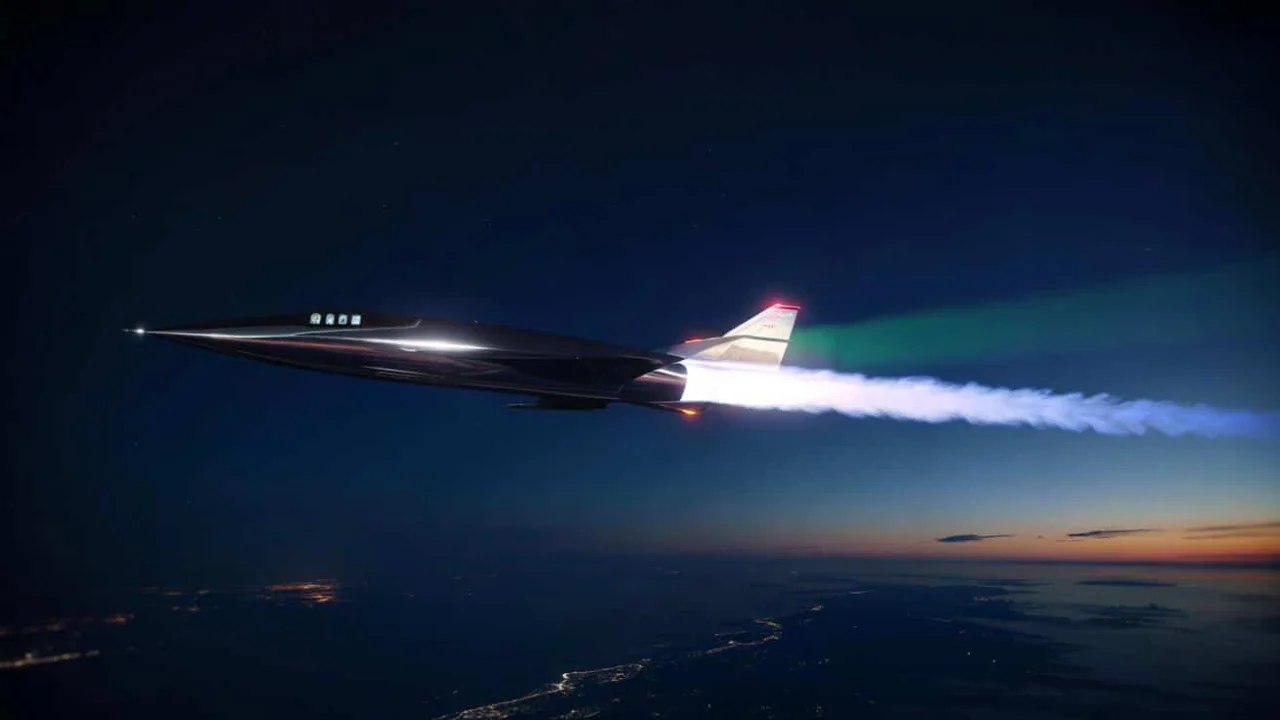
Sarah Chen remembers the exact moment she knew her job at the gas station would become obsolete. It was 3 AM on a Tuesday, and she was watching the news on her phone while the coffee brewed. A grainy video showed something streaking across the Pacific sky at impossible speed. The reporter mentioned hydrogen engines, hypersonic flight, and a speed that sounded like science fiction. Twenty-four thousand kilometers per hour.
She didn’t understand the technical details then. But she understood the underlying message: the world was about to change, and it would happen faster than anyone expected. Within months, her small town would be buzzing about hydrogen infrastructure projects and aerospace job opportunities that hadn’t existed since her grandfather worked in the shipyards.
This is what happens when a hydrogen nation decides to rewrite the rules of the sky.
The moment that changed aerospace forever
The numbers still seem impossible. An Anglo-Saxon nation just demonstrated a hydrogen-powered hypersonic aircraft reaching 24,501 km/h – roughly Mach 20 at high altitude. To put that in perspective, you could fly from New York to London in about 11 minutes at that speed.
But this isn’t about passenger flights. This test represents a fundamental shift in how nations think about defense, space access, and energy independence. The prototype aircraft used liquid hydrogen as both fuel and coolant, solving one of hypersonic flight’s biggest challenges: keeping the vehicle from melting under extreme heat.
“What we’re seeing is three impossible problems solved simultaneously,” explains Dr. Marcus Reynolds, a propulsion systems analyst. “Extreme aerodynamics, thermal management, and hydrogen storage at hypersonic speeds. Any one of these would be a decade-long engineering challenge.”
The test wasn’t announced with fanfare. Instead, grainy footage emerged showing a white-hot streak cutting through the night sky, followed by a simple statement that the mission “met and exceeded objectives.” In the world of aerospace development, such understatement usually means something extraordinary just happened.
Why hydrogen changes everything about hypersonic flight
Traditional hypersonic vehicles face a brutal contradiction. The faster they go, the hotter they get, but conventional cooling systems add weight and complexity. Liquid hydrogen solves this elegantly by serving dual purposes.
Here’s how the breakthrough technology works:
- Liquid hydrogen stored at -253°C flows through channels in the aircraft’s skin
- It absorbs heat from air friction, protecting critical components
- The warmed hydrogen then feeds into scramjet engines as fuel
- This creates a self-cooling system that gets more efficient at higher speeds
- The entire process produces only water vapor as exhaust
The technical specifications reveal the scope of this achievement:
| Parameter | Achievement | Comparison |
|---|---|---|
| Maximum Speed | 24,501 km/h | 20x faster than commercial jets |
| Flight Duration | Several seconds | Enough for proof of concept |
| Fuel Type | Liquid hydrogen | Zero-carbon combustion |
| Engine Type | Hydrogen scramjet | Air-breathing at Mach 20 |
| Altitude | High atmosphere | Above traditional flight corridors |
“The beautiful thing about hydrogen is that it’s not just clean – it’s the most efficient cooling agent you can find,” notes aerospace engineer Dr. Jennifer Walsh. “At these speeds, that dual function becomes absolutely critical.”
What this means for the hydrogen nation and the world
This development positions the testing nation as a hydrogen nation leader, but the implications extend far beyond national prestige. The successful test demonstrates that hydrogen technology can work in the most extreme conditions imaginable.
The immediate strategic implications include:
- Rapid deployment capabilities for defense applications
- Dramatically reduced space launch costs using air-breathing engines
- Potential for ultra-fast cargo delivery anywhere on Earth
- Proof that hydrogen infrastructure investments are strategically sound
For ordinary citizens, the hydrogen nation breakthrough signals accelerated development in related technologies. Hydrogen fuel cells for vehicles, home energy systems, and industrial applications all benefit from advances in hydrogen storage and handling.
“When you prove hydrogen can work at Mach 20, suddenly every other hydrogen application looks much more feasible,” explains energy policy researcher Dr. Amanda Torres. “It’s like demonstrating that your material can survive a nuclear blast – everything else becomes easy.”
The economic ripple effects are already starting. Aerospace companies worldwide are scrambling to understand the technical details, while hydrogen infrastructure projects gain new urgency and funding.
The race for hypersonic hydrogen supremacy
Other major powers aren’t standing still. China, Russia, and several European nations have active hypersonic programs, though none have publicly demonstrated hydrogen-powered systems at these speeds.
The successful test by this hydrogen nation creates pressure for accelerated development elsewhere. Countries with significant aerospace industries face a choice: invest heavily in competing technologies or risk falling behind in a critical capability gap.
“This isn’t just about having the fastest aircraft,” warns defense analyst Dr. Robert Kim. “Hypersonic hydrogen systems represent a convergence of energy independence, environmental responsibility, and military capability. Nations that master this technology early gain advantages across multiple domains.”
The environmental angle adds another layer of complexity. While traditional hypersonic vehicles burn hydrocarbon fuels with massive carbon footprints, hydrogen-powered systems produce only water vapor. This makes them politically easier to develop and deploy, even as climate concerns intensify globally.
Manufacturing and supply chain implications are equally significant. The hydrogen nation that achieved this breakthrough likely developed new materials, manufacturing processes, and safety protocols that have value far beyond aerospace applications.
Looking ahead, the test success virtually guarantees increased investment in hydrogen infrastructure, from production facilities to storage systems to safety training programs. The nation that proved hydrogen can work at Mach 20 has essentially validated hydrogen as a strategic technology for the 21st century.
What happens next depends partly on how quickly other nations respond, and partly on whether this hydrogen nation can translate their technical achievement into practical systems. But one thing is certain: the age of hypersonic hydrogen flight has officially begun, and the implications will ripple through everything from transportation to energy policy to international relations.
FAQs
What makes hydrogen better than conventional fuels for hypersonic flight?
Hydrogen serves as both fuel and coolant, solving the heat management problem that plagues hypersonic vehicles while producing only water vapor as exhaust.
How fast is 24,501 km/h compared to normal aircraft?
It’s about 20 times faster than commercial jets and roughly Mach 20, fast enough to cross continents in minutes rather than hours.
Is this technology safe for civilian use?
Current systems are experimental and military-focused, but the safety protocols developed for extreme conditions will likely benefit civilian hydrogen applications.
Which Anglo-Saxon nation achieved this breakthrough?
The specific nation hasn’t been officially confirmed in public reports, though the test clearly demonstrates advanced aerospace and hydrogen capabilities.
When will we see practical applications of this technology?
Military and space applications could emerge within years, while civilian hypersonic travel would likely take decades due to cost and infrastructure requirements.
How does this affect the global hydrogen economy?
Success at extreme conditions validates hydrogen technology broadly, likely accelerating investment in hydrogen infrastructure and applications across multiple industries.


