
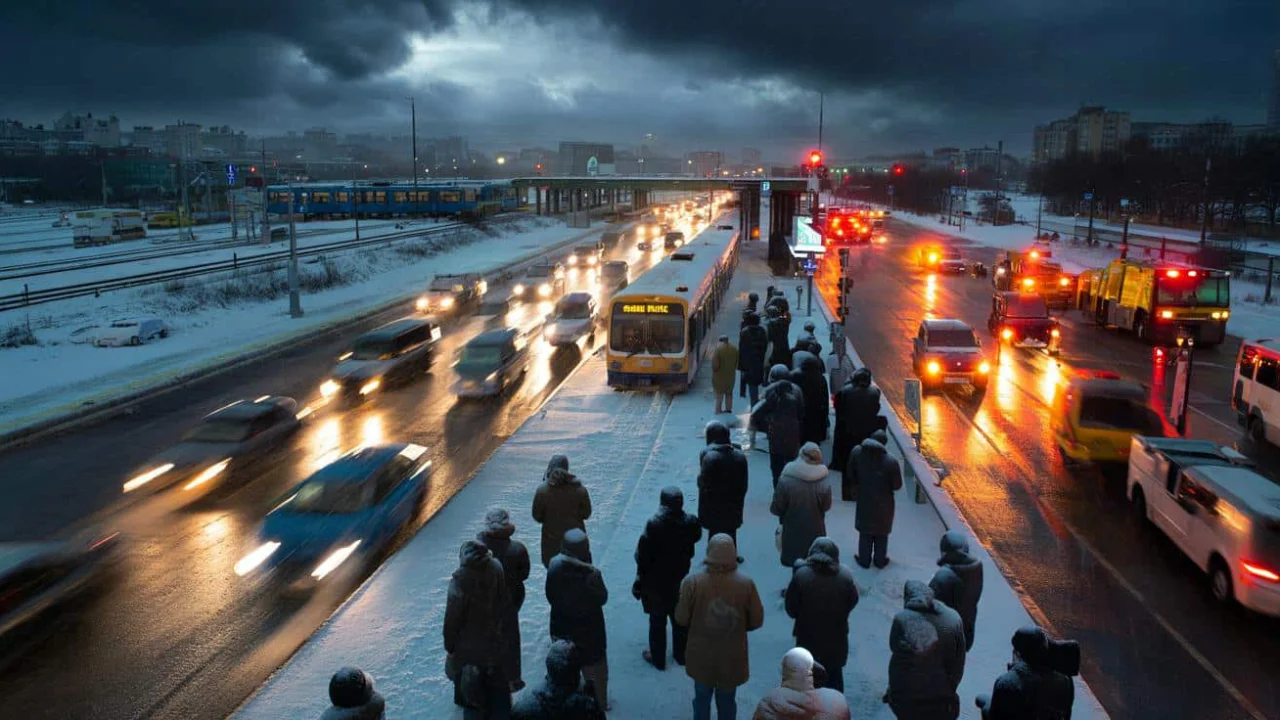
Sarah checked her phone for the third time in ten minutes, watching the weather app refresh with increasingly urgent warnings. Her morning commute usually takes 45 minutes, but tomorrow’s 8 AM client meeting suddenly felt impossible. Around her, other passengers on the evening train home wore the same worried expression – that mix of anticipation and dread that comes when you know everything’s about to change.
The conversations had shifted too. Instead of weekend plans, people whispered about backup routes, working from home, and whether the schools would close. One mother was already texting her childminder, making contingency plans for a day that hadn’t even started yet.
This is what happens when a heavy snow forecast moves from “possible” to “certain.” The city holds its breath, and everyone becomes a weather expert overnight.
From Weather Warning to Transport Emergency
The Met Office’s latest update removed all ambiguity. Heavy snow will begin late tonight, with accumulations of 10-15cm expected across major urban areas by morning rush hour. What started as a cautious forecast has transformed into an official warning that has transport authorities scrambling.
“We’ve moved from monitoring mode to active response,” says a senior traffic management official. “When the forecast changes from ‘likely’ to ‘confirmed,’ everything shifts gear immediately.”
The timing couldn’t be worse. Late-night snowfall means the worst conditions will hit precisely when millions of people attempt their morning commute. Rail operators are already canceling early services, while major airports have begun advising passengers to expect significant delays.
Gritting trucks started their rounds hours before the first flake was expected, coating empty motorways with salt that sparkles under street lights like premature frost. Highway maintenance crews are working through the night, positioning snow ploughs at strategic points across the network.
What This Heavy Snow Forecast Really Means
The numbers tell the story better than any weather presenter’s dramatic gestures. Here’s what authorities are dealing with:
| Transport Mode | Expected Impact | Response Measures |
|---|---|---|
| Rail Services | 30-50% service reduction | Emergency timetables, additional heating |
| Bus Networks | Major route suspensions | Snow chains, reduced frequencies |
| Air Travel | 200+ flight delays/cancellations | De-icing equipment on standby |
| Major Roads | Speed restrictions, lane closures | Continuous gritting, snow plough deployment |
The ripple effects extend far beyond transport. Schools in affected areas are already sending alerts to parents, preparing for potential closures. NHS trusts are activating winter pressure plans, ensuring critical staff can reach hospitals. Even waste collection services are warning of delays that could last days.
Key areas facing the heaviest snow include:
- Northern England and Scotland
- Major transport corridors including the M1, M6, and M8
- Urban areas with complex rail networks
- Airport hubs serving international routes
- Rural communities with limited gritting coverage
The Domino Effect Nobody Talks About
What makes this heavy snow forecast particularly concerning isn’t just the immediate chaos. It’s the cascade of problems that follow. When transport networks fail simultaneously, the economic impact spreads like cracks in ice.
“People think about getting to work, but they don’t consider the delivery trucks that can’t reach shops, or the medical appointments that get cancelled,” explains a logistics coordinator who’s spent the evening rearranging tomorrow’s freight schedules.
Supermarkets are already seeing panic buying as people stock up on essentials. Online delivery services have suspended next-day promises, knowing their vans won’t make it up suburban hills. Even digital infrastructure faces risks as engineers struggle to reach communication towers for urgent repairs.
The human stories matter most, though. Elderly residents worry about heating bills as they crank up thermostats. Parents calculate childcare costs when schools close unexpectedly. Hospital patients wonder if their treatments will be postponed. Small business owners watch potential customers stay home, knowing each snow day costs them revenue they can’t afford to lose.
“The forecast might last 24 hours, but the disruption lasts a week,” notes a transport policy researcher. “Every cancelled train creates a backlog. Every delayed flight means missed connections across Europe.”
What Happens When the Snow Actually Starts
Once the heavy snow forecast becomes reality, the city transforms. Streets that bustled with traffic fall silent except for the scrape of snow ploughs and the distant wail of emergency sirens. The lucky few with working transport find themselves sharing unusually empty carriages, bonding over their mutual survival of the commute.
Emergency services switch to winter protocols, with ambulances taking twice as long to reach patients and police patrols limited to major routes. Local councils deploy every available resource, but physics wins every time – snow falls faster than any crew can clear it.
The psychological impact runs deeper than the practical disruption. There’s something about heavy snow that strips away the veneer of modern efficiency, reminding everyone how quickly normal life can grind to a halt. Social media fills with photos of empty platforms and stranded vehicles, each image a small monument to nature’s power over human planning.
Yet communities also come together. Neighbors check on elderly residents, strangers share taxis, and local shops become impromptu community centers. The same forecast that creates chaos also reveals resilience people didn’t know they had.
FAQs
When exactly will the heavy snow start tonight?
Current forecasts indicate snow will begin between 11 PM and 1 AM, intensifying rapidly through the early morning hours.
Should I attempt to travel to work tomorrow morning?
Check with your transport provider before leaving home, and consider working remotely if possible, as major disruptions are expected across all networks.
Will schools be closed tomorrow?
Many schools in affected areas are likely to close, but decisions are typically made early morning based on local conditions and transport availability.
How long will the transport disruption last?
While the heaviest snow is expected to clear by evening, transport services may take 48-72 hours to return to normal schedules.
What should I do if I’m stranded at a transport hub?
Most major stations and airports have extended their opening hours and emergency support, but bring warm clothes, food, and phone chargers as a precaution.
Are emergency services still operating normally?
Emergency services remain operational but response times may be significantly delayed, so avoid non-essential travel and take extra safety precautions.


