
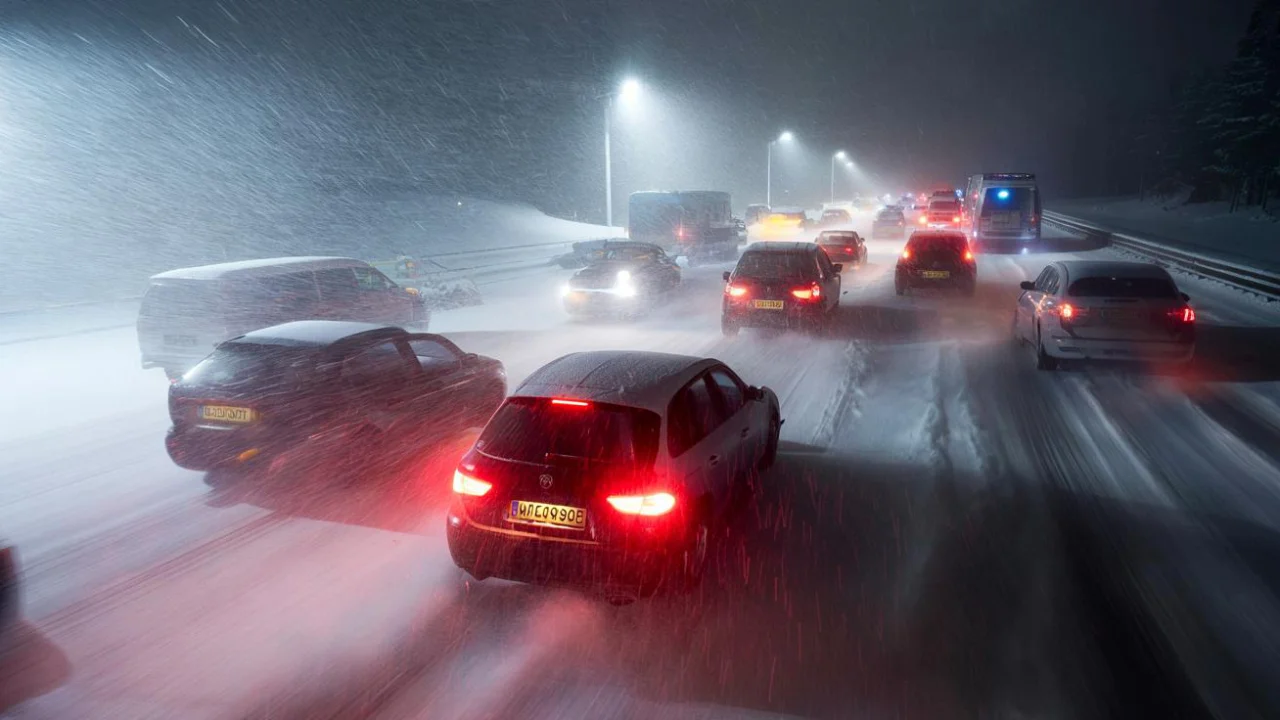
Sarah checked the weather app one more time as she loaded her weekend bags into the car. The heavy snow forecast showed red warnings spreading across her planned route from Manchester to Edinburgh. Her sister’s wedding was tomorrow morning, and she’d already missed the rehearsal dinner last month due to work. The first fat flakes were just starting to fall on her windscreen.
“It’s only a bit of snow,” she muttered, starting the engine. Three hours later, she was part of a 12-car pile-up on the M74, watching ambulances struggle through the whiteout conditions she’d convinced herself wouldn’t be that bad.
Sarah’s story isn’t unique. Every time a heavy snow forecast hits the headlines, emergency services brace themselves for the inevitable wave of stranded motorists who thought they could beat the odds.
Why Smart People Make Deadly Decisions
There’s something almost magnetic about severe weather warnings that draws people onto the roads. Maybe it’s the British spirit of “carrying on” or simply the modern inability to accept that nature still calls the shots. Whatever the reason, tonight’s heavy snow forecast has weather services and police forces preparing for chaos.
The Met Office has issued red warnings across multiple regions, with visibility expected to drop to less than 50 metres in minutes once the storm intensifies. Yet booking sites report no significant increase in cancellations for long-distance travel.
“We see this pattern every single winter,” explains Chief Inspector Mark Williams from the motorway police unit. “People get the alerts, they see the red warnings, but they convince themselves their journey is different somehow. It’s not until they’re sitting in a car that won’t move on a road they can’t see that reality hits.”
The psychology behind these decisions is complex but predictable. Most drivers overestimate their abilities and underestimate how quickly conditions deteriorate. A light dusting at home doesn’t prepare you for zero visibility and sheet ice 50 miles down the road.
What Tonight’s Heavy Snow Forecast Actually Means
When meteorologists issue a heavy snow forecast with red warnings, they’re not being overly cautious. These predictions come from sophisticated models that track temperature gradients, wind patterns, and moisture levels with remarkable accuracy.
Tonight’s system is particularly dangerous because it combines several risk factors:
- Rapidly dropping temperatures turning wet roads into ice rinks
- Sustained snowfall rates of 3-5cm per hour in the worst-hit areas
- Gusty winds creating whiteout conditions even in moderate snow
- The storm arriving during peak travel hours when roads are busiest
- Ground temperatures still above freezing, creating treacherous slush
| Time | Expected Snowfall Rate | Visibility | Risk Level |
|---|---|---|---|
| 6-8 PM | 1-2cm/hour | 200-500m | Moderate |
| 8-10 PM | 3-4cm/hour | 50-200m | High |
| 10 PM-2 AM | 4-5cm/hour | Under 50m | Extreme |
| 2-6 AM | 2-3cm/hour | 50-100m | Very High |
“The key thing people don’t understand is how fast visibility can collapse,” says Emma Thompson, a senior meteorologist. “You might start a journey in light snow with decent visibility, but within 20 minutes you could be in conditions where you literally cannot see the car in front of you.”
The Ripple Effect of Reckless Choices
Every driver who ignores a heavy snow forecast and gets stranded doesn’t just risk their own safety. They create a domino effect that puts rescue workers, other motorists, and emergency services at risk.
Last winter’s statistics tell a sobering story. During major snow events, emergency services typically see:
- A 400% increase in road traffic incidents
- Average response times doubled due to dangerous conditions
- Rescue workers injured in 15% more incidents
- Hospital admissions for weather-related injuries up 300%
- Economic losses from blocked motorways reaching millions per day
The human cost goes beyond statistics. Paramedic James McKenzie remembers one particularly brutal night last February: “We had a family trapped in their car for six hours because other vehicles had blocked the access routes. The children were hypothermic by the time we reached them. All because their parents thought they knew better than the weather warnings.”
Emergency services are already pre-positioning resources for tonight’s expected chaos, but their capacity isn’t unlimited. Every unnecessary callout means someone else might wait longer for help.
Making the Right Call When the Stakes Are High
The decision to travel during a heavy snow forecast shouldn’t be taken lightly. Here’s how to honestly assess whether your journey is worth the risk:
- Ask yourself: “What happens if I don’t make this trip?” If the answer isn’t “someone could be seriously harmed,” consider postponing
- Check current conditions along your entire route, not just at your starting point
- Have a realistic backup plan that doesn’t involve “hoping for the best”
- Ensure your vehicle is properly equipped with winter essentials
- Tell someone your exact route and expected arrival time
“I’ve seen too many people make emotional decisions when they should be making practical ones,” notes Dr. Rachel Hayes, who studies risk perception in extreme weather. “The question isn’t whether you’re a good driver in normal conditions. It’s whether you’re prepared for conditions that could turn deadly in minutes.”
The most experienced winter drivers often make the hardest choice of all: staying home. They understand that sometimes the bravest decision is admitting when the odds are stacked against you.
Tonight’s heavy snow forecast isn’t just another weather event to endure. It’s a reminder that nature still has the final word, no matter how urgent your plans seem or how confident you feel behind the wheel.
FAQs
How accurate are heavy snow forecasts?
Modern meteorology can predict heavy snow events with about 85-90% accuracy 24-48 hours in advance, making current warnings highly reliable.
What should I do if I’m already driving when conditions worsen?
Pull over safely as soon as possible, keep your exhaust clear, run the engine periodically for heat, and call for help rather than attempting to continue.
How quickly can visibility drop during heavy snow?
In intense snowfall with wind, visibility can drop from several hundred metres to less than 50 metres in just 2-3 minutes.
Are SUVs and 4×4 vehicles safe in heavy snow?
While they offer better traction, they’re not immune to losing control on ice and can give drivers false confidence in dangerous conditions.
What items should I keep in my car during winter weather?
Essential items include warm blankets, water, non-perishable food, a torch, phone charger, ice scraper, and emergency shovel.
How do I know if a journey is truly essential during severe weather?
Ask yourself if delaying the trip by 12-24 hours would cause genuine harm or danger to yourself or others – if not, it’s probably not essential.


