
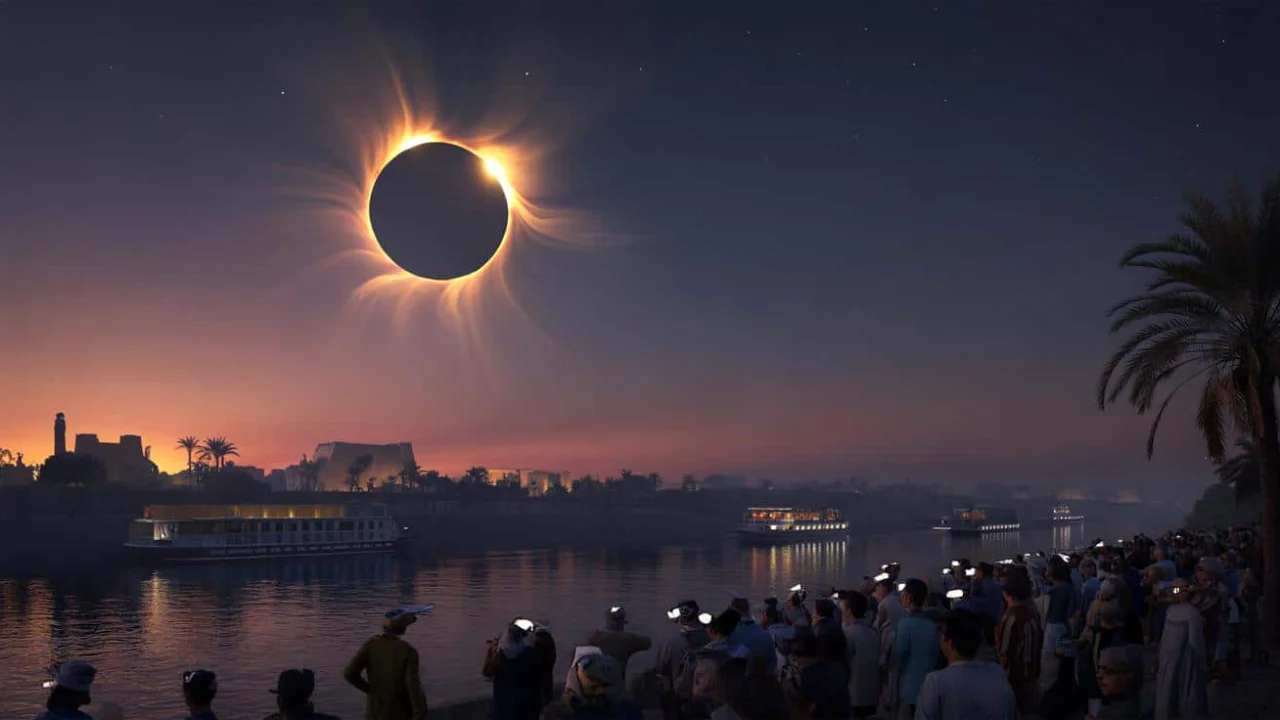
Maria had always been skeptical of her astronomy-obsessed neighbor’s excited rambling about celestial events. But when she stepped outside her Cairo apartment on that August afternoon in 2027 and watched the world slowly dim like someone adjusting a cosmic light switch, she understood what all the fuss was about.
As the moon’s shadow crept across the sun, birds began returning to their roosts in confusion. Street lamps flickered on automatically. The temperature dropped by ten degrees in minutes. For 6 minutes and 23 seconds, day became an otherworldly twilight that left Maria speechless.
She wasn’t alone. Millions of people around the world are already marking their calendars for what astronomers are calling the longest solar eclipse of the century.
August 2, 2027: The Date That Will Stop the World
The countdown has officially begun. On August 2, 2027, the moon will slide directly between Earth and the sun, creating a total solar eclipse that will last longer than any other eclipse this century. The longest solar eclipse will plunge parts of North Africa and the Middle East into an eerie twilight for up to 6 minutes and 23 seconds.
Dr. Sarah Chen, a solar physicist at the International Observatory, explains the significance: “Most total eclipses give you maybe 2-3 minutes of totality. This one is like getting a front-row seat to the universe’s greatest show for more than six minutes. It’s astronomical luxury.”
The path of totality will sweep across Morocco, Algeria, Tunisia, Libya, Egypt, Saudi Arabia, Yemen, and Somalia. Cities like Luxor, Egypt, and parts of the Arabian Peninsula will experience the full spectacle, while millions more across Europe, Africa, and western Asia will witness a deep partial eclipse.
What Makes This Eclipse So Special
The extraordinary duration of this longest solar eclipse comes down to perfect cosmic timing. The moon will be near perigee, the closest point in its orbit to Earth, making it appear larger in our sky and creating a more complete block of the sun’s light.
| Eclipse Feature | August 2027 Eclipse | Average Eclipse |
|---|---|---|
| Maximum Duration | 6 minutes 23 seconds | 2-3 minutes |
| Path Width | 258 kilometers | 160 kilometers |
| Visible Area | North Africa, Middle East, parts of Europe/Asia | Varies by location |
| Next Similar Duration | 2114 | N/A |
The eclipse will offer incredible viewing opportunities:
- Complete darkness in the path of totality for over 6 minutes
- Visible corona around the blocked sun
- Temperature drops of 10-15 degrees Fahrenheit
- Animal behavior changes as they react to sudden “nightfall”
- Stars and planets visible in the darkened daytime sky
Professor Ahmed Hassan from Cairo University’s Astronomy Department notes, “The duration gives us unprecedented opportunities for scientific observation. We can study the sun’s corona, measure temperature changes, and observe how ecosystems respond to this sudden shift from day to night.”
Global Eclipse Fever Already Building
Tourism agencies across the path of totality are already reporting massive interest. Hotels in Luxor, Egypt, are taking reservations three years in advance. Morocco’s tourism board has launched an “Eclipse 2027” campaign, expecting hundreds of thousands of visitors.
The economic impact could be enormous. The 2017 Great American Eclipse brought an estimated $700 million in tourism revenue to the United States. With this eclipse lasting nearly twice as long and crossing multiple countries, the financial boost could reach into the billions.
Travel companies are creating special eclipse packages:
- Desert viewing experiences in the Sahara
- Nile River cruise eclipse tours
- Archaeological site viewing at ancient monuments
- Scientific expedition packages with astronomy experts
Dr. Jennifer Walsh, an eclipse chaser who has witnessed 23 total solar eclipses, shares her excitement: “This isn’t just the longest solar eclipse of our lifetimes – it’s happening over some of the most historically significant and beautiful locations on Earth. Imagine watching totality from the Valley of the Kings or the Atlas Mountains.”
What to Expect When Day Turns to Night
The experience begins about an hour before totality, when observers will notice a small “bite” taken out of the sun. As the moon continues its journey across the solar disk, the light gradually dims. Shadows become sharper and take on a peculiar quality.
About 15 minutes before totality, the temperature starts dropping noticeably. Animals become confused – birds may return to roost, and nocturnal creatures might emerge. Some people report feeling an almost supernatural silence.
Then comes the moment of totality. The sun’s corona, normally invisible due to the bright solar disk, blazes around the moon’s silhouette like a celestial crown. Bright stars and planets pop into view in the darkened sky. The horizon glows with a 360-degree sunset effect.
For those in the path of this longest solar eclipse, the experience will stretch for over six magical minutes – enough time to truly absorb the cosmic spectacle unfolding overhead.
Planning Your Eclipse Experience
Safety remains paramount for eclipse viewing. Looking directly at the sun, even during an eclipse, can cause permanent eye damage. Special eclipse glasses or solar filters are essential for viewing the partial phases.
The best viewing locations along the path of totality include:
- Luxor, Egypt (6 minutes 9 seconds of totality)
- Giza Plateau, Egypt (5 minutes 42 seconds)
- Parts of Saudi Arabia (up to 6 minutes 23 seconds)
- Southern Spain (4 minutes 28 seconds)
- Gibraltar (4 minutes 25 seconds)
Weather patterns suggest the best chances for clear skies will be in Egypt and parts of the Arabian Peninsula, where cloud cover is typically minimal in early August.
As we approach August 2027, the longest solar eclipse of the century promises to unite millions of people in a shared moment of wonder. Whether you’re planning to travel to the path of totality or watching from afar, this celestial event will remind us of our place in the vast cosmic dance happening around us every day.
FAQs
When exactly will the longest solar eclipse occur?
The eclipse will take place on August 2, 2027, with totality beginning in the Atlantic Ocean and sweeping across North Africa and the Middle East.
How long will the eclipse last?
The maximum duration of totality will be 6 minutes and 23 seconds, making it the longest solar eclipse of the 21st century.
Where is the best place to view the eclipse?
The prime viewing locations are along the path of totality through North Africa, particularly Egypt, where weather conditions are most favorable.
Is it safe to look at a solar eclipse?
Never look directly at the sun without proper eclipse glasses or solar filters, as this can cause permanent eye damage or blindness.
When is the next eclipse of similar length?
The next total solar eclipse of comparable duration won’t occur until 2114, making this a truly once-in-a-lifetime opportunity.
Will the eclipse be visible from Europe or North America?
While totality won’t be visible from these regions, parts of Europe will experience a deep partial eclipse, with up to 95% of the sun covered in some areas.


