
Mark Thompson still remembers the phone call that changed everything. As a shipyard worker in Adelaide, he’d spent years building conventional submarines for the French contract, learning specialized welding techniques and precision engineering. Then came September 2021 – the day Australia scrapped its massive French submarine deal overnight.
“One day we’re building diesel subs, the next day we’re told the whole project is dead,” Mark recalls. “My mates and I thought our careers were over. Who knew we’d end up working on something even bigger?”
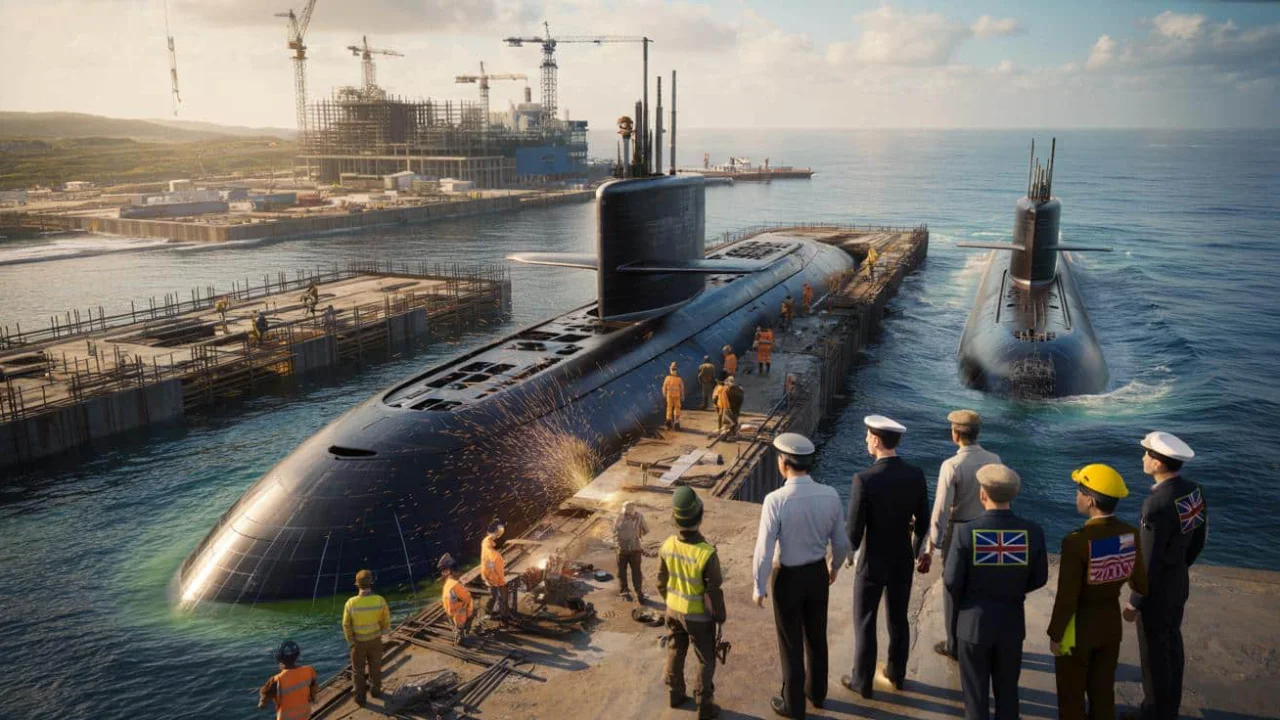
Now Mark and thousands like him are about to become part of Australia’s boldest defense gamble in decades. The government just approved $3.9 billion AUD to build the infrastructure for nuclear powered submarines – a move that’s reshaping the nation’s military future and creating opportunities nobody saw coming.
From French Fiasco to Nuclear Future
The story begins with one of the messiest diplomatic breakups in recent memory. Back in 2016, Australia signed a monster deal worth over $90 billion AUD with France’s Naval Group to build 12 conventional Attack-class submarines. It was supposed to be the project of the century.
But by 2021, costs were spiraling, delays were mounting, and strategic priorities had shifted dramatically. China’s growing assertiveness in the Pacific made Australia’s leaders realize they needed something more powerful than diesel-electric subs.
The solution came through the AUKUS alliance – a security partnership between Australia, the UK, and the US that would give Australia access to nuclear submarine technology. There was just one problem: they had to tell the French first.
“The way Australia handled the French cancellation was diplomatically clumsy, but strategically necessary,” says defense analyst Sarah Chen. “Nuclear powered submarines offer capabilities that conventional subs simply can’t match in the vast Pacific theater.”
France was furious. They recalled their ambassadors from both Australia and the US, calling it a “stab in the back.” The diplomatic fallout took months to repair, but Australia pressed ahead with its nuclear submarine ambitions.
Breaking Down the $3.9 Billion Investment
This initial funding represents just the first installment of what will become Australia’s largest peacetime defense investment. Here’s where the money is actually going:
| Investment Area | Estimated Cost (AUD) | Timeline |
|---|---|---|
| Shipyard construction and design | $1.8 billion | 2024-2028 |
| Workforce training programs | $800 million | 2024-2030 |
| Port facility upgrades | $700 million | 2025-2027 |
| Nuclear safety infrastructure | $600 million | 2024-2029 |
The nuclear powered submarines Australia plans to build will be game-changers compared to conventional boats. While diesel-electric submarines need to surface regularly to recharge their batteries, nuclear subs can stay submerged for months at a time.
Key advantages include:
- Unlimited underwater endurance – only limited by crew supplies
- Higher sustained speeds both surface and submerged
- Greater stealth capabilities for intelligence gathering
- Extended operational range across the vast Pacific Ocean
- More space for advanced weapons and sensor systems
“These aren’t just bigger submarines – they’re fundamentally different weapons platforms,” explains former Navy commander James Mitchell. “A nuclear sub can patrol from Australia to the South China Sea without surfacing once. That changes everything about naval strategy in our region.”
What This Means for Australia’s Defense Future
The timeline for Australia’s nuclear submarine program stretches well into the 2040s and beyond. Here’s how it’s expected to unfold:
In the early 2030s, Australia will purchase several Virginia-class nuclear powered submarines directly from the United States. These will serve as training platforms and provide immediate capability while the domestic shipbuilding program develops.
By the late 2030s, the new Australian shipyard should begin producing SSN-AUKUS submarines – a next-generation design being developed jointly by the UK and Australia. These boats will incorporate the latest technology from both nations.
The economic impact extends far beyond defense. The program is expected to create over 20,000 jobs across multiple industries:
- Nuclear engineers and technicians
- Advanced manufacturing specialists
- Cybersecurity and software developers
- Traditional shipbuilding trades
- Supply chain and logistics professionals
“We’re not just building submarines – we’re building an entire nuclear-capable industrial ecosystem,” says economic researcher Dr. Amanda Price. “This represents the largest technology transfer in Australian history.”
The strategic implications are equally significant. Australia will join an exclusive club of nations operating nuclear powered submarines, currently limited to six countries: the US, UK, France, Russia, China, and India.
Challenges and Concerns on the Horizon
Despite the excitement, significant hurdles remain. Australia has zero experience with naval nuclear reactors, creating massive training and safety challenges. The country will need to develop entirely new regulatory frameworks, waste management systems, and security protocols.
Environmental groups have raised concerns about nuclear waste storage and the potential for accidents. While naval reactors have an excellent safety record globally, the technology is new to Australia and public acceptance isn’t guaranteed.
“The technical challenges are immense,” admits nuclear policy expert Professor Robert Hayes. “Australia is essentially trying to compress decades of nuclear submarine development into a much shorter timeframe. It’s ambitious, but not impossible with the right international support.”
Cost overruns are another major concern. Large defense projects have a history of exceeding budgets, and nuclear programs are notoriously expensive. The total AUKUS submarine program could eventually cost over $300 billion AUD across its lifetime.
Political risks also loom large. The program spans multiple decades and will require sustained bipartisan support through numerous election cycles. Any future government could potentially scale back or modify the program if priorities change.
The Ripple Effects Across the Pacific
Australia’s nuclear submarine program isn’t happening in isolation. China has repeatedly criticized AUKUS as destabilizing, arguing that it represents an arms race in the Pacific. Other regional nations are watching carefully to see how the balance of power shifts.
The program also strengthens Australia’s ties with its AUKUS partners. Sharing nuclear submarine technology represents an unprecedented level of trust and cooperation between the three nations.
For workers like Mark Thompson, the transformation has been remarkable. After thinking his career was over when the French project collapsed, he’s now training on nuclear systems and looking at decades of secure employment.
“My kids ask me what I’m building, and I tell them it’s something that will keep Australia safe for their whole lives,” Mark says. “It’s pretty amazing to be part of something this big.”
FAQs
Will Australian nuclear powered submarines carry nuclear weapons?
No, these submarines will only use nuclear power for propulsion. All weapons will be conventional, and Australia remains committed to nuclear non-proliferation.
How long will it take to build Australia’s first nuclear submarine?
The first Australian-built nuclear submarine is expected to be completed in the late 2030s, though Australia will purchase US submarines earlier to bridge the capability gap.
What happens to nuclear waste from the submarines?
Australia is still developing its nuclear waste management strategy, but the waste will likely be stored domestically under strict international protocols.
How many nuclear submarines will Australia eventually operate?
Current plans call for at least eight nuclear powered submarines, though the final number may increase based on strategic requirements.
Can Australia cancel the nuclear submarine program like it did with France?
While technically possible, the AUKUS agreement involves much deeper integration with allied nations and would be far more difficult to reverse than the French contract.
How much will the entire nuclear submarine program cost?
Total costs could exceed $300 billion AUD over the program’s lifetime, making it Australia’s largest peacetime defense investment ever.


