
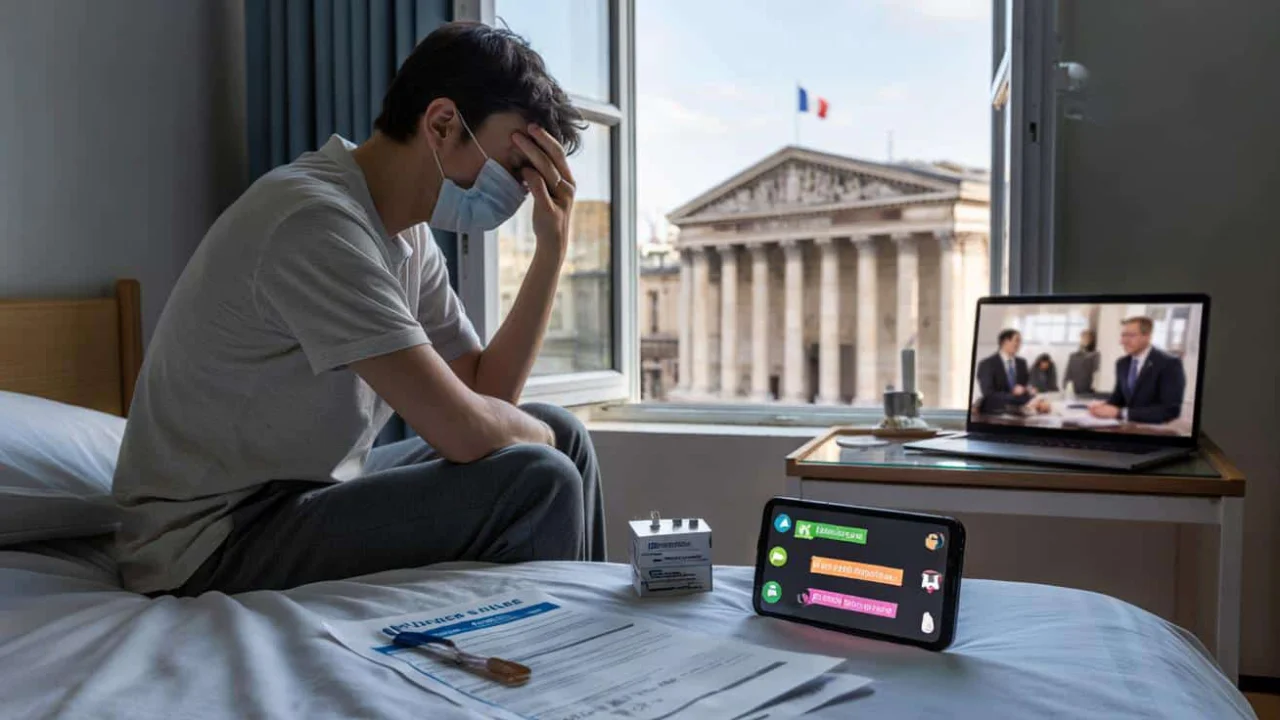
Claire clutches her phone on the crowded metro, throat burning with each swallow. Her doctor prescribed ten days off for a severe throat infection, but her boss’s text still flashes on her screen: “Can you maybe cut it short? We really need you back.” The guilt weighs heavier than her fever.
She’s not alone. Across France, millions of workers face this same impossible choice between their health and their paycheck every year. Now, that choice just got a lot more complicated.
The National Assembly has quietly restored the sick leave duration limit that was temporarily suspended during recent political upheaval. This seemingly technical change will ripple through every workplace, every doctor’s office, and every household dealing with illness or injury.
What the Sick Leave Duration Limit Actually Means
The restored sick leave duration limit isn’t just bureaucratic paperwork. It’s a fundamental shift in how France handles the delicate balance between worker protection and cost control.
Under the new rules, sick leaves exceeding specific time thresholds will face increased scrutiny from both employers and social security. Medical professionals will need to provide more detailed justifications, and workers may find themselves called in for additional medical evaluations.
“We’re seeing a clear tightening of controls,” explains Dr. Marie Dubois, a general practitioner in Lyon. “Patients are already asking me if they should really take all the days I prescribe. The pressure is real.”
The change affects every type of sick leave, from common colds to serious injuries. But the impact varies dramatically depending on your condition and your job.
Breaking Down the New Rules
The restored sick leave duration limit creates a tiered system of oversight that kicks in at different stages:
- Short-term leave (1-7 days): Minimal additional oversight beyond standard medical certification
- Medium-term leave (8-30 days): Enhanced documentation requirements and possible employer follow-up
- Long-term leave (30+ days): Mandatory social security medical evaluations and stricter renewal processes
- Extended leave (90+ days): Comprehensive medical reviews and potential workplace reintegration planning
| Duration | Previous System | New System | Impact on Workers |
|---|---|---|---|
| 1-14 days | Basic medical certificate | Basic certificate + employer notification | Low impact |
| 15-30 days | Medical follow-up optional | Mandatory progress reports | Moderate pressure |
| 30+ days | Standard renewal process | Enhanced medical justification required | Significant scrutiny |
| 90+ days | Periodic reviews | Comprehensive evaluation + return-to-work planning | High oversight |
The government argues these changes will reduce fraudulent claims and encourage faster recovery. Critics worry about workers returning to work too early, potentially worsening their conditions.
“The goal is preventing abuse while maintaining genuine support for those who need it,” says economic analyst Jean-Paul Martinez. “But implementation will determine whether this helps or hurts workers.”
Who Gets Hit Hardest by These Changes
Not everyone faces the same impact from the sick leave duration limit restoration. The changes create different challenges for different groups of workers.
Manual laborers dealing with repetitive stress injuries or back problems often need longer recovery periods. Construction workers, warehouse employees, and factory staff may find their typical 2-3 week injury recoveries subject to much more scrutiny.
Office workers dealing with stress-related conditions or burnout face a different challenge. Mental health conditions often require flexible timing that doesn’t fit neatly into bureaucratic categories.
Healthcare workers themselves are caught in the middle. They must navigate increased paperwork while treating patients who are increasingly anxious about taking necessary time off.
“I’m spending more time on administrative tasks and less time actually caring for patients,” reports Dr. Sophie Laurent, an occupational medicine specialist. “The system is creating stress for everyone involved.”
Small business employees face perhaps the biggest challenge. Their employers often lack HR departments to handle the new requirements, creating informal pressure to return early or avoid taking leave entirely.
The Real-World Ripple Effects
The restored sick leave duration limit will change how ordinary people navigate illness and injury. These changes touch every aspect of the worker-employer relationship.
Employers now have more tools to question extended absences, but they also face increased administrative responsibilities. Many are scrambling to update their policies and train managers on the new procedures.
Workers are already modifying their behavior. Some are splitting longer illnesses into multiple shorter leaves to avoid scrutiny. Others are rushing back to work prematurely, risking their long-term health.
The healthcare system faces its own pressures. Doctors report spending more time on paperwork and dealing with patients who second-guess medical advice based on workplace concerns.
Insurance companies and social security administrators are implementing new review processes, but the full impact won’t be clear for months.
“We’re essentially conducting a massive social experiment,” notes workplace rights advocate Claire Moreau. “The real test will be whether this reduces costs without harming worker health and well-being.”
The changes also affect family dynamics. Partners and children must adapt to different sick leave patterns, and household finances may become more unpredictable as workers navigate the new system.
What Workers Need to Know Right Now
Understanding your rights under the restored sick leave duration limit can help you make better decisions about your health and career.
First, keep detailed records of all medical appointments, treatments, and communications with your employer. The new system rewards documentation, and having complete records protects you if questions arise.
Second, maintain open communication with your healthcare provider about workplace pressures. Many doctors are adjusting their approach to help patients navigate the new requirements while protecting their health.
Third, know your company’s specific policies. Employers are implementing the new rules differently, and understanding your workplace’s approach can help you plan accordingly.
Finally, don’t let administrative complexity compromise your health. The sick leave duration limit creates new bureaucratic steps, but it doesn’t eliminate your right to necessary medical care.
FAQs
How long can I take sick leave without additional scrutiny under the new rules?
Basic sick leaves under 7 days face minimal additional oversight, while anything longer triggers increasingly detailed review processes.
Will my employer have more power to question my sick leave?
Employers receive more information about extended leaves and can request additional documentation, but they cannot override medical decisions.
Do the new rules affect my sick leave benefits or pay?
The benefit amounts remain the same, but the approval process for longer leaves may become more complex and time-consuming.
What happens if I disagree with a medical review decision?
You can appeal decisions through established social security channels, and your doctor can provide additional supporting documentation.
Are mental health conditions treated differently under the new system?
Mental health sick leaves follow the same duration limits, but medical professionals have flexibility in documenting these conditions appropriately.
When do these changes take effect?
The restored sick leave duration limit is already in effect, though full implementation across all systems may take several months to complete.


