
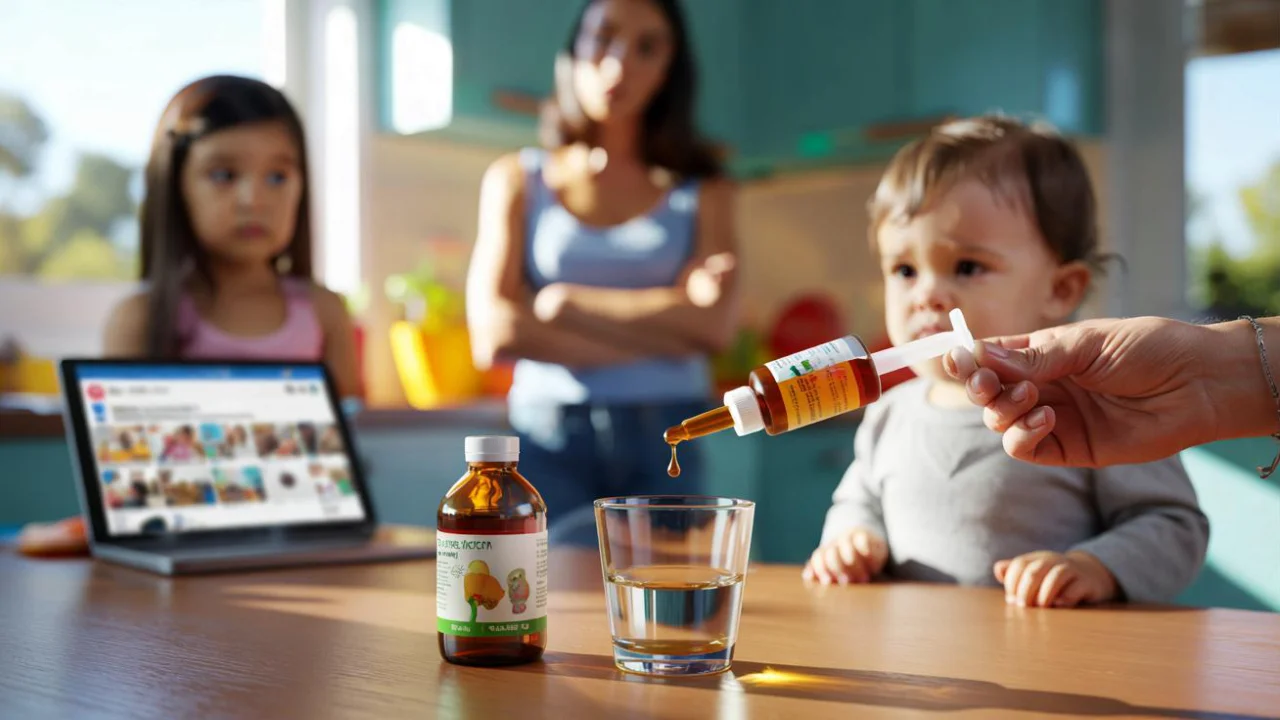
Sarah’s hands shook as she watched her three-year-old daughter refuse breakfast for the third morning in a row. The apple cider vinegar “immunity shots” she’d been giving Emma seemed like such a good idea when she saw them trending on Instagram. “Just a teaspoon in water,” the wellness influencer had promised. “Your kids will never get sick again!”
Now Emma complained her tummy hurt and pushed away anything that tasted even slightly sour. Sarah stared at the amber bottle on her kitchen counter, wondering if she’d made a terrible mistake. She wasn’t alone in this moment of doubt.
Across social media platforms, thousands of parents find themselves caught in an unexpected battleground over something as simple as vinegar. What started as innocent “natural health tips” has spiraled into heated debates, emergency room visits, and families torn between fear and hope.
The viral wellness trend splitting families in half
Scroll through any parenting Facebook group or TikTok feed, and you’ll find them: carefully staged videos of toddlers sipping cloudy drinks, mothers measuring drops into sippy cups, and captions promising miraculous health benefits. The apple cider vinegar trend for children has exploded beyond anyone’s expectations.
The pitch sounds almost too good to be true. Proponents claim that regular doses of apple cider vinegar can boost children’s immune systems, improve digestion, prevent ear infections, and even help with behavioral issues. The videos rack up millions of views, with comments sections flooded with desperate parents sharing their own success stories.
“My daughter hasn’t had a single cold since we started this routine six months ago,” reads one typical comment. “The pediatrician can’t believe how healthy she’s been.”
But pediatric nutritionist Dr. Maria Rodriguez sees a different story in her clinic. “I’m treating more children with stomach irritation and dental enamel damage than ever before. Parents come in confused because they thought they were doing something healthy.”
What parents need to know about apple cider vinegar and children
The reality behind apple cider vinegar for children is more complex than social media suggests. While vinegar has legitimate uses in adult health and food preparation, giving it to children regularly poses specific risks that many parents don’t realize.
Here are the key facts every parent should understand:
- Acid content: Apple cider vinegar is highly acidic, with a pH between 2.5 and 3.0
- Tooth enamel damage: Regular exposure can permanently weaken children’s developing teeth
- Digestive irritation: Can cause stomach pain, nausea, and throat burning in young children
- Medication interactions: May interfere with certain medications or medical conditions
- No proven immune benefits: No scientific evidence supports immunity claims for children
| Age Group | Risk Level | Common Issues |
|---|---|---|
| Under 2 years | High | Severe stomach irritation, choking risk |
| 2-5 years | Moderate to High | Tooth enamel damage, digestive upset |
| 6-12 years | Moderate | Dental problems, stomach discomfort |
| Teenagers | Low to Moderate | Similar to adult risks when used appropriately |
Emergency physician Dr. James Chen has seen the consequences firsthand. “We’ve had children come in with chemical burns in their throat from undiluted vinegar. Parents are shocked because they thought ‘natural’ meant safe.”
Why desperate parents turn to internet remedies
Understanding why apple cider vinegar gained such traction requires looking at the bigger picture of modern parenting stress. Long wait times for pediatric appointments, antibiotic shortages, and overwhelming amounts of conflicting health information create perfect conditions for viral wellness trends to flourish.
Take Marcus, a father of two from Ohio. When his children kept getting sick from daycare, and their pediatrician was booked for three weeks, he felt powerless. “You see these videos with thousands of comments from other parents saying it worked for their kids. When you’re desperate, that feels like proof.”
The appeal of apple cider vinegar lies partly in its accessibility. Unlike expensive supplements or complex treatments, it’s something parents can buy at any grocery store and implement immediately. The ritual of giving a child a “health drink” each morning provides a sense of control in an unpredictable world.
Child psychologist Dr. Lisa Park explains the deeper appeal: “Parents want to feel proactive about their children’s health. When traditional medicine feels slow or inadequate, these simple solutions offer immediate action and hope.”
The real consequences of the vinegar trend
Beyond individual families, this trend is having wider impacts on children’s health and parental confidence. Pediatric dentists report seeing more cases of enamel erosion in young children, while emergency departments deal with more cases of chemical burns from improperly diluted acids.
Perhaps more concerning is the erosion of trust between parents and healthcare providers. When parents believe they’ve found a “secret” remedy that doctors won’t acknowledge, it can damage the therapeutic relationship crucial for children’s ongoing care.
“I had a mother refuse antibiotics for her child’s strep throat because she was convinced apple cider vinegar would cure it,” recalls pediatrician Dr. Sarah Kim. “We had to have a very difficult conversation about the difference between prevention and treatment.”
The financial impact is also real. Families spend money on special “mother of the vinegar” products, fancy delivery systems, and organic variants, sometimes at the expense of proven health measures like vaccinations or regular checkups.
Some children develop anxiety around eating and drinking after negative experiences with forced vinegar consumption. Feeding therapists report treating more children who associate meal time with unpleasant tastes and stomach discomfort.
Finding balance between natural health and child safety
The apple cider vinegar controversy doesn’t mean all natural approaches are dangerous or that parents should ignore traditional remedies entirely. The key lies in understanding the difference between adult-appropriate natural health practices and what’s safe for developing children.
Registered dietitian Amanda Foster suggests focusing on proven approaches: “If parents want to support their child’s health naturally, we know that adequate sleep, varied nutrition, regular handwashing, and age-appropriate physical activity make real differences.”
For families already using apple cider vinegar with children, pediatric experts recommend transitioning away gradually rather than stopping abruptly, which might create additional anxiety around food and drinks.
FAQs
Is any amount of apple cider vinegar safe for children?
Most pediatricians recommend avoiding regular doses for children under 12, though occasional small amounts in cooking are generally fine.
What should I do if my child has been taking apple cider vinegar daily?
Stop the routine and consult your pediatrician, especially if your child shows signs of stomach pain or dental sensitivity.
Are there natural ways to boost my child’s immune system?
Focus on proven methods like adequate sleep, nutritious meals, regular handwashing, staying up to date on vaccinations, and limiting stress.
How can I tell if online health advice is reliable?
Look for information from licensed healthcare professionals, check multiple sources, and be wary of claims that seem too good to be true.
What’s the best way to discuss this trend with my pediatrician?
Bring any questions or concerns directly to your child’s doctor, and share honestly about any supplements or remedies you’re currently using.
Why do these trends spread so quickly on social media?
Parents share what appears to work for their families, creating powerful word-of-mouth marketing that can override scientific evidence and safety concerns.


