
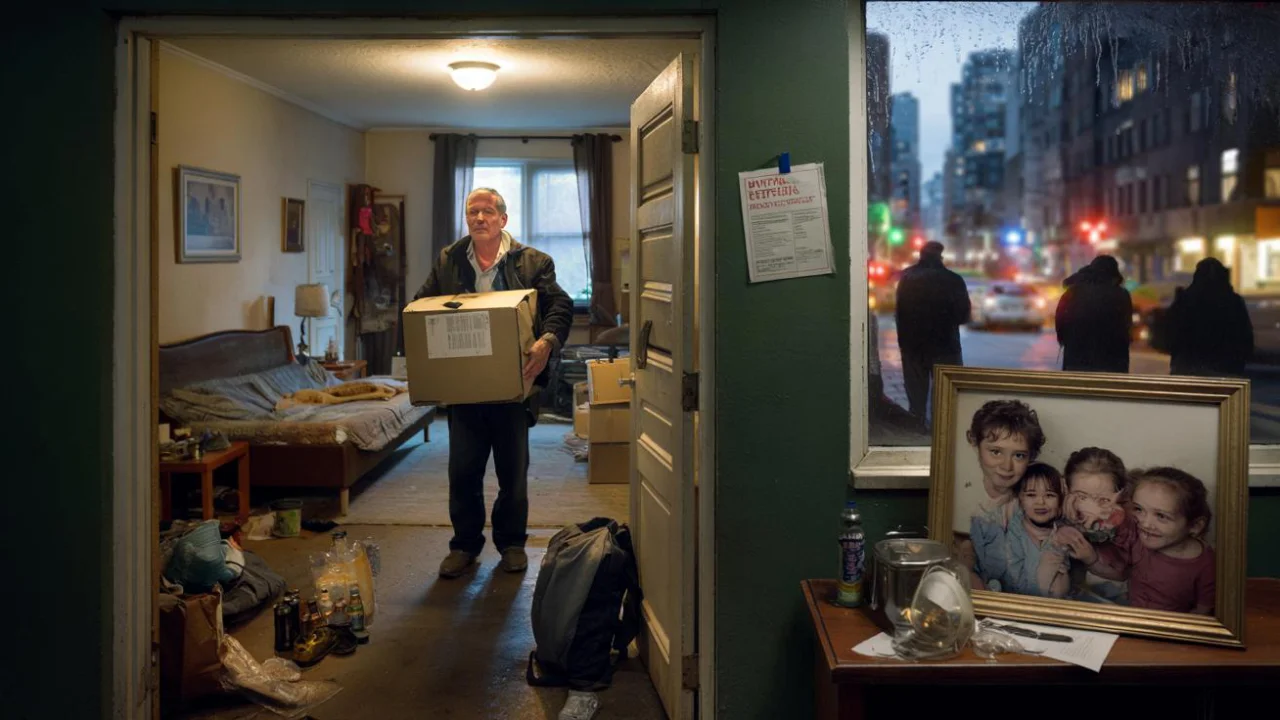
Sarah stared at the eviction notice taped to her neighbor’s door, remembering how proud she’d felt six months ago when she saw Paul helping his homeless friend Marc move in. “That’s what good people do,” she’d told her husband over dinner. Now, watching Paul load his remaining possessions into a borrowed van while his wife and kids stayed at her sister’s house, Sarah wasn’t sure what to think anymore.
The whole street was talking. Some called Paul a saint who got burned. Others whispered he’d brought it on himself. But everyone agreed on one thing – they’d never seen a good deed go so spectacularly wrong.
This is the story that’s dividing communities everywhere: what happens when kindness collides with reality, and helping someone costs you everything you’ve worked for?
How a homeless friend stays over turned into a neighborhood nightmare
Paul’s story started the way most acts of kindness do – with genuine compassion and the best of intentions. When his old school friend Marc knocked on his door that rainy November evening, soaked and desperate, Paul couldn’t turn him away.
“I’ve seen homelessness up close through my work with local charities,” says community support worker Linda Matthews. “The hardest cases are always the ones involving friends and family. People want to help, but they rarely understand what they’re signing up for.”
At first, everything seemed manageable. Marc showered regularly, helped with dishes, played games with the kids. Paul’s wife Emma made extra portions at dinner, and the children enjoyed having “Uncle Marc” around. The family felt good about themselves – they were making a real difference.
But the warning signs appeared faster than anyone expected. Marc’s “few days” became weeks without any discussion of next steps. Personal belongings spread throughout the living room. The smell of cigarette smoke lingered despite the no-smoking rule. Small amounts of money went missing from Emma’s purse.
When Marc invited friends over to “watch the game,” the evening turned into an impromptu party that lasted until 3 AM. Neighbors complained about the noise. The landlord received multiple calls about disturbances and the strong smell of smoke in a non-smoking property.
The warning signs nobody wants to acknowledge
Housing experts say Paul’s experience follows a predictable pattern that plays out in homes across the country every day. When someone experiencing homelessness moves in with friends or family, both parties often underestimate the challenges ahead.
| Timeline | Warning Signs | Impact on Family |
| Week 1-2 | Temporary belongings become permanent fixtures | Minor inconvenience, family adjusts routines |
| Week 3-8 | Boundary violations, money issues, personal habits clash | Tension increases, children become uncomfortable |
| Month 2-4 | Friends visiting, noise complaints, substance use | Spouse considers separation, neighbors complain |
| Month 4+ | Legal complications, tenant rights claims | Family breakdown, possible eviction |
The breaking point came when Marc claimed tenant rights after living in the flat for several months. “Once someone establishes residency, even without a lease, they can have legal protections,” explains tenant rights lawyer James Morrison. “Well-meaning hosts often find themselves trapped in their own homes.”
Paul discovered this harsh reality when he tried to ask Marc to leave. Legal advice revealed that Marc could potentially fight any eviction attempt, making the situation even more complex. Meanwhile, mounting neighbor complaints put the entire family’s housing at risk.
When good intentions destroy families
The emotional toll on Paul’s family escalated rapidly. Emma started staying late at work to avoid coming home. Their teenage daughter spent most evenings at friends’ houses. Their young son began having trouble sleeping, keeping his door locked at night.
“The children were my breaking point,” Emma later told friends. “They shouldn’t have to feel unsafe in their own home, no matter how much we want to help someone.”
Family counselor Dr. Rebecca Chen sees these situations regularly. “When helping others comes at the expense of your own family’s wellbeing and security, it stops being kindness and becomes enabling. Families need to protect their own stability first.”
The final straw came when the landlord served an eviction notice citing multiple lease violations:
- Unauthorized occupants exceeding property limits
- Noise complaints from neighbors
- Smoking in a non-smoking property
- Damage to furniture and carpets
- Frequent late-night disturbances
Paul faced an impossible choice: fight the eviction and risk his family’s future, or accept responsibility for a situation that had spiraled beyond his control.
Emma made the decision for him, moving out with the children to stay with her sister. “I married a good man,” she told neighbors, “but good intentions don’t pay the rent or protect our kids.”
The community that turned against kindness
Perhaps the cruelest twist in Paul’s story is how quickly public opinion shifted against him. Initially, neighbors admired his generosity. Local social media groups praised his willingness to help someone in need.
But as the situation deteriorated, sympathy turned to frustration, then anger. Neighbors who had once called Paul a “good Samaritan” began blaming him for bringing instability to their street.
“He should have known better,” became the common refrain. “You can’t save everyone,” people said. “He put his family at risk for someone who clearly wasn’t grateful.”
Social worker Maria Santos understands both perspectives. “People want to believe that helping others always leads to positive outcomes. When it doesn’t, they need someone to blame. Unfortunately, that someone is usually the person who tried to help in the first place.”
The aftermath has left Paul questioning everything he thought he knew about helping others. He’s currently staying in temporary accommodation, working to rebuild his relationship with his wife and children, and facing financial hardship from the eviction and associated costs.
Marc, meanwhile, was eventually housed by local authorities in emergency accommodation. He’s received support for his substance abuse issues and is working with a housing officer to find permanent accommodation.
The story raises uncomfortable questions about the limits of personal charity and the complex realities of homelessness that simple acts of kindness cannot always solve.
FAQs
Can someone gain tenant rights by staying as a guest?
Yes, in most jurisdictions, someone can establish residency rights after staying 30 days or more, even without paying rent or signing a lease.
What should you do before letting a homeless friend stay over?
Set clear boundaries, agree on a specific timeframe, discuss expectations in writing, and research local tenant laws to understand your legal obligations.
How can you help homeless friends without risking your own housing?
Consider alternative help like connecting them with local shelters, social services, or housing assistance programs rather than offering accommodation.
What are the warning signs that a house guest situation is becoming problematic?
Boundary violations, financial requests, bringing friends over without permission, substance use, and refusing to discuss departure timelines.
Can landlords evict tenants for unauthorized guests?
Yes, most lease agreements limit the number of occupants and duration of guest stays. Violations can lead to eviction proceedings.
How common are situations like Paul’s?
Housing charities report that informal arrangements between friends and family account for approximately 30% of homelessness situations, with many ending in relationship breakdowns and housing loss.


