
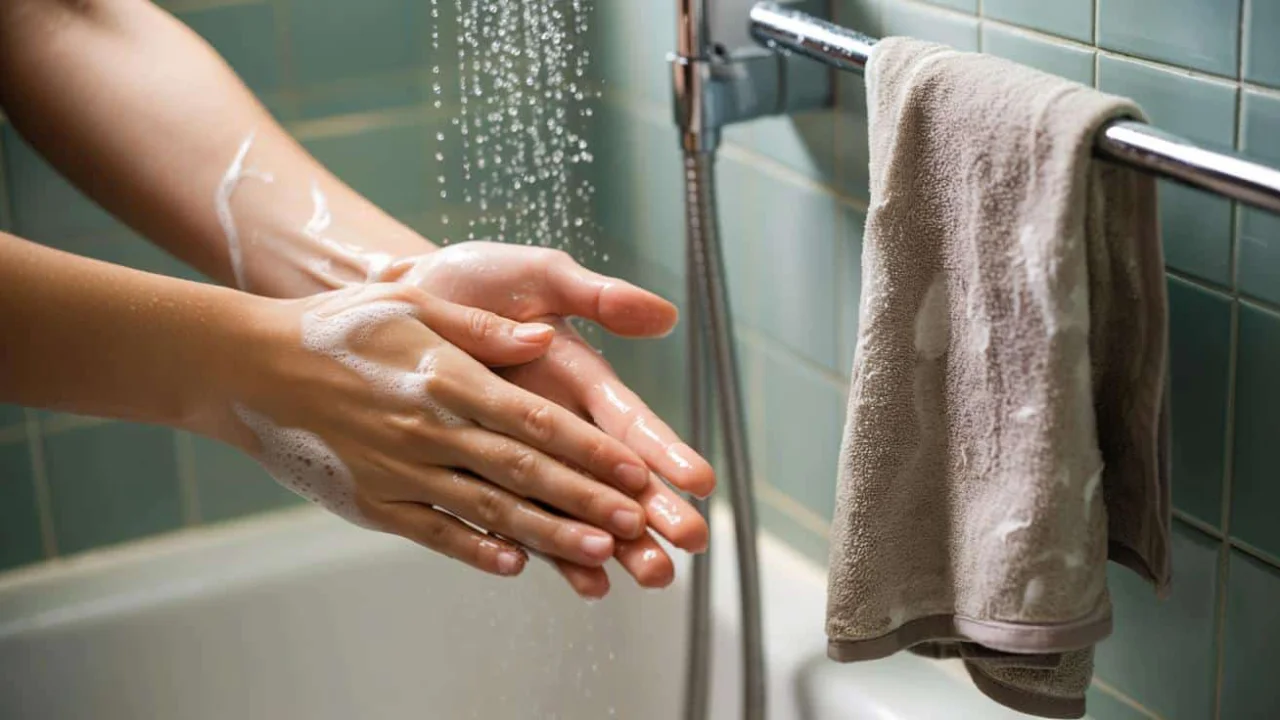
Sarah noticed it during her morning routine last Tuesday. Her teenage daughter Emma emerged from the bathroom clutching a soggy flannel, while her son Jake proudly announced he’d gotten “perfectly clean” using just his hands and soap. The siblings immediately launched into their familiar debate about which shower method was actually better.
This everyday bathroom disagreement isn’t just happening in Sarah’s house. Across the country, families are quietly divided on whether that trusty cotton flannel is a hygiene hero or a germ-harboring villain. The answer might surprise you.
Recent medical guidance suggests this seemingly simple choice could impact your skin health, hygiene levels, and even your family’s wellbeing. What started as a generational preference has become a legitimate health discussion worth examining.
Why Your Hands Might Be Your Best Shower Tool
Dr. Kierzek and other medical professionals increasingly recommend the simplest approach: washing directly with your hands. This method offers several advantages that many people never consider.
Clean hands provide precise control over pressure and coverage. You can instantly adjust how firmly you scrub different areas, and you’ll immediately notice any unusual bumps, irritation, or changes in your skin texture.
“Direct contact between clean hands, soap and skin is usually all that is needed for routine hygiene, as long as you rub for long enough,” explains dermatology research.
The technique matters more than the tools. Here’s what medical experts recommend for effective hand washing in the shower:
- Start by rinsing your body with warm (not scalding) water
- Apply a small amount of soap or shower gel directly to your hands
- Rub each area thoroughly, paying special attention to armpits, groin, buttocks, and feet
- Rinse carefully until your skin no longer feels slippery
- Spend 1-2 minutes actively rubbing each major body area
The mechanical action of your hands, combined with soap’s surfactants, effectively lifts away sweat, natural oils, and surface bacteria. This process doesn’t require additional scrubbing tools to be effective.
The Hidden Hygiene Benefits of Going Tool-Free
One major advantage often gets overlooked: fewer objects in your shower means fewer damp surfaces where harmful microorganisms can multiply. Your hands dry quickly after washing, but flannels and washcloths can remain moist for hours.
Consider this comparison of different shower methods:
| Method | Cleaning Effectiveness | Bacteria Risk | Skin Safety | Maintenance Required |
|---|---|---|---|---|
| Hands Only | High | Very Low | Excellent | None |
| Clean Flannel (Daily) | Very High | Low | Good | High |
| Reused Flannel | Medium | High | Poor | Medium |
| Loofah/Sponge | High | Very High | Fair | Very High |
This data reveals why many dermatologists lean toward hand washing. The risk-to-benefit ratio strongly favors the simplest approach for most people’s daily hygiene needs.
When Flannels Still Make Sense (And When They Don’t)
Despite the medical preference for hands-only washing, flannels aren’t completely without merit. They serve specific purposes that hands alone can’t always achieve.
People with limited mobility often find flannels helpful for reaching their back, shoulders, or feet. The cloth provides extended reach and can help maintain independence in personal care routines.
“A flannel can provide gentle exfoliation that leaves skin feeling smoother and looking brighter,” notes skincare research. Dead skin cells that make your complexion appear dull come away more easily with light cloth friction.
However, the bacterial risk is real and significant. A flannel that stays wet, gets folded while damp, or sits in a humid bathroom becomes an ideal breeding ground for various microorganisms:
- Common bacteria like Staphylococcus and Streptococcus
- Yeasts such as Candida that cause skin infections
- Molds that thrive in constantly moist environments
- Other fungi that can cause athlete’s foot or ringworm
These microbes don’t just stay on the cloth. Each time you use that flannel, you’re potentially spreading them across your clean skin. This defeats the entire purpose of showering.
What This Means for Your Daily Routine
The implications extend beyond personal preference. Families using shared flannels or storing them improperly in bathrooms could unknowingly increase their risk of skin infections, especially during warmer months when humidity levels rise.
Parents teaching children proper hygiene habits face a practical decision. Teaching kids to wash effectively with their hands eliminates the need to manage, clean, and replace cloth accessories regularly.
“The simplest hygiene methods are often the most sustainable and effective long-term,” observes public health guidance.
For adults with sensitive skin conditions like eczema or dermatitis, eliminating potential bacterial sources from the shower routine can reduce flare-ups and irritation significantly.
Budget-conscious households also benefit. Skipping washcloths, flannels, and similar accessories reduces laundry loads, replacement costs, and the need for specialized cleaning products.
Making the Switch: Practical Tips for Hand-Only Washing
If you’re used to flannels, transitioning to hands-only washing might feel strange initially. Here’s how to make it effective:
Spend extra time on areas that accumulate the most bacteria and odor. Your hands can access these spots more precisely than any cloth tool.
Use circular motions rather than just applying soap and rinsing. The mechanical rubbing action is crucial for removing oils, sweat, and surface contaminants effectively.
Pay attention to often-missed areas like between your toes, behind your ears, and around your navel. Your hands can feel these spots and ensure thorough cleaning.
Don’t skip the final rinse. Soap residue left on skin can cause irritation, especially in sensitive areas. Take time to rinse until your skin feels completely clean rather than slippery.
FAQs
Is it really possible to get clean using just your hands?
Yes, medical research confirms that proper hand washing with soap effectively removes sweat, oils, and surface bacteria from skin.
What about exfoliation – don’t I need a cloth for that?
Light exfoliation happens naturally during hand washing, and most people don’t need additional scrubbing unless they have specific skin conditions.
How often should I wash a flannel if I choose to use one?
Flannels should be washed in hot water after every single use and dried completely to prevent bacterial growth.
Are there any situations where flannels are actually better?
Yes, people with limited mobility may need flannels to reach certain body areas, and some skin conditions benefit from gentle cloth exfoliation.
What’s the biggest mistake people make with shower hygiene?
Not spending enough time actually rubbing the skin – the mechanical action is more important than the tools you use.
Can sharing flannels spread infections between family members?
Absolutely, shared damp flannels can transmit bacteria, fungi, and other microorganisms between users, increasing infection risk for everyone.


