
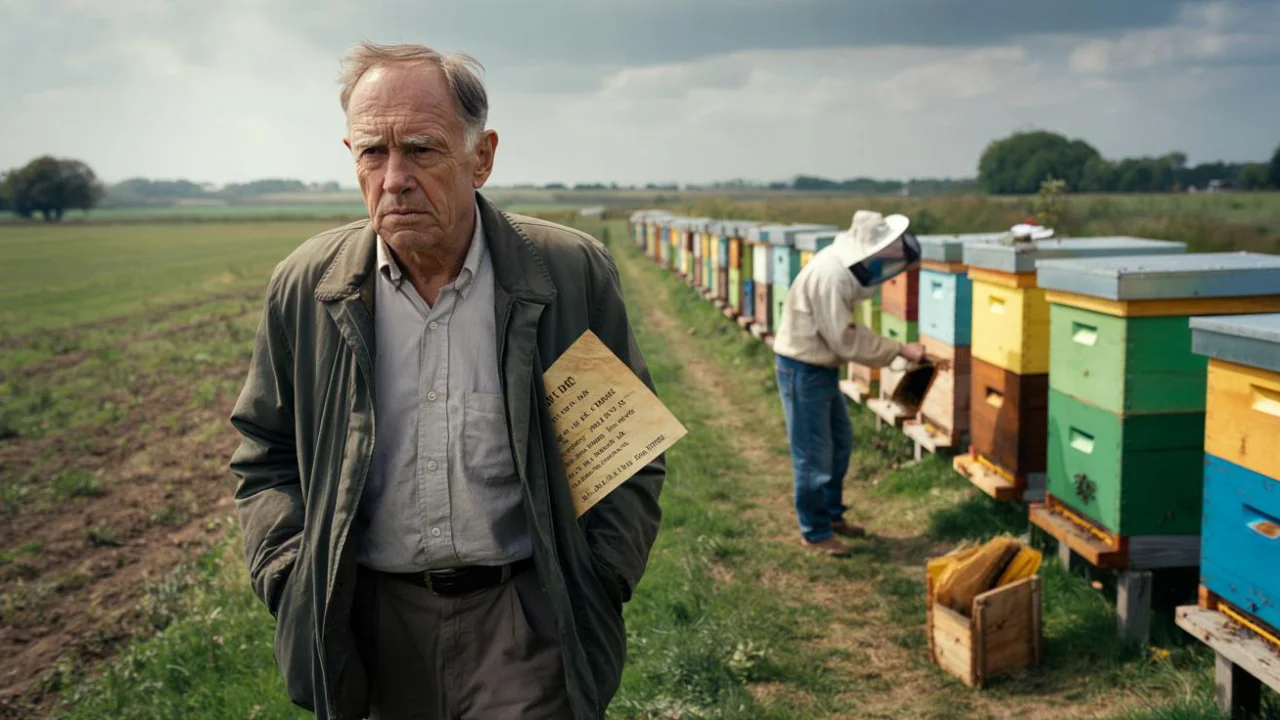
Marie-Claire thought she was doing the right thing. When her neighbor Jean-Luc asked if he could place a few beehives on the unused corner of her property, she didn’t hesitate. “Of course,” she said, waving away any talk of payment. “The bees need somewhere safe, and that field just sits there anyway.”
Three years later, a letter arrived that made her hands shake. The tax office wanted €4,200 in agricultural levies for land she’d never made a penny from. Her simple act of kindness had somehow become a taxable agricultural operation.
Marie-Claire’s story isn’t unique. Across the country, landowners who lent fields to beekeepers are discovering that goodwill comes with a price tag nobody mentioned.
The Case That Started a National Argument
What began as Gérard’s quiet arrangement with a local beekeeper has exploded into a nationwide debate about agricultural levies and tax fairness. The retired farmer from rural France never expected his handshake deal to end up in courtrooms and newspaper headlines.
The situation is deceptively simple. Gérard owns several hectares of farmland he no longer actively cultivates. A young beekeeper needed a safe location for his hives, away from pesticide-treated crops and busy roads. No money changed hands. No formal contract existed. Just two neighbors helping each other out.
Then the tax reassessment arrived. The authorities reclassified his unused fields as active agricultural land, triggering substantial levy payments. Despite earning nothing from the arrangement, Gérard faced thousands in unexpected taxes.
“I thought I was helping the environment and a young entrepreneur,” says agricultural lawyer Sophie Moreau. “These cases show how good intentions can collide with complex tax regulations.”
Understanding Agricultural Levies and Who Gets Hit
Agricultural levies affect more people than most realize. These taxes and social contributions apply when land is deemed to be in agricultural use, regardless of whether the owner profits directly.
Here’s how different arrangements typically get classified:
| Land Use | Levy Risk | Key Factors |
|---|---|---|
| Beehives placement | High | Commercial honey production |
| Livestock grazing | Very High | Regular agricultural activity |
| Crop sharing | Moderate | Depends on formal agreements |
| Unused/fallow land | Low | No active agricultural purpose |
The current system creates several pressure points:
- Land classification can change without the owner’s knowledge
- Verbal agreements offer no protection from tax reassessment
- Social contributions can exceed €2,000-5,000 annually per case
- Appeals processes are lengthy and expensive
- Retroactive payments may cover multiple tax years
Tax consultant Pierre Dubois explains the government’s position: “The law looks at economic activity, not monetary exchange. If land contributes to a commercial operation, it can trigger levies whether rent is paid or not.”
The Battle Lines Are Drawn
The controversy has split public opinion down the middle. Rural communities see this as punishment for neighborly cooperation, while urban taxpayers question why landowners should get special treatment.
Farmers’ unions argue that these cases discourage environmental stewardship and small-scale agriculture. “We’re taxing people for helping pollinators survive,” says Rural Alliance spokesperson Catherine Laurent. “This makes no economic or environmental sense.”
But tax reform advocates see it differently. They claim wealthy landowners have exploited informal arrangements to avoid their fair share of contributions while benefiting from increased property values and agricultural subsidies.
The debate has practical consequences reaching far beyond individual cases:
- Beekeepers report difficulty finding new locations for hives
- Landowners are demanding formal rental contracts to protect themselves
- Small-scale agricultural partnerships are dissolving
- Environmental conservation projects face new barriers
What troubles many observers is how the system seems to penalize cooperation. A landowner who charges market rent faces lower levy risks than someone helping for free, creating perverse incentives.
Real People, Real Consequences
Behind the policy debates are families facing financial hardship. Marie-Claire, whose story opened this article, represents thousands of landowners caught off-guard by unexpected tax bills.
Her situation illustrates the human cost of regulatory confusion. At 68, living on a fixed pension, she now faces choosing between appealing the assessment or selling family land to pay the levies.
“I helped someone who needed help,” she says. “Now I’m being punished for it. Where’s the justice in that?”
Meanwhile, beekeepers like Jean-Luc worry about the future of their operations. Rising costs and fewer available sites threaten small honey producers already struggling with climate challenges and bee population decline.
Agricultural economist Dr. François Mercier warns of broader implications: “This isn’t just about bees and taxes. It’s about how we structure cooperation in rural communities and whether we want to encourage environmental stewardship.”
The controversy highlights a fundamental question about modern tax policy. Should the system focus purely on economic activity, or should it account for social and environmental benefits that don’t appear on balance sheets?
As cases multiply across the country, pressure grows for legislative clarification. Some regions are exploring exemptions for environmental partnerships, while others argue for stricter enforcement to ensure tax fairness.
For now, landowners like Gérard and Marie-Claire wait for appeals while the country debates whether helping your neighbor should come with a tax bill.
FAQs
What triggers agricultural levies on unused land?
Agricultural levies apply when land is used for commercial agricultural purposes, even without formal rental agreements or direct payments to the landowner.
Can landowners avoid levies by refusing payment?
No, the tax system focuses on land use rather than financial transactions. Free arrangements can still trigger levy obligations if commercial activity occurs.
How much do agricultural levies typically cost?
Costs vary by region and land size, but owners often face €2,000-5,000 annually in social contributions and related taxes.
Are there legal ways to help beekeepers without tax consequences?
Landowners should consult tax advisors about formal agreements that clearly define responsibilities and limit agricultural classification risks.
Can these tax assessments be appealed?
Yes, but appeals are expensive and time-consuming. Success depends on proving the land wasn’t used for commercial agricultural purposes.
What changes are being considered to address this issue?
Some regions are exploring exemptions for environmental partnerships, while others want clearer guidelines distinguishing charity from commercial activity.


