
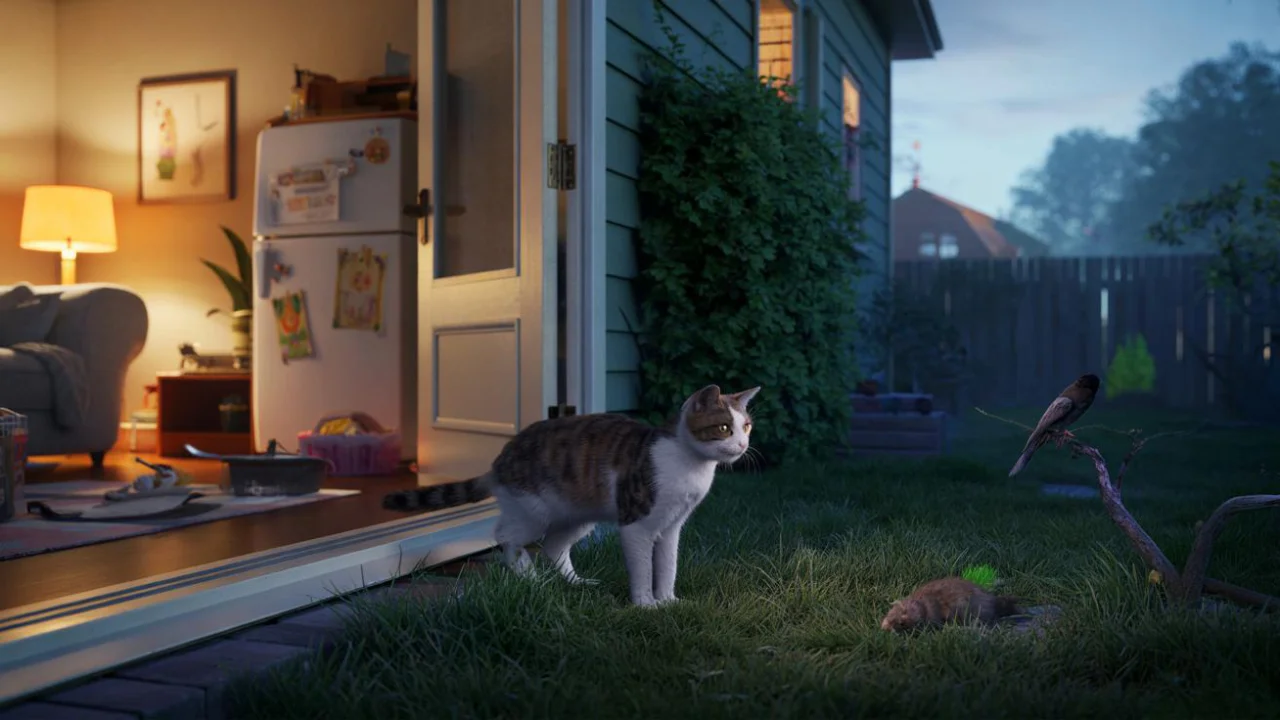
Sarah noticed something strange about her neighborhood last spring. The little songbirds that used to wake her up each morning had gone quiet. Her backyard feeder sat empty for weeks, untouched by the finches and sparrows that once flocked there daily. Then she spotted her neighbor’s tabby cat, Whiskers, crouched under the azalea bush with feathers scattered around his paws.
That moment changed how Sarah saw every house cat in her area. What she thought was normal pet behavior suddenly felt different—more predatory, more consequential. She wasn’t alone in this realization.
Across neighborhoods worldwide, scientists are documenting a troubling reality: domestic cats invasive wildlife impact reaches far beyond what most pet owners realize. Your cuddly companion might be contributing to one of the most significant wildlife conservation challenges of our time.
The Hidden Hunting Habits of House Cats
Every dawn and dusk, millions of pet cats slip outside for what appears to be harmless exploration. But wildlife researchers using motion-activated cameras tell a different story. These “beloved pets” transform into efficient predators the moment they step outdoors.
Dr. Amanda Chen, a wildlife biologist at Oregon State University, puts it bluntly: “We’re not talking about feral cats here. These are well-fed house cats with loving owners who simply can’t resist their hunting instincts when given the opportunity.”
The numbers are staggering. Recent studies suggest domestic cats kill between 1.3 to 4 billion birds annually in the United States alone. But it’s not just birds—small mammals, reptiles, and amphibians also fall victim to these suburban hunters.
What makes domestic cats invasive wildlife particularly problematic is their efficiency. Unlike wild predators that hunt out of necessity, well-fed cats hunt for sport. They don’t need the calories, but they kill anyway.
The Ecological Impact Breakdown
Understanding how domestic cats function as invasive wildlife requires looking at the specific ways they disrupt natural ecosystems:
- Native bird populations: Cats target ground-nesting species and fledglings learning to fly
- Small mammal communities: Mice, voles, and shrews face constant predation pressure
- Reptile and amphibian survival: Lizards, salamanders, and small snakes become easy targets
- Island ecosystems: Isolated habitats suffer the most severe impacts from cat predation
- Urban wildlife corridors: Parks and green spaces lose biodiversity faster than expected
The following table shows the estimated annual wildlife casualties attributed to outdoor domestic cats in different regions:
| Region | Birds Killed (millions) | Small Mammals Killed (millions) | Primary Species Affected |
|---|---|---|---|
| United States | 1,300-4,000 | 6,300-22,300 | Songbirds, mice, voles |
| Canada | 100-350 | 38-135 | Warblers, sparrows, shrews |
| Australia | 272-1,100 | 466-815 | Native birds, small marsupials |
| United Kingdom | 55-80 | 52-63 | Robin, blackbird, field mice |
Conservation biologist Dr. Michael Torres explains the broader implications: “When we classify domestic cats invasive wildlife, we’re not being dramatic. These numbers represent real ecosystem collapse in some areas, especially where native species haven’t evolved alongside cat-like predators.”
Island Ecosystems Under Siege
The most devastating impacts of domestic cats invasive wildlife behavior occur on islands. These isolated ecosystems evolved without mammalian predators, leaving native species completely unprepared for cat hunting strategies.
In New Zealand, cats contribute to the decline of over 40 native bird species. The country’s unique ground-dwelling birds, like the takahē and kiwi, face particular threats from both feral and domestic cats.
Hawaiian islands tell an even more alarming story. Researchers documented how a single outdoor cat can eliminate entire colonies of native seabirds within months. The Hawaiian petrel and Newell’s shearwater populations have crashed partly due to cat predation.
“On small islands, every breeding pair matters,” notes Dr. Lisa Yamamoto, who studies island conservation in Hawaii. “When cats kill even a few adults during breeding season, it can mean local extinction for some species.”
What This Means for Pet Owners and Communities
Recognizing domestic cats invasive wildlife impact doesn’t mean demonizing pets or their owners. Instead, it opens conversations about responsible pet ownership and wildlife conservation.
Many communities are implementing cat management strategies that protect both pets and wildlife:
- Indoor-only policies: Some housing developments require cats to remain indoors
- Curfew regulations: Restricting outdoor access during dawn and dusk hunting hours
- Cat enclosures: Outdoor spaces that contain cats while letting them experience nature
- Bell collars: Warning devices that alert prey, though effectiveness varies
- Leash training: Supervised outdoor time that prevents hunting
The economic impact extends beyond wildlife loss. Property values can decline in areas with severely depleted bird populations. Pest control costs increase when natural predators like hawks and owls disappear from neighborhoods.
“We’re seeing suburban areas become ecological deserts,” explains urban ecologist Dr. James Rivera. “The silence where birdsong used to be isn’t just sad—it’s expensive. These communities lose natural pest control and pollination services.”
Finding Balance Between Pet Love and Wildlife Protection
The domestic cats invasive wildlife debate often becomes polarized, with cat lovers feeling attacked and conservationists seeming heartless. But solutions exist that protect both interests.
Progressive veterinarians now discuss wildlife impact during routine pet consultations. They emphasize that keeping cats indoors or in supervised outdoor spaces actually extends feline lifespans by reducing exposure to diseases, traffic, and predators.
Some communities are pioneering innovative approaches. Portland, Oregon offers subsidized cat enclosure installations for low-income pet owners. Australian suburbs experiment with “cat curfew” hours that restrict outdoor access during peak wildlife activity times.
The most successful programs avoid blame and focus on education. Pet owners who understand their cats’ ecological impact often become conservation advocates themselves.
FAQs
Are indoor cats really healthier than outdoor cats?
Yes, indoor cats typically live 2-5 years longer than outdoor cats due to reduced exposure to diseases, traffic accidents, and predator attacks.
Do well-fed cats still hunt wildlife?
Absolutely. Hunting is an instinctual behavior that’s independent of hunger, so even well-fed cats will kill birds and small animals when given the opportunity.
Can cat bells actually prevent wildlife deaths?
Bells provide limited protection and may reduce kills by 30-50%, but many cats learn to hunt silently even with bells, and the devices don’t prevent all wildlife deaths.
What’s the difference between feral and domestic cats’ impact on wildlife?
Feral cats typically kill more per individual, but the sheer number of owned outdoor cats means domestic cats invasive wildlife impact often exceeds that of feral populations in many areas.
Are certain cat breeds more likely to hunt than others?
All domestic cats retain hunting instincts regardless of breed, though individual cats vary in their prey drive and hunting success rates.
How can I give my cat outdoor time without harming wildlife?
Consider building a catio (cat patio), using a leash and harness for supervised walks, or creating a fully enclosed outdoor run that prevents hunting while allowing fresh air and exercise.


