
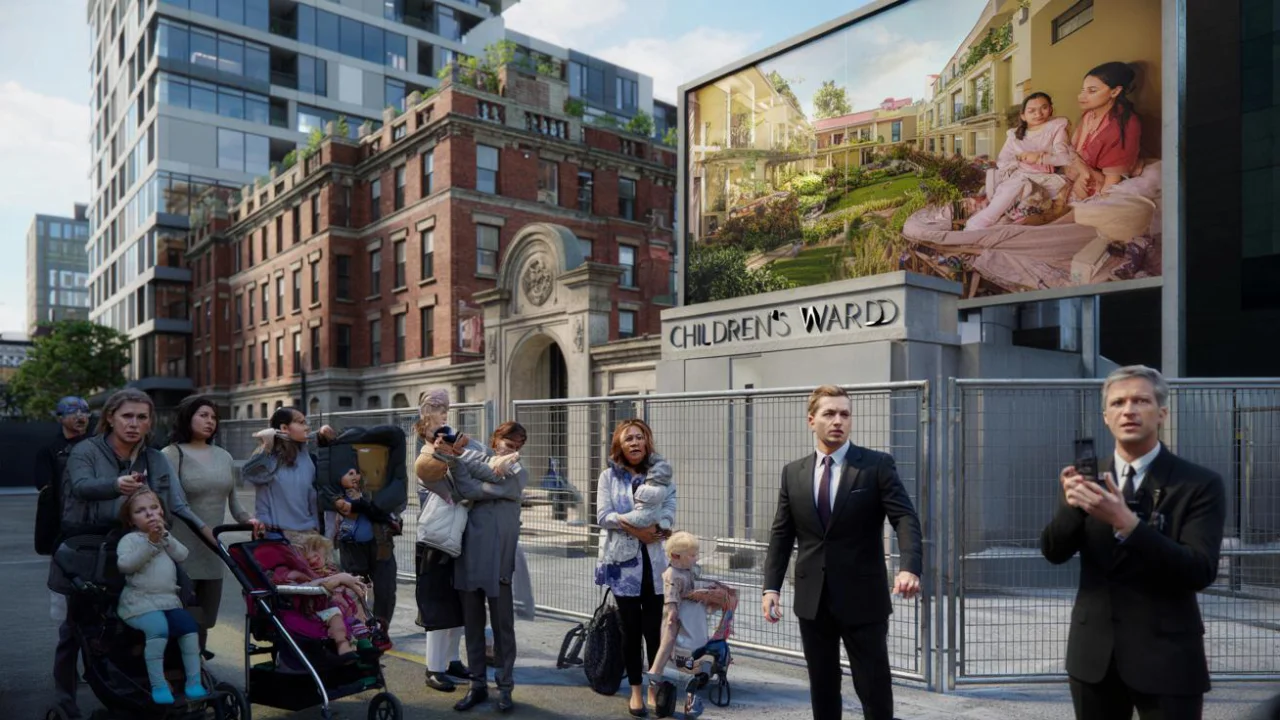
Sarah clutches her phone with trembling hands as she reads the planning notice. The red-brick building in front of her used to be where she spent three terrifying weeks watching her newborn son fight for his life. Now there’s a sign advertising luxury apartments starting at £525,000.
“They’re turning the children’s ward into penthouses,” she whispers to her neighbor, who stops pushing her pram to stare. Both women remember rushing through those doors at 3am, hearts pounding, praying their babies would be okay.
This scene is playing out across the country as cash-strapped councils sell off former hospital sites to developers. But for parents who depended on these places during their darkest hours, the transformation feels like a betrayal.
When Healthcare Becomes Real Estate Gold
The children’s hospital closure saga reveals how public health cuts ripple through communities in unexpected ways. What started as cost-cutting measures has evolved into a housing crisis flashpoint.
Local councils facing budget shortfalls are increasingly unable to demand affordable housing from developers. Instead of mixed-income communities, former hospital sites become exclusive enclaves that existing residents can’t afford.
“We’re seeing essential public buildings turned into luxury developments while families who used those services get pushed further away,” explains housing policy researcher Dr. James Mitchell. “It’s social cleansing with a planning permission stamp.”
The process typically follows the same pattern. Health trusts sell sites to cover debts. Developers promise regeneration. Councils approve plans they claim will bring investment. But the reality often disappoints.
The Numbers Behind the Outrage
Understanding why parents are so angry requires looking at the financial details councils rarely publicize clearly.
| Development Aspect | What Families Expected | What Actually Happened |
|---|---|---|
| Affordable Housing | 30% of units | 0% on-site |
| Community Facilities | Health center or nursery | Private gym and concierge |
| Public Access | Memorial garden or community space | Residents-only courtyards |
| Local Employment | Jobs for existing residents | Service positions only |
The financial arrangements reveal why emotions run so high:
- Developers paid £2.3 million for the hospital site
- Estimated development value: £28 million
- Council’s share of profits: Zero
- Community infrastructure levy: Waived due to “viability concerns”
- Affordable housing contribution: £450,000 toward homes elsewhere in the city
“The maths just doesn’t add up for ordinary families,” says parent campaigner Rachel Torres. “They can afford underground parking and rooftop gardens but not a single affordable flat.”
Meanwhile, the waiting list for social housing has grown by 40% since the hospital closed. Families who once lived walking distance from emergency care now face hour-long journeys to the replacement facility.
Families Fighting Back Against Housing Inequality
The anger isn’t just about nostalgia. It’s about justice and who gets to live where.
Parents have organized into action groups, attending every council meeting and scrutinizing planning documents. They’ve discovered that “viability assessments” – the financial reports developers use to avoid affordable housing obligations – are often kept secret.
Local teaching assistant Emma Rodriguez spent her savings on legal fees to challenge the secrecy. “My daughter nearly died in that building,” she explains. “Now they want to hide the paperwork that lets them turn it into millionaires’ flats.”
The campaign has united an unlikely coalition. Grandparents who remember when the hospital opened in 1962. Young families priced out of nearby areas. Even some healthcare workers who used to staff the wards.
Their tactics include:
- Freedom of information requests for financial documents
- Crowdfunding legal challenges to planning decisions
- Creating alternative development proposals with community groups
- Lobbying for stronger affordable housing policies
- Documenting the social impact of hospital closures
“We’re not against development,” clarifies campaign organizer David Chen, whose son was treated for leukemia at the hospital. “We’re against development that erases communities.”
Some groups have achieved partial victories. In Manchester, campaigners forced developers to include a community health center. In Bristol, protesters secured genuinely affordable units after a two-year battle.
The Ripple Effects Nobody Talks About
Children’s hospital closures create problems that extend far beyond healthcare access. When these anchor institutions disappear, entire neighborhoods change character.
Local businesses that depended on hospital visitors struggle to survive. The cafe that stayed open 24 hours for worried parents closes down. The pharmacy that stocked specialist medications relocates.
“It’s like pulling the heart out of a community,” observes urban planning expert Professor Linda Hayes. “Hospitals aren’t just medical facilities – they’re social infrastructure.”
The housing implications multiply over time. Luxury developments attract high-income residents who don’t use local schools or services. Property values rise. Original residents find themselves unable to afford their own neighborhoods.
Transport links designed for hospital access don’t serve new residents’ needs. Bus routes get cut. Parking becomes scarce. The physical infrastructure reflects priorities that no longer exist.
Meanwhile, families travel further for healthcare. A recent study found that children’s hospital closures increase emergency response times by an average of 12 minutes – a potentially life-threatening delay.
“Every minute counts when your child stops breathing,” says parent Sarah Walsh, whose three-year-old has severe asthma. “We used to live five minutes from A&E. Now it’s forty minutes if traffic’s bad.”
The emotional toll on families cannot be quantified in planning applications or profit margins. These buildings held memories of fear, hope, relief, and gratitude. Seeing them transformed into exclusive residential developments feels like those experiences don’t matter.
FAQs
Why can’t councils force developers to include affordable housing?
Developers submit “viability assessments” claiming affordable housing would make projects unprofitable. Cash-strapped councils often accept these rather than risk losing development entirely.
What happens to healthcare services when children’s hospitals close?
Services typically move to larger regional hospitals, often much further away. Some specialized care becomes centralized in major cities, creating travel hardships for families.
Can local residents challenge these planning decisions?
Yes, but it’s expensive and time-consuming. Most successful challenges focus on procedural errors or inadequate consultation rather than the principle of private development on public land.
Do luxury developments actually benefit local communities?
Developers claim they create jobs and investment, but research suggests benefits mainly flow to property owners and high-income newcomers rather than existing residents.
Are there alternatives to selling hospital sites to private developers?
Some areas have used community land trusts, housing associations, or council-led development to maintain affordable housing. These approaches require more public investment but create lasting community benefits.
What rights do parents have when hospitals close?
Formal consultation is required, but parents report feeling unheard. The focus is usually on clinical service reorganization rather than community impact or future land use.


