
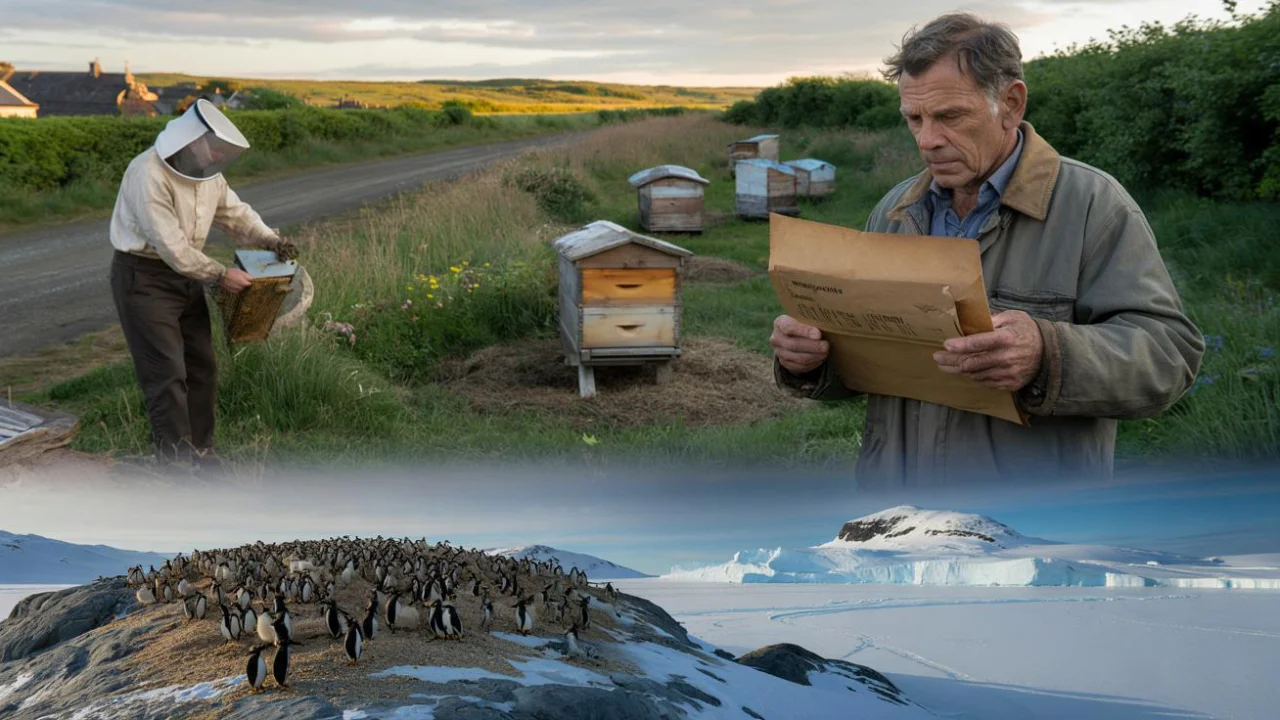
Marie Dubois still remembers the moment her kindness backfired. The 68-year-old retiree from rural Normandy had simply wanted to help her neighbor’s struggling beekeeping business. Her overgrown quarter-acre plot seemed perfect for a few hives—wild flowers everywhere, no pesticides, just nature doing its thing.
“I thought I was doing something good for the environment,” she recalls, shaking her head. “Six months later, I got a bill for 340 euros in agricultural tax. Apparently, letting someone keep bees on your land makes you a farmer in the government’s eyes.”
Marie’s story isn’t unique. Across France and beyond, well-meaning landowners are discovering that generosity can trigger unexpected tax consequences. Meanwhile, halfway around the world, scientists studying newly discovered penguin colonies in Antarctica are sparking an even bigger debate about who truly controls nature.
When Good Deeds Meet Government Forms
The agricultural tax system wasn’t designed for modern acts of environmental kindness. Created decades ago when land use was simpler, these regulations struggle with today’s complex arrangements between private landowners and small-scale farmers.
“The tax code sees any productive use of land as commercial activity,” explains Philippe Moreau, a rural tax advisor who’s handled dozens of similar cases. “It doesn’t matter if you’re not making money. If someone else is using your land professionally, you’re suddenly in the agricultural category.”
The problem stems from how authorities classify land use. Once beehives appear on a property—even temporarily—the land automatically shifts from residential or unused status to agricultural. This change triggers several financial obligations:
- Higher property taxes based on agricultural productivity rates
- Potential liability for professional activity insurance
- Required declarations to agricultural census authorities
- Compliance with environmental regulations for farming operations
Marie discovered these rules the hard way. Her neighbor’s five beehives transformed her tax status overnight, even though she received only a few jars of honey in return.
The Hidden Costs of Helping Nature
The financial impact extends far beyond the initial agricultural tax bill. Landowners often face a cascade of unexpected expenses and administrative burdens.
| Cost Category | Average Annual Impact | Required Action |
|---|---|---|
| Agricultural Tax Increase | €200-€500 | Annual payment to local authorities |
| Insurance Adjustments | €150-€300 | Professional liability coverage |
| Administrative Compliance | €100-€250 | Forms, inspections, documentation |
| Legal Consultation | €300-€600 | Understanding obligations and rights |
“We’re seeing people who just wanted to help local food production getting hit with bills they never expected,” says environmental lawyer Catherine Rousseau. “The law hasn’t caught up with the sharing economy mindset that’s becoming common in rural areas.”
Some landowners have found themselves responsible for environmental violations they didn’t even know were happening. When agricultural inspectors visit properties with beehives, they apply the same standards used for commercial farming operations.
Nature’s Ownership Crisis Goes Global
While French retirees grapple with tax bills, a parallel debate is unfolding in Antarctica. Recent satellite imagery has revealed thousands of previously unknown penguin nesting sites, raising complex questions about territorial claims and environmental protection.
The discovery has reignited discussions about who has the right to control natural spaces. Seven countries claim portions of Antarctica, but the Antarctic Treaty suspends these claims. Now, with new penguin colonies mapped, nations are quietly reassessing their positions.
“These penguin discoveries are changing the game,” notes Dr. Sarah Mitchell, an international environmental law expert. “Countries that thought they knew their Antarctic territories are realizing there’s much more biological activity than previously documented.”
The situation mirrors what’s happening in places like France, where traditional concepts of land ownership clash with modern environmental needs. Just as Marie’s unused plot became valuable when bees arrived, Antarctica’s newly mapped penguin habitats are suddenly strategic assets.
Real People, Real Consequences
Back in Normandy, Marie eventually found a solution, but it took months of paperwork and legal fees. She and her beekeeper neighbor formalized their arrangement through a “commodat” agreement—a legal framework for free land use that provides some protection against tax reclassification.
The process revealed how unprepared the system is for environmental cooperation. “I had to hire a lawyer to give away free land use,” Marie laughs bitterly. “It cost me more in legal fees than I would have made renting the land properly.”
Her experience highlights a growing problem across rural communities. As more people seek to support local food production and environmental initiatives, existing regulations create barriers instead of encouragement.
Agricultural tax consultants report a 40% increase in inquiries about informal land-sharing arrangements gone wrong. Most involve retirees or hobby farmers who thought they were making simple, neighborly agreements.
“The agricultural tax system needs updating for the 21st century,” argues rural development specialist Jean-Claude Bertrand. “We should be encouraging these partnerships, not penalizing them.”
Finding Solutions in an Imperfect System
Despite the challenges, some regions are experimenting with more flexible approaches. Several French departments have created special categories for small-scale agricultural partnerships, reducing tax burdens for non-commercial arrangements.
These pilot programs recognize agreements where landowners receive minimal compensation—like Marie’s honey jars—as environmental partnerships rather than commercial ventures. The key is documentation and intent.
Meanwhile, the Antarctic penguin situation is pushing international law in new directions. Environmental scientists argue that biological discoveries should strengthen conservation protections rather than territorial claims.
For people like Marie, the lesson is clear: good intentions need good paperwork. Her advice to others considering similar arrangements is simple but sobering—consult a professional before shaking hands.
FAQs
Why does letting someone keep bees on my land trigger agricultural tax?
Tax authorities classify any productive land use as potential commercial activity, regardless of whether money changes hands.
Can I avoid agricultural tax by limiting the number of hives?
Unfortunately, no. Even one professional beehive can change your land’s tax classification in most jurisdictions.
What’s the difference between a regular agreement and a “commodat”?
A commodat is a formal legal contract for free use of property that provides better protection against unexpected tax obligations.
How long does it take to resolve agricultural tax disputes?
Most cases take 6-12 months to resolve, often requiring professional legal assistance and documentation of the original agreement’s intent.
Are there tax benefits for environmentally beneficial land use?
Some regions offer reduced rates for verified conservation activities, but these programs are limited and require advance registration.
What should I do before agreeing to let someone use my land?
Consult with a tax advisor or rural lawyer to understand the potential implications and create proper documentation from the start.


